


Why Testing Students in Their Home Language Unlocks Deeper Learning—and What It Means for Language Learners Everywhere

Imagine sitting for a high-stakes science exam on genetics, electromagnetism, or chemical equations. You've studied the material for months. But the questions are written in a language you only started learning seriously a few years ago. Words like isotope or photosynthesis swim on the page. You know the concepts in your home language, but the English terms feel like a secret code you can't quite crack. This isn't a hypothetical scenario for millions of students across Africa and in multilingual classrooms worldwide. A recent initiative at a South African school, documented by researchers at The Conversation, flipped this script, and the results demand our attention.
When that school switched from English-only science tests to bilingual assessments, something remarkable happened. Student performance improved. But more importantly, the knowledge that learners already possessed was finally allowed to shine. For language learners everywhere, this case study isn't just about policy; it's a masterclass in how we store, retrieve, and truly own information. At Lyric Lingo, we see a parallel universe where the same principle plays out every day: learners using the songs stuck in their heads to unlock vocabulary and grammar in a new language, not by translating in a sterile vacuum, but by building meaning through a familiar melody and emotional context.
The South African Experiment: When Bilingual Testing Leveled the Playing Field
The research highlighted a fundamental flaw in many post-colonial education systems. Students were being educated, and tested, exclusively in English, French, or Portuguese. This isn't a matter of mere preference; it's a cognitive bottleneck. The study revealed that school leavers taught and assessed solely in an ex-colonial language are “often not as linguistically and cognitively capable as their counterparts” who have been allowed to leverage their full linguistic repertoire. The problem isn't intelligence or effort. It's a leaky pipeline where knowledge inputted in a second language struggles to be outputted effectively during assessment.
The South African school’s intervention was elegantly simple: present science exam questions in both English and the students’ home language. The result was a more accurate measurement of science knowledge, not just English proficiency. This removed the “language tax” that penalizes bright students simply because their command of academic English is still developing. It’s a validation of what linguists call the “Interdependence Hypothesis”, the idea that skills, concepts, and knowledge acquired in a first language transfer readily to a second, provided the learner has the linguistic tools to manifest them.
The Neuroscience of “Home Language Advantage”
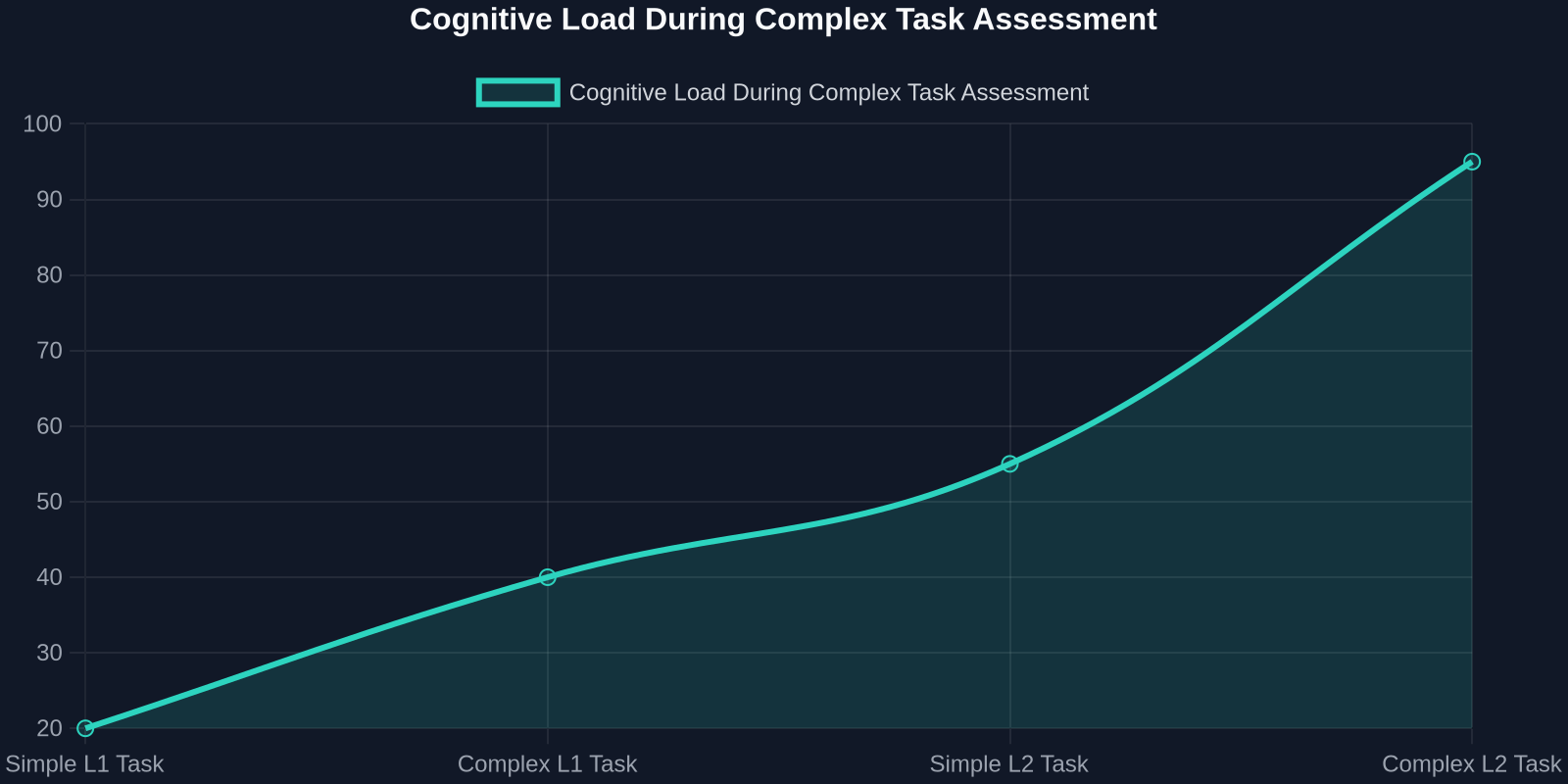
Why does thinking and being assessed in your strongest language matter so much? It boils down to cognitive load. When a learner processes a complex concept like evolution or molecular bonding in a weaker second language, their brain juggles two demanding tasks simultaneously: grasping the abstract concept itself and decoding the vocabulary and syntax used to explain it. This dual-processing eats up working memory, the mental scratchpad we use for reasoning.

Testing in the home language streamlines this. The familiar grammar and vocabulary become automatic, freeing up cognitive horsepower for the actual problem-solving. This explains why the bilingual tests didn’t just help students who might be labeled “struggling”; they allowed high-aptitude students to demonstrate the full extent of their analytical mastery without the ceiling imposed by second-language processing speed.
From the Classroom to Your Playlist
This principle governs language acquisition in adults too. When you listen to a song in your target language, the burden of decoding is shared. The rhythm, rhyme, and emotional tone provide a scaffolding that reduces cognitive load. You’re not facing a cold, unconnected vocabulary list; the word's meaning is locked into a multi-sensory memory trace that includes melody, the singer's expression, and even where you were when you first heard it. This is why a phrase learned through a song feels instantly more “yours” and less like a foreign object you’re struggling to hold.
How Music Mimics Bilingual Education: Building Your Own Interdependent Lexicon
The bilingual science tests work because they honor the learner’s existing cognitive framework. They don't throw out the home language in favor of the target one; they interlock them. For a language learner, this is precisely what a well-designed dual-subtitle music experience can do. You see the original lyric, you see your native language translation, and you feel the meaning through the music. Your brain is building an interdependent network where the French phrase "je ne regrette rien" isn't just three disconnected words; it’s a symphony of defiance, a declaration of self that you’ve seen, heard, and internalized alongside its English equivalent.
This challenges the outdated assumption that effective language learning requires full immersion from day one, where your home language is treated as an unwanted guest. The African school’s success aligns with research on the organized bilingual mental lexicon. We don’t store languages in sealed containers. When a multilingual speaker hears the word “apple,” related concepts in their other languages are also subtly activated. Using your native language strategically, as an anchor point rather than a crutch, accelerates this network-building. You are essentially giving new vocabulary a pre-built neighborhood of meaning to live in, rather than leaving it stranded on an unfamiliar street.
“Education policy that forces learners into an English-only box isn't just undermining local languages; it's splintering a student's ability to think deeply. Music, with its universal emotional grammar, can help repair those splinters for any learner.”
From Policy to Personal Practice: The 3-Step “Bilingual Test” Technique
You can replicate the cognitive magic of that South African exam room with your next study session. The goal is to prove to yourself that you understand a concept in the target language, not just that you can string sounds together. Here’s a practical, music-powered method:

Step 1: The Sonic Immersion (English/Target Language)
Choose a song you’re obsessed with in your target language. Watch it with dual subtitles, target language and your native language, exactly once. Don't pause. Let the full emotional context wash over you. The music acts as your “home language” during this phase, providing comfort and cognitive ease.
Step 2: The Conceptual Mapping (Bilingual Recall)
Now, replay the song line by line. This is your bilingual test. For a specific phrase, say, the Spanish "aunque me cueste la vida" from a passionate ballad, cover the native-language subtitle. Pause the video. Can you explain the concept in your own words, without looking? Don't just give a one-word translation; describe the feeling, the scenario, the nuance. If you can explain the weight of that phrase (“even if it costs me my life”) as a concept of ultimate sacrifice, you’ve earned the point. This is the equivalent of answering the science question, not just recognizing the English word.
Step 3: The Production Phase (Target Language Output)
Finally, your turn to be the student taking a monolingual test. Listen to the instrumental version or hum the melody, and try to sing, or speak, that line accurately with the right emotion. You’re producing the target language, but you’ve built a deep, multimodal foundation first. You’ve moved from recognizing a passive vocabulary item to activating it fully, the same way those science students finally showed their true potential when the language barrier was removed.
Challenging the Monolingual Myth in Our Own Heads
The pushback against initiatives like the South African one often stems from a deep-seated but flawed belief: that learning language in a “pure,” monolingual environment is always superior, and that leaning on a first language is a sign of weakness. The data says otherwise. This book on South Africa’s 11 official languages challenges those long-held assumptions head-on, making a case for “mutual inter-comprehensibility.” The goal isn't to replace English with a local language in every domain, but to build a bridge between them that strengthens both.
Adult language learners internalize a version of this myth too. We apologize for code-switching, feel guilty using a translator, or think we’re “cheating” by learning French via our English understanding. The South African experiment should liberate us from that guilt. Using your home language as a strategic tool for comprehension testing is not the enemy of fluency; it is its scaffolding. It allows you to tackle more complex, interesting content, like a song full of poetic metaphor or an explosive pop anthem with rapid-fire slang, sooner than you ever could in a purely target-language environment.
Lyric Lingo as Your Daily Bilingual Assessment Lab
Tools that effectively implement this bilingual bridge are game-changers. By displaying both the foreign lyrics and your native translation side-by-side in perfect sync with the video, you’re not just watching a music video; you’re running a constant, low-stakes experiment on comprehension. You see the Spanish phrase, you glance at the English equivalent, and your brain begins mapping the syntax and vocabulary onto a vivid emotional scene. You are, in essence, taking a daily bilingual exam where the reward is understanding a song you love, and the side effect is effortlessly stronger recall and deeper connection to the language's emotional core.
| Learning Method | Cognitive Model | Testing Accuracy | Emotional Engagement |
|---|---|---|---|
| English-Only Instruction | Monolingual Gatekeeping | Low (reflects language skill, not concept mastery) | Low |
| Bilingual Testing (Home Language + Target) | Interdependent Knowledge Network | High (assesses concept directly) | Medium |
| Music-Based Bilingual Learning | Multimodal Emotional Integration | High (assesses conceptual & emotional nuance) | Very High |
The Future Belongs to the Linguistically Nimble
The world is moving away from a simplistic view of language as a switch that flips between “on” (English) and “off” (everything else). The South African school’s success is a microcosm of a global shift towards recognizing multilingualism not as a problem to be managed, but as a cognitive resource to be harnessed. This connects deeply to movements in cultural memory, education rights, and even geopolitical understanding, where language is seen not just as communication, but as a vessel for heritage and complex thought.
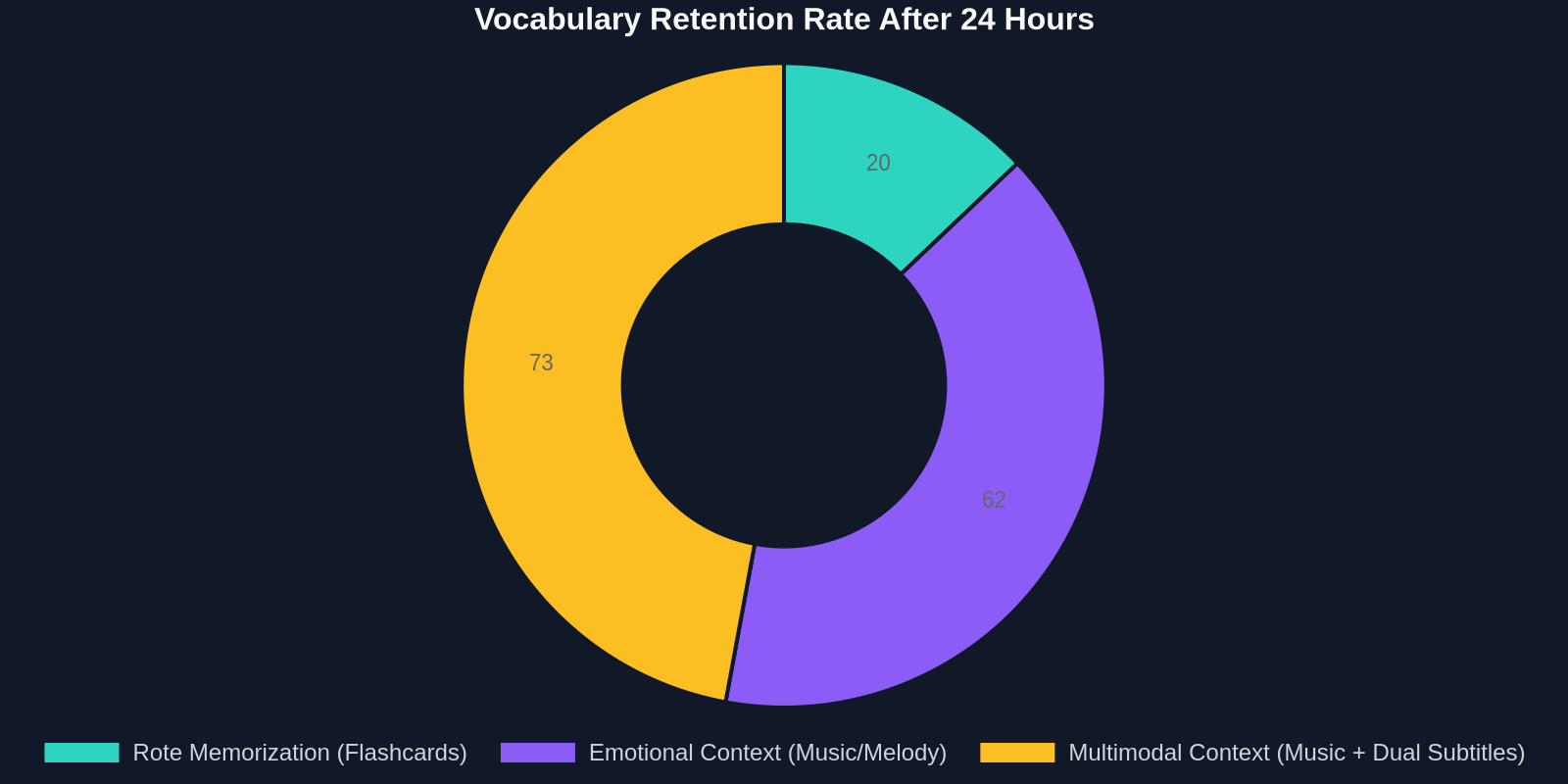
For the individual learner, this means the most effective study methods are those that mimic this bilingual, multimodal richness. A flashcard has no melody, no emotion, no cultural context. It’s a flat file. A song, processed with dual-language support, is a living, breathing, interconnected web of meaning. It’s a piece of data that lives in multiple parts of your brain simultaneously, the auditory cortex, the language center, the limbic system for emotion. When you recall the word during a real conversation, you have multiple retrieval paths to find it, not just the single, dusty neural pathway formed by rote repetition.
The evidence is mounting: from longitudinal studies of thousands of children in state-funded education to the powerful, qualitative results in single schools making brave changes. The baseline findings show that the way we introduce and test knowledge in a multilingual world is overdue for an overhaul. For you, tonight, that overhaul might look like swapping 20 minutes of flashcard drilling for 20 minutes of deep listening and bilingual subtitle study with your favorite artist. You’ll be testing your understanding on a level that truly reflects what you know, and in doing so, you’ll finally hear, and feel, the difference.
Conclusion: Rewrite Your Own Testing Rules
The South African bilingual test didn’t give students knowledge they didn’t have. It simply allowed them to demonstrate what was already there. That’s the shift in mindset every language learner needs. You’re not an empty vessel waiting to be filled with Spanish, French, or English. You’re a complex thinker who already possesses the conceptual understanding of the world, love, fear, joy, the process of cellular division, and you’re simply mapping new linguistic labels onto those pre-existing concepts. Treat your study time not as a monotonous intake, but as a rigorous, joyful, bilingual assessment of how well you can map those concepts through music. Your playlists aren’t a distraction from your studies; they’re the most scientifically sound, emotionally charged exam you’ll ever take, and one you’ll actually look forward to passing with flying colors.