


Why Spanish Language Learning in China Is Surging—and What It Means for Learners Everywhere

Introduction
The demand for Spanish language learning in China has reached a tipping point. According to a Euronews report in October 2026, Chinese education authorities are calling for more Spanish teachers as student demand soars. The surge isn't a passing trend; it reflects deeper economic, cultural, and educational shifts. But it also exposes a major bottleneck: there simply aren't enough qualified teachers to meet the moment.
While classroom seats remain scarce, learners are turning to the content they already consume: music videos, YouTube clips, and streaming media. This is where dual-subtitle tools like Lyric Lingo become a practical bridge. Instead of waiting for a teacher, learners can turn a song into a structured lesson tonight.
The Surge in Spanish Learning in China
In 2015, Spanish was still a niche language in many Chinese schools. By 2025, estimates suggest the number of learners has more than tripled. The Euronews headline, China calls for more Spanish teachers as demand for language soars, captures only part of the story. The data behind the trend shows a language moving from elective curiosity to professional asset.
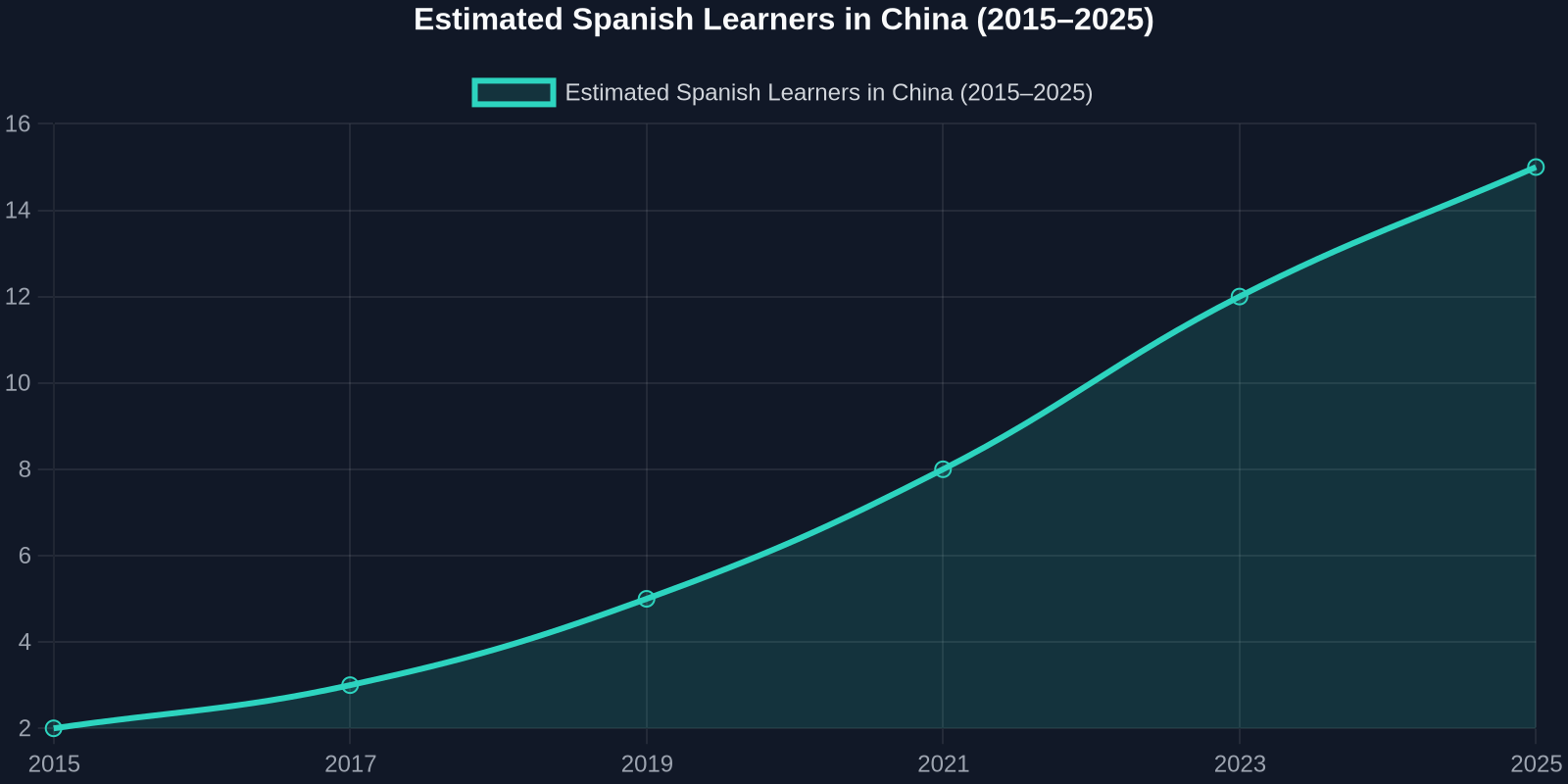
Several forces are driving this surge. First, China's expanding trade relationships with Spanish-speaking countries in Latin America have created a demand for bilingual professionals in logistics, finance, and engineering. Second, Spanish-language music and streaming content have exploded in global popularity. Artists like Rosalía, Bad Bunny, and even older hits such as Despacito have introduced millions of Chinese listeners to the sounds of Spanish. Third, study-abroad programs in Spain and Latin America are increasingly marketed to Chinese students as pathways to global careers.
Why the Teacher Shortage Matters for Your Learning Plan
A shortage of qualified Spanish teachers in China means larger class sizes, fewer opportunities for speaking practice, and long waitlists for limited seats. Many schools recruit instructors who are fluent but lack formal training in second-language acquisition. Outside major cities, the situation is even more acute, leaving students to rely on apps or passive media exposure.
Traditional classroom lessons often provide only two or three hours of exposure per week. That's far below the threshold needed for conversational fluency. The gap between classroom hours and immersion can be filled by music, video, and other authentic content, but only if learners engage with it actively.
How Music Unlocks Vocabulary Retention
Why does music help with language learning? The answer lies in how the brain encodes memory. Melody, rhythm, and emotion activate multiple brain regions simultaneously, creating richer memory traces. When you hear a word set to music, you're not just storing its meaning; you're storing the sound, the emotional context, and the physical sensation of the beat. This multisensory encoding makes vocabulary easier to recall later.

Repetition is another key. Choruses repeat the same phrases multiple times, which mimics spaced repetition, the process of reviewing information at intervals to strengthen long-term memory. A song you play on repeat for a week naturally delivers dozens of exposures to the same verb conjugations, prepositions, and sentence structures.
Consider the word despacio in Despacito. The chorus repeats it slowly, anchoring both the sound and the meaning. In Bailando by Enrique Iglesias, the repeated word bailando (dancing) and the phrase quiero estar contigo (I want to be with you) teach the present tense and an infinitive construction without a single flashcard. Marc Anthony's Vivir Mi Vida repeats voy a reír, voy a bailar (I'm going to laugh, I'm going to dance), introducing the near future construction in a context that's impossible to forget.
A song you love is a memory palace with a beat.
The Missing Piece: Dual Subtitles for Active Practice
Listening to Spanish music passively can help with pronunciation and rhythm, but it won't teach you vocabulary unless you understand what you're hearing. That's where dual subtitles become essential. Dual subtitles show the original Spanish lyric and a translation on the same screen, letting you see the meaning without pausing to look up every word.
Lyric Lingo does not host or redistribute video or audio. It layers synchronized bilingual subtitles over content you already have access to on YouTube. This turns any music video into a structured listening and reading exercise.
| Method | Retention | Effort |
|---|---|---|
| Flashcards | Medium | High |
| Classroom lecture | Medium-High | Low |
| Music + single-language subtitles | Medium | Medium |
| Music + dual subtitles | High | Low-Medium |
A 5-Step Method You Can Use Tonight
You don't need a teacher or a textbook to start learning from a music video. Follow this simple sequence tonight with any Spanish song you already enjoy.

1. Choose a high-frequency chorus song. Pick a song with a clear, repeated chorus. Despacito, Bailando, and Vivir Mi Vida are solid starting points for beginners.
2. Watch once with dual subtitles on. Read the translation as you listen. Don't try to memorize anything yet, just get the gist.
3. Pause at each line and shadow the singer. Repeat each phrase out loud, matching the singer's rhythm and intonation. This builds muscle memory for pronunciation.
4. Hide the translation and recall the meaning. Cover the translated text and try to remember what each line means. Check yourself immediately.
5. Replay after 24 hours and 7 days. This spaced repetition schedule fights the forgetting curve and moves vocabulary into long-term memory.
Lyric Lingo's toggle feature makes it easy to hide the translation, replay a specific line, and loop the chorus without leaving YouTube.
Real Songs, Real Progress: Where to Start
Your song choice matters. Beginners should favor slower tempos and repetitive choruses. Intermediate and advanced learners can handle faster rhythms and more complex grammar.
Beginner: Despacito by Luis Fonsi (slow chorus, present tense), Bailando by Enrique Iglesias (dancing verbs, simple constructions), Vivir Mi Vida by Marc Anthony (near future tense, repetition).
Intermediate: La Gozadera by Gente de Zona ft. Marc Anthony (present tense, cultural vocabulary), Robarte un Beso by Carlos Vives and Sebastián Yatra (romantic phrases, command forms).
Advanced: El Perdón by Nicky Jam and Enrique Iglesias (past tense, forgiveness vocabulary), or any Bad Bunny track for slang and rapid connected speech.
Listen for patterns. Chorus repetitions reinforce present-tense conjugations. Pre-chorus lines often introduce new vocabulary in a predictable context. Bridge sections sometimes switch tenses, giving you a mini grammar lesson without a textbook.
You don't need a classroom to start speaking; you need a chorus you can't stop hearing.
The Science of Repetition and Spaced Review
Hermann Ebbinghaus, a 19th-century psychologist, demonstrated that we forget most new information within hours unless we review it. His forgetting curve shows steep initial decline followed by a plateau. Spaced repetition flattens that curve by scheduling reviews just as you're about to forget.
Music naturally embeds spaced repetition. A song you replay every few days delivers the same vocabulary at intervals that align with memory consolidation. Dual subtitles add a layer of active recall: when you hide the translation, you force your brain to retrieve the meaning, strengthening the memory trace.
Building a Daily 20-Minute Music Practice
Consistency matters more than intensity. A daily 20-minute music practice can deliver more vocabulary exposure than a weekly two-hour class. The key is to divide the time into active and passive phases.
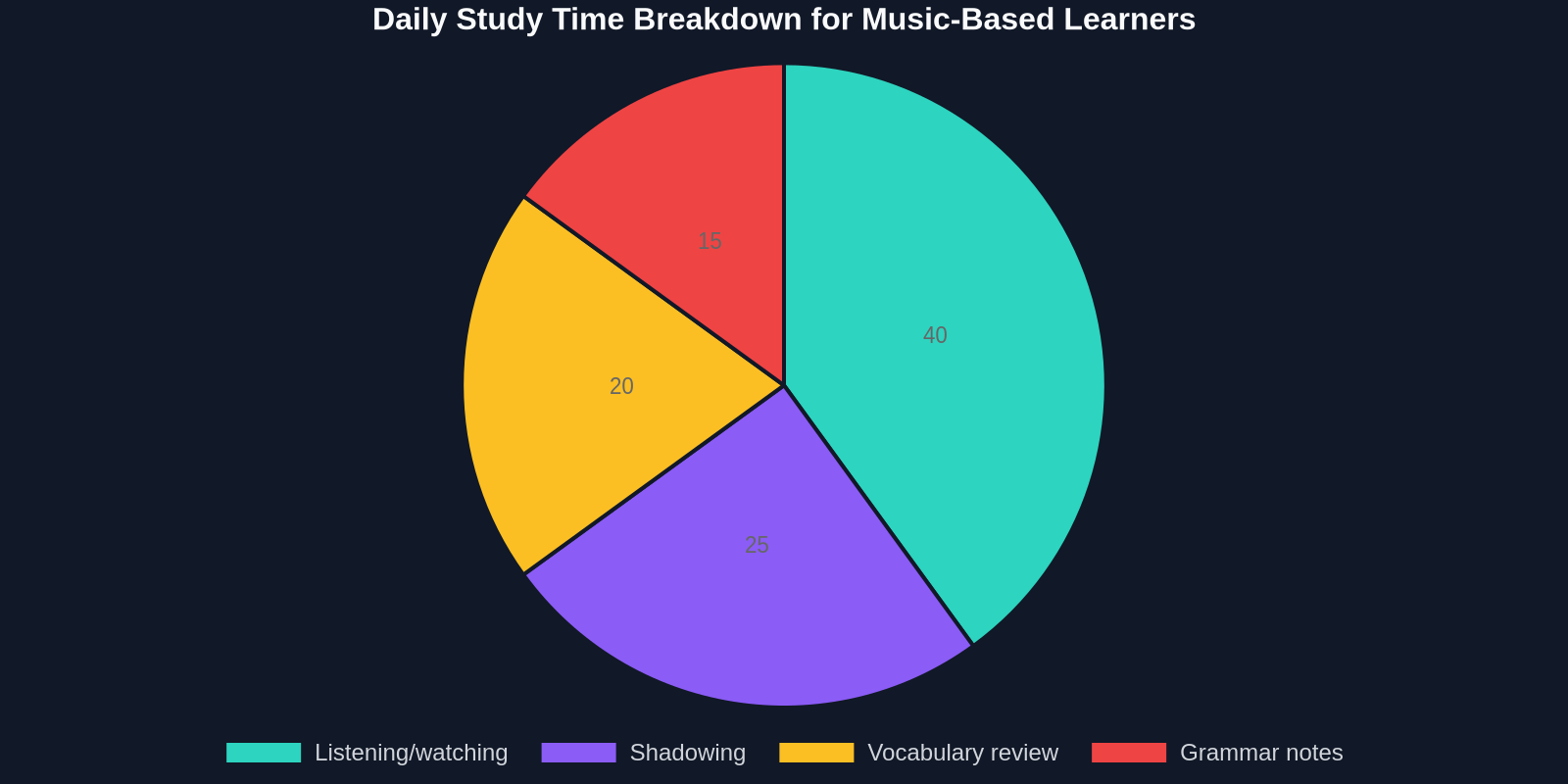
Minutes 1–5: Listen and watch. Play the music video with dual subtitles and just absorb the song.
Minutes 6–12: Shadow with dual subtitles. Pause each line, repeat it out loud, and read the translation.
Minutes 13–17: Write down five new words. Choose words or phrases that repeat in the chorus. Note their meanings.
Minutes 18–20: Replay without translation. Hide the translation and see how much you can follow.
This structure works with any song at any level. It turns a passive YouTube habit into a focused study session.
What the China Surge Teaches Every Language Learner
The Spanish boom in China is not an isolated event. Around the world, learners are shifting away from textbooks and toward authentic media. Music videos, podcasts, vlogs, and streaming series now provide the bulk of exposure for self-taught learners. The teacher shortage in China is a preview of a global challenge: traditional education cannot scale fast enough to meet demand.
Self-directed learning has become essential. Tools that make authentic content comprehensible, such as dual subtitles, will define the next decade of language education. Lyric Lingo sits at that intersection, turning the videos and songs you already watch into a structured practice environment.
The surge in Chinese Spanish learners also reminds us that motivation often comes from culture, not curriculum. A student who falls in love with a song will replay it dozens of times, effortlessly logging repetition that would be tedious in a textbook. The teacher shortage may be a supply problem, but the demand problem is already solved: people want to learn from music they love.
Conclusion
Spanish language learning in China is surging because the language has become professionally valuable and culturally irresistible. The teacher shortage is real, but it no longer has to limit your progress. Music combined with dual subtitles offers a practical, enjoyable, and research-backed path to vocabulary retention.
Tonight, open YouTube, pick one Spanish song from the beginner list, and follow the 5-step method. Hide the translation, shadow the chorus, and replay it tomorrow. That's it. You've just started learning Spanish from the music you already love, no classroom required.