

The Bilingual Breakthrough: What a South African School’s Science Test Reveals About Language Learning

In a country where 81% of Grade 4 learners cannot read for meaning in any language, every experiment that moves the needle demands attention. A quiet but powerful shift occurred in a South African primary school when educators decided to offer science tests in two languages, English and isiXhosa. The result? A tangible lift in scores and a compelling lesson for language learners everywhere.
That study, recently highlighted in The Conversation, holds a mirror up to a universal truth: our first language is not a crutch but a launchpad. Whether you are a self‑taught polyglot, a teacher searching for fresh material, or a Spanish learner humming a reggaeton chorus, the message is clear, embracing your home language while acquiring a new one can transform learning from a grind into genuine growth.
This post unpacks the science behind that South African experiment, connects it to the way we absorb language through music, and introduces a tool that turns YouTube into a bilingual classroom without ever leaving the song you love.
The Experiment That Changed a Classroom
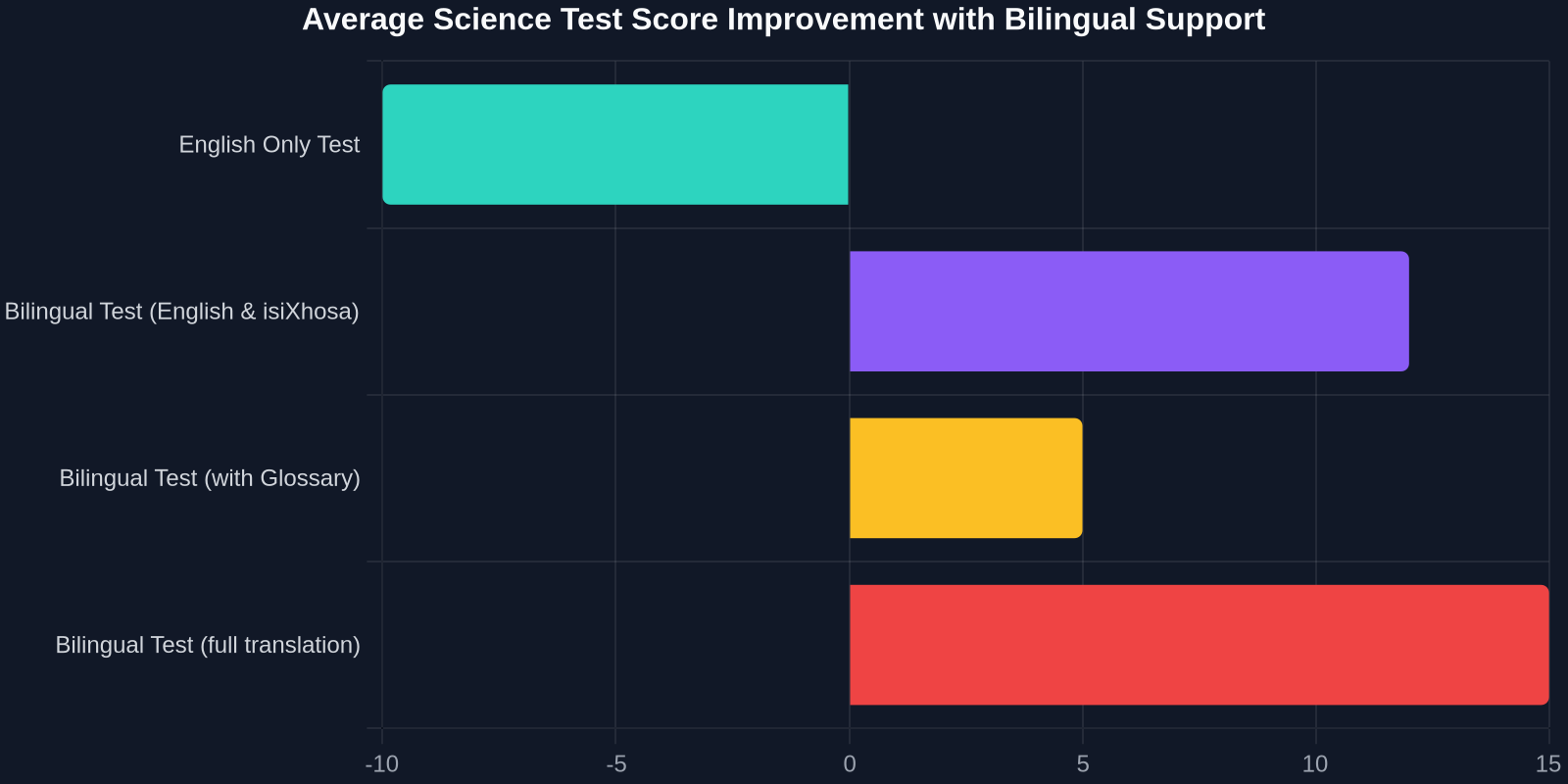
Researchers at a Cape Town primary school noticed a disconnect: learners were expected to master complex science concepts solely through English, a language many of them were still acquiring. The solution was deceptively simple, translate the tests. Not the lessons (at least initially), just the assessments. Pupils could now read questions in both English and isiXhosa, choosing whichever helped them best demonstrate their knowledge.
The results were immediate. Average marks climbed significantly, and the biggest gains appeared among the students who had previously struggled most. Teachers reported that children looked less anxious, finished faster, and even started using science vocabulary in both languages during class discussion.
This mirrors a broader body of research: the brain’s existing neural networks for a first language (L1) don’t shut off when we learn a second (L2). Instead, they scaffold new information. Give a learner permission to lean on L1, and you give them a cognitive foothold.
Why Your First Language Is a Secret Weapon
For decades, language classrooms pushed an “immersion‑only” doctrine, no translation, no reference to the mother tongue. While total immersion works wonders for some, research increasingly shows that strategic use of L1 accelerates comprehension, reduces anxiety, and actually strengthens long‑term recall.
Consider a learner encountering the French word foudre (lightning) for the first time. If they only ever hear a French definition, the concept remains fuzzy until multiple contexts cement it. But a brief mental link to an English equivalent creates an instant, durable tag. The same learner, later listening to a Stromae song and seeing “la foudre” in the subtitles, is not just decoding, they are reinforcing a connection already built.
| Approach | Immediate Comprehension | Long‑Term Retention | Learner Confidence |
|---|---|---|---|
| English‑Only Immersion (no L1) | Low‑Medium | Medium (delayed) | Often shaky at start |
| Bilingual Support (L1 + L2) | High | High (scaffolded) | More secure, less anxiety |
| Music + Dual Subtitles | Very High | High (emotional & rhythmic) | Deeply engaging |
Music: The Brain’s Bilingual Bridge
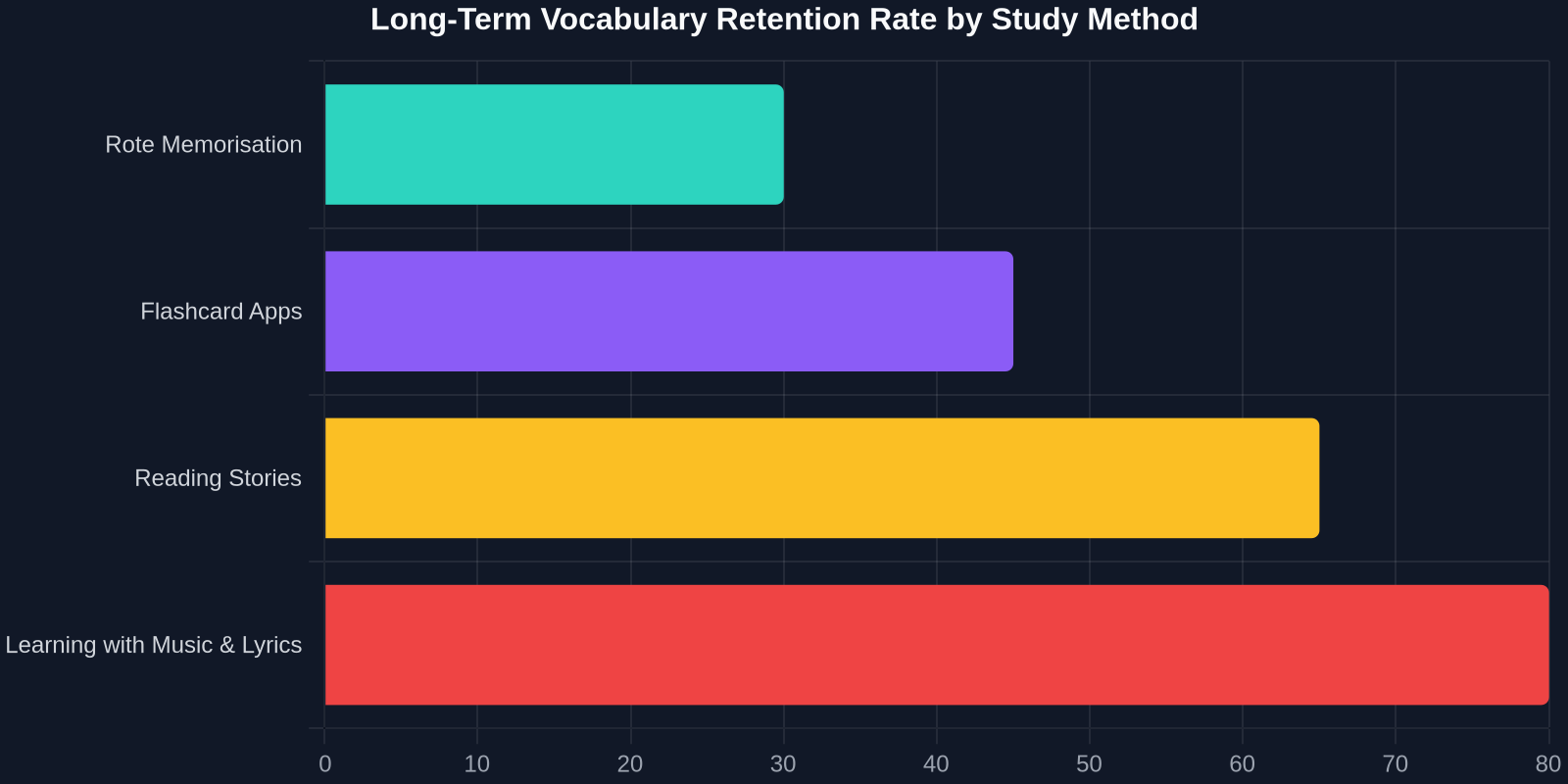
Songs are sticky. Melody, rhythm, and emotion fuse to create what neuroscientists call a “rich encoding”, a multi‑sensory memory trace that resists forgetting. Couple a catchy tune with lyrics in two languages, and you’re not just listening; you’re building a personal bilingual glossary in your head.
Take the chorus of “La Bicicleta” by Carlos Vives and Shakira. A learner sees “Que te sueño y te quiero tanto” while a second line shows “I dream of you and I love you so much”. The rhyme, the beat, the visual pairing, all work together. Later, hearing the Spanish alone triggers the English meaning effortlessly.
“Listening to music in a target language while reading dual subtitles activates the same cross‑linguistic pathways that made bilingual science tests so effective.”
This is not casual browsing; it is deliberate, scaffolded exposure. And it doesn't require expensive textbooks, just the trails you already walk on YouTube, transformed into a structured pathway.
How Lyric Lingo Turns Watching Into Learning
Lyric Lingo sits at the intersection of that South African insight and your Spotify‑and‑YouTube habit. It is an education layer that adds dual subtitles to the music and videos you already watch, so that every play becomes a mini‑lesson.
Imagine a science‑minded pupil from the Cape Town study, now grown, trying to master French through Maitre Gims’ songs. With Lyric Lingo, the lyrics appear simultaneously in French and English. The learner sees “Est‑ce que tu m’aimes?” right above “Do you love me?”. Visual, auditory, and semantic channels converge in a moment that feels like entertainment but works like deep language processing.

Why a Dual‑Subtitle Setup Works
Traditional subtitles keep you in one lane, either you read in the target language (and miss nuance) or you read a translation (and ignore the original). Dual subtitles close that gap. They let your eyes flick between the two, mimicking the bilingual test papers that gave South African learners the power to access meaning in their strongest language while still absorbing target vocabulary.
This “parallel text” effect is backed by applied linguistics. It fosters incidental vocabulary acquisition (picking up words without focused study) and form‑meaning mapping (linking a word’s shape to its sense). Over repeated listens, the scaffolding can be gradually removed, mimicking the very progression from L1‑supported learning to confident L2 independence that the classroom study demonstrated.
From Classroom to Playlist: 4 Practical Techniques
1. Pre‑song Anchor
Before hitting play, glance at the chorus lyrics in both languages. Pick three words you don’t know and write them down with their translations. This primes your brain with a small, achievable goal.
2. Rhythmic Repetition
Music segments naturally repeat. Use the first chorus to read the translation, the second to shadow‑sing in the target language, and the third to test yourself by covering one subtitle line. This mimics the “spaced retrieval” technique verified by memory research.
3. Bilingual Breakdown
Choose one verse and try to translate it back into your own language using only the target‑language subtitles for reference. Then check against the dual view. This is the self‑test that mirrors the South African exam room, letting you confirm understanding on your own terms.
4. Emotion‑Keyword Link
Music carries emotion. Identify the most emotional line (joy, heartbreak, defiance) and write it out in both languages. The emotional charge will glue the vocabulary to your long‑term memory, much like the confidence boost that bilingual test‑takers experienced.
What the South African Study Means for Self‑Taught Polyglots
The Cape Town school didn’t replace English; they complemented it. That philosophy can reshape a polyglot’s journey. When you encounter a tricky French verb in a podcast or a German noun in a news clip, allow yourself a brief mental translation into your strongest language. This is not cheating, it is strategic cognitive anchoring.
Later, when you’re ready, hide the L1 subtitle and challenge yourself. The scaffolding was always meant to be temporary. Over weeks, the brain rewires, and the target language becomes intuitive. The journey mirrors the dual‑subtitle progression: first comprehension, then confidence, then autonomy.
“Bilingualism in education is not about choosing one language over another; it’s about building a bridge between them.”
Bringing the Breakthrough Into Your Daily Routine
You don’t need to be a pupil in Cape Town to replicate the success of that experiment. Your smartphone and a pair of headphones are enough. Here is a simple, research‑backed weekly plan:
- Monday: Listen to a Spanish song you love while reading dual subtitles on YouTube via Lyric Lingo. Highlight five new words.
- Wednesday: Read a short science article (or any topic) in your target language. When stuck, quickly check a native‑language definition, no guilt.
- Friday: Test yourself: play the song without subtitles and jot down what you understand. Compare later.
- Weekend: Try explaining a concept from the song or article to a friend, mixing both languages if needed.
This rhythm honours the bilingual testing principle: use every linguistic resource at your disposal until you don’t need them anymore.
A Future Where Learning Feels Like Living
The South African school’s decision was not a lowering of standards, it was a raising of possibilities. By acknowledging the full linguistic identity of each child, they unlocked academic potential. Language learners of every level can do the same.
With tools like Lyric Lingo, the human tendency to sing, watch, and repeat becomes a powerful curriculum. You don’t need a classroom to switch into bilingual mode. Just hit play on a track you already have spinning in your head, turn on dual subtitles, and let your brain do what it does best, build bridges.