


Multilingualism as an Asset: Distinguishing Language Learning from Learning Disabilities in Schools

Walk into any modern classroom, and you’ll hear a symphony of languages, Spanish, Somali, Vietnamese, Arabic, French, all weaving together as students navigate the complex task of learning academic content in a language that may not be their first. For educators, this linguistic diversity is both a profound opportunity and a persistent challenge. The pressing question that keeps teachers, administrators, and parents up at night: How do we tell the difference between a child who is still learning English and a child who has a genuine learning disability?
It’s a question with enormous stakes. Misidentify a language learner as having a disability, and you risk lowering expectations and stigmatizing a child for a lifetime. Miss a true learning disability because you assumed it was "just a language issue," and you deny a child the intervention they desperately need. The solution lies in understanding multilingualism not as a deficit to be overcome, but as an asset to be developed.
This article explores how schools can distinguish between the natural process of second-language acquisition and the persistent, cross-linguistic patterns that signal a learning disability. We’ll examine the evidence-based practices that work, the linguistic nuances to look for, and the mindset shift required to see every multilingual learner as an asset to their classroom, not a problem to be fixed.
Understanding the Linguistic Landscape: Fewer Misdiagnoses, Better Outcomes
For decades, the educational system has grappled with a dual problem: the over-identification of English learners for special education services, and the under-identification of language learners who do have genuine learning disabilities. Both failures stem from the same root cause, a lack of understanding about how language acquisition actually works.
The Over-Identification Problem: Language Gaps vs. Cognitive Gaps
When a teacher hears a Spanish-speaking student struggle to conjugate irregular English verbs, or notices sentence structures that mirror Spanish syntax, the instinct may be to flag the student for evaluation. But these patterns are often normal developmental stages of acquiring a second language, not evidence of a disability. The student might exhibit:
- Code-switching between languages
- Silent periods where they absorb language without speaking
- Interference from the first language’s grammar rules
- Slower processing speed in English-only contexts
These are not red flags, they’re linguistic assets in motion. A child who transfers knowledge from their first language is demonstrating cognitive flexibility, not deficit. The key distinction lies in whether these patterns persist across both languages.
The Under-Identification Problem: When "It’s Just a Language Thing" Falls Short
The flip side is equally damaging. Teachers and administrators sometimes dismiss genuine learning struggles as "just a language issue," waiting years before referring a child for evaluation. This delay is particularly acute for students who are quiet, well-behaved, and socially bilingual, the very students whose oral conversational fluency masks academic language struggles.
Research on multilingual classroom contexts shows that oral narrative-based interventions support language learning, yet access to these interventions remains limited. The result is that students with dyslexia, dysgraphia, or auditory processing disorders may go unserved for critical years while adults wait for their English to "catch up."
The 6 Key Differences Between Second-Language Acquisition and Learning Disabilities
Schools need a systematic framework for distinguishing between language learning and disability. Here are six evidence-based differentiators that educators, psychologists, and parents can use.
1. The Cross-Linguistic Transfer Test
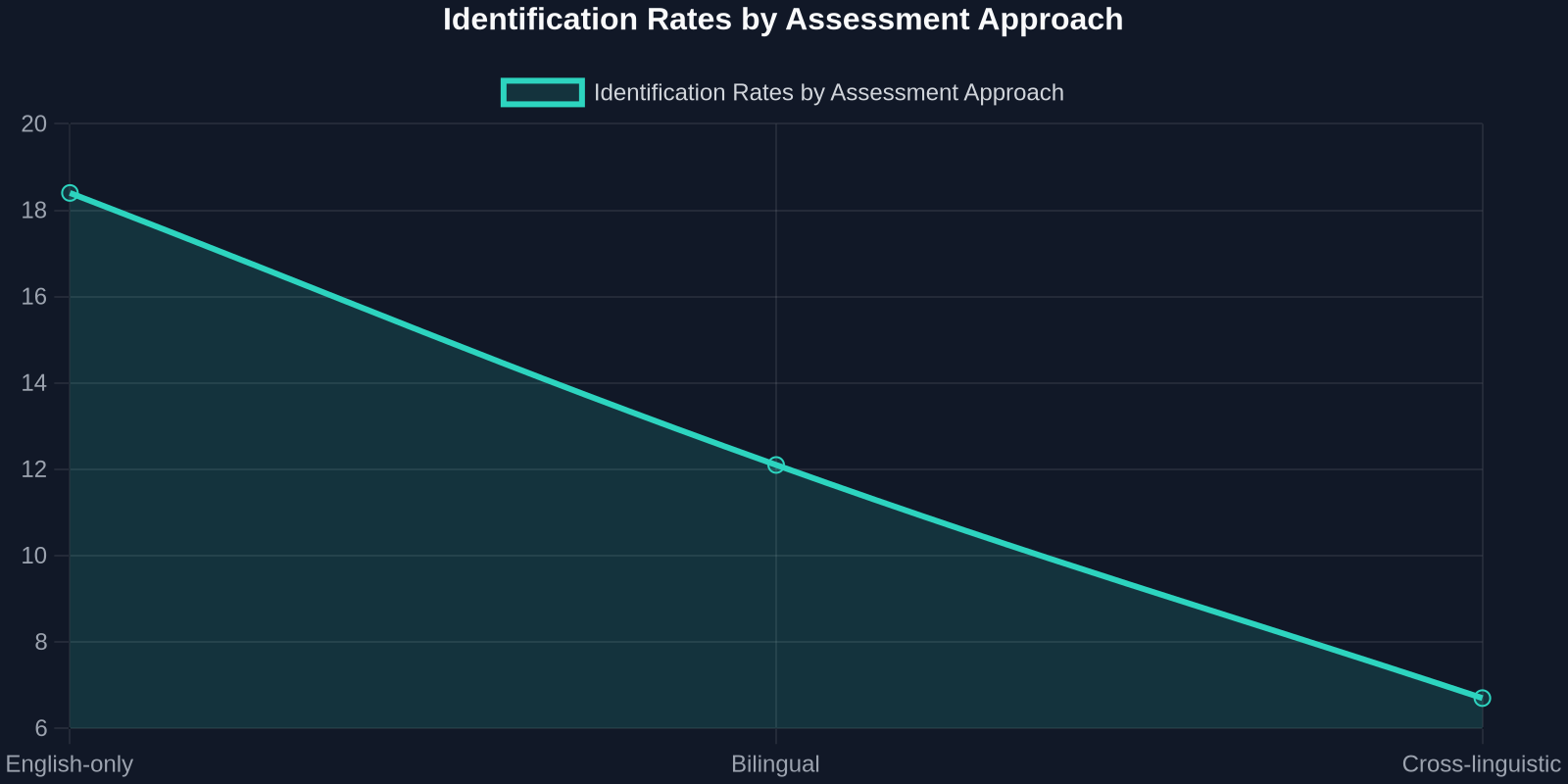
Perhaps the most powerful diagnostic rule: a learning disability does not discriminate by language. If a student struggles with phonological awareness, the ability to hear and manipulate sounds, and this struggle appears in Spanish, French, or Mandarin just as it does in English, that’s a red flag. If the struggle only appears in English, it’s likely a language acquisition issue.
Schools that invest in bilingual assessment resources, or partner with multilingual speech-language pathologists, dramatically improve the accuracy of their evaluations. This is precisely why alternative assessments for English language learners, aligned to standards of learning, are now mandated in many states.
2. Rate of Progress Over Time
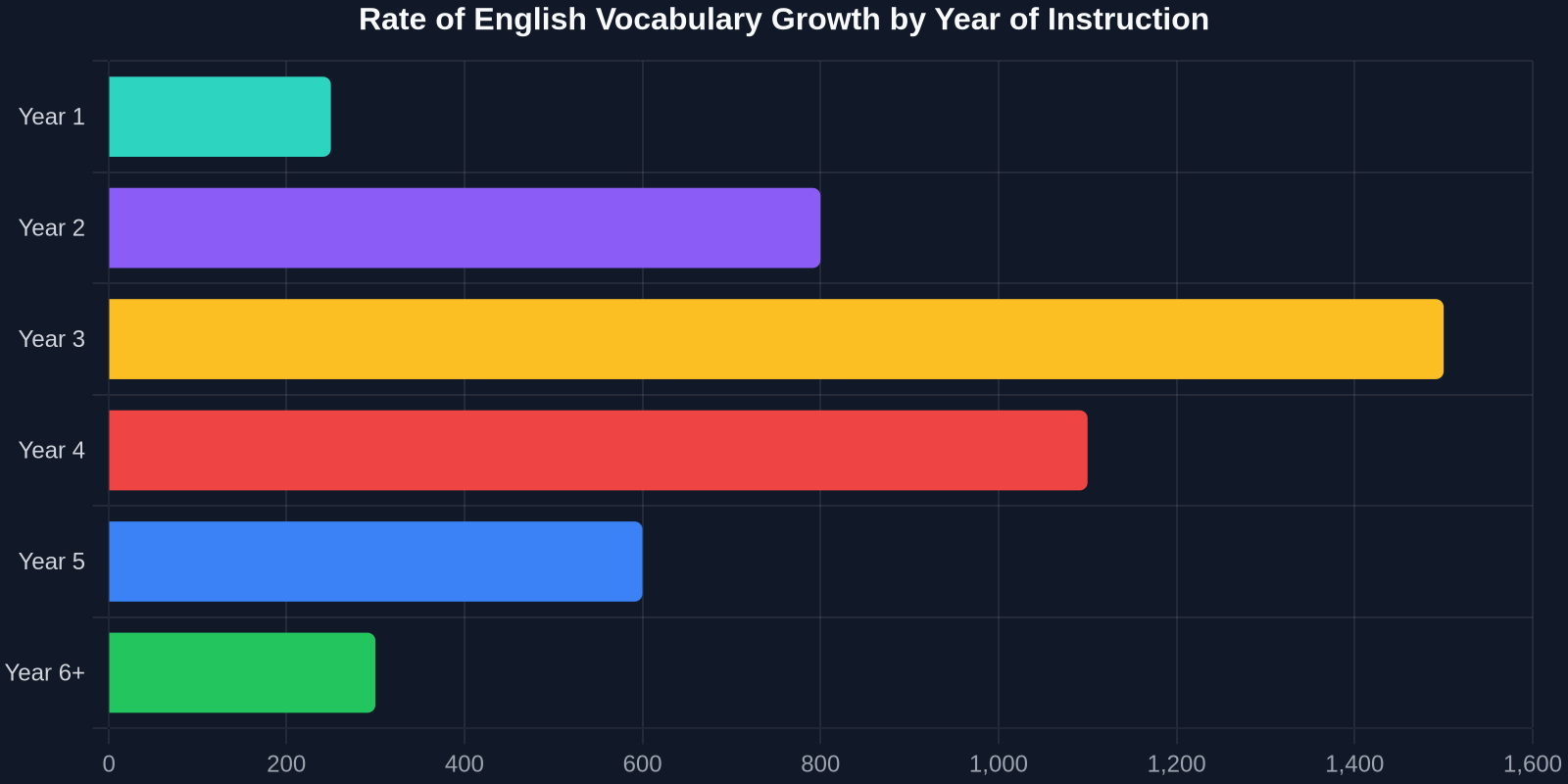
Language acquisition follows a predictable curve, even if the timeline varies by individual. A six-year-old native Spanish speaker in their first year of English exposure might understand simple commands but struggle with phrasal verbs. That’s normal. A student in their third year of consistent English exposure who still cannot produce basic sentences is not simply "learning slowly", they may need intervention.
The critical metric is rate of progress relative to peers with similar language backgrounds, not absolute performance. Schools using dynamic assessment models, where students are pretested, taught a skill, and post-tested, can measure learning capacity in a way that static tests cannot.
3. The Silent Period Isn’t Forever
Many second-language learners pass through a "silent period", a phase of intense listening and internalizing before speaking emerges. This period typically lasts anywhere from a few weeks to several months. When it extends beyond an academic year, however, it may indicate selective mutism, anxiety, or an underlying language processing issue.
Teachers can track receptive language during this period: Can the student follow multi-step directions in English? Do they respond to non-verbal prompts correctly? A student who can’t follow directions in either their home language or English warrants evaluation, regardless of whether they speak.
4. The Home Language Baseline
Every evaluation of a multilingual student must establish what’s happening in the child’s first language. A student who speaks Spanish fluently and age-appropriately at home but struggles in English is experiencing normal language acquisition. A student who struggles in both Spanish and English, or whose parents report delayed language milestones in the home language, needs a closer look.
This is where family engagement becomes non-negotiable. Parent interviews are among the most under-utilized assessment tools in schools. Questions like, "At what age did your child speak their first word?" and "How does your child’s language compare to siblings?" can illuminate patterns that classroom observation alone cannot.
5. Error Patterns vs. Error Frequency
All language learners make errors. The question isn’t whether errors occur, it’s what type of errors they are. Consider two hypothetical students writing in English:
| Error Type | Typical for Language Learner | Red Flag for Disability |
|---|---|---|
| Verb tense errors | Yes, especially irregular verbs | Only if persistent after 2+ years of instruction |
| Word order influenced by first language | Yes, transferring syntax is normal | No, this is a feature of language learning |
| Difficulty rhyming or hearing syllables | Sometimes, if sounds don’t exist in first language | Yes, especially if present in home language too |
| Letter reversals (b/d, p/q) | Common through 1st grade in all children | Persistent reversal after 2nd grade |
| Limited vocabulary | Expected, vocabulary gap narrows with exposure | Concern if vocabulary is limited in home language too |
Language learners show systematic, predictable errors driven by first-language interference. Students with disabilities show inconsistent, scattered errors that don’t follow linguistic patterns. This distinction is one of the most reliable indicators educators can use.
6. Social vs. Academic Language: The BICS/CALP Divide
The distinction between BICS (Basic Interpersonal Communication Skills) and CALP (Cognitive Academic Language Proficiency) is fundamental. BICS, the language of playgrounds and cafeteria tables, develops in 1-3 years. CALP, the language of textbooks, essays, and standardized tests, takes 5-7 years to fully develop.
A student who chats fluently with friends at recess but can’t write a coherent paragraph is not necessarily language-disabled; they may simply be at the expected point on the CALP development curve. Still, schools must track whether academic language is progressing at the expected rate, even if it hasn’t fully developed yet.
"The most damaging phrase in education is ‘they’re still learning English.’ It’s true for many students, but it becomes a shield that hides real disabilities from view when we stop investigating."
Why Multilingualism Itself Is an Asset, Not a Burden
Every conversation about distinguishing language learning from disability must begin with a foundational truth: being multilingual is a cognitive, social, and economic advantage, not a liability. When schools treat non-English speakers as students with "deficits," they miss the profound strengths these children bring to the classroom.
Research consistently shows that bilingual individuals outperform monolinguals on tasks requiring:
- Executive function, the ability to focus, switch attention, and inhibit irrelevant information
- Metalinguistic awareness, the ability to think about language as a system, which correlates with stronger reading skills
- Problem-solving flexibility, the capacity to approach challenges from multiple angles
- Cultural competence, the social-emotional intelligence to navigate diverse environments
These advantages appear even when students are "still learning" English. In fact, the very process of managing two language systems builds the neural pathways that underlie complex thinking. When schools recognize this, multilingualism stops being a barrier to education and becomes a benchmark of exceptional learning.
Practical Tools for Teachers: What to Do in the Classroom Tomorrow
You don’t need a degree in linguistics to start distinguishing language learning from disability more effectively. Here are concrete strategies that any classroom teacher can implement.

1. Use Dynamic Assessment in Every Subject
Instead of only testing what students know, insert mini-teaching sessions into your assessment. Present a new phonics rule in English, teach it for 10 minutes, then test. A student who learns the rule quickly, even if they didn’t know it beforehand, is showing strong learning capacity. A student who struggles to learn the rule despite direct instruction may need additional support.
Dynamic assessment is especially valuable in multilingual classroom contexts where traditional tests penalize students for what they haven’t been exposed to rather than measuring what they can learn.
2. Create a Language Portrait for Every Multilingual Student
For each English learner in your classroom, keep a running language portrait that documents:
- Home language(s) and approximate proficiency in each
- Years of formal English instruction
- Specific error patterns observed (e.g., "transfers Spanish word order")
- Rate of progress on key academic vocabulary
- Performance on tasks that don’t require English (math problems read aloud in home language)
Portraits make it easier to see whether a student’s struggles are language-wide or English-specific, critical information for any referral team.
3. Leverage Music and Rhythm as a Window into Language Processing
One of the most under-used tools in multilingual education is music. Research demonstrates that rhythm, melody, and repetition significantly enhance vocabulary retention for all learners, and they offer a diagnostic window into language processing.
A student who can sing along accurately to songs in English but can’t decode written text may have a reading-specific disability, not a language deficit. Music removes the phonological-processing demands of text while engaging the language system. Tools like dual-subtitle platforms, where learners see both their home language and target language in real time, turn music videos into structured language practice that reveals processing strengths and weaknesses.
For example, a French-speaking student learning English who can follow the lyrics of "Count on Me" by Bruno Mars with French subtitles on screen is demonstrating strong auditory discrimination and vocabulary recognition, even if their written English lags. That’s a different profile than a student who can’t process the sounds at all, even with visual support.
4. Build a Bilingual Referral Team
Schools serious about accurate identification need evaluation processes that don’t rely solely on English-language assessments. This means:
- Access to Bilingual Speech-Language Pathologists (SLPs) for evaluations
- Parent-friendly explanations of the evaluation process in multiple languages
- Use of interpreters for all assessment meetings
- Review of student work samples in the home language whenever possible
Research on African American Vernacular English and other language varieties further complicates identification, but also informs it. Students who speak non-standard dialects often face the same misidentification risks as English learners. Building evaluation teams that understand linguistic variation is essential.
The Role of Policy: How Schools Can Institutionalize Better Identification
Individual teachers can make a difference, but sustainable change requires policy-level action. Schools and districts that have successfully reduced both over-identification and under-identification share common structural features.
Mandatory Cultural-Linguistic History for All Referrals
Before any multilingual student can be referred for special education evaluation, the referring team should complete a cultural-linguistic historycovering:
- Language exposure timeline (Who speaks what language to the child? Since when?)
- Schooling history (Has the student had continuous instruction, or interrupted formal education?)
- Home literacy environment (Books, print exposure, family reading practices)
- First-language milestones (When did the child first speak? Walk? Use sentences?)
This history prevents the most common error in special education referrals: assuming that a language gap reflects a cognitive gap when it actually reflects an opportunity gap.
Progress Monitoring with Multilingual Benchmarks
Schools need progress-monitoring tools that track English learner growth against peers with similar language backgrounds, not against monolingual English speakers. A student who entered the U.S. as a refugee with interrupted formal education will progress differently than a student who immigrated with strong literacy in their first language.
Without these differentiated benchmarks, well-meaning teachers refer students for evaluation prematurely, or wait too long, thinking that slow English growth is "normal" when it actually signals a processing issue.
Case Study in Practice: What a Correct Identification Looks Like
Consider a composite case, drawn from documented examples in multilingual education research. "Luis" is a third-grader whose family speaks Spanish at home and who has been in English-language classrooms for two years.

Initial concern: Luis struggles with reading comprehension in English. His teacher wonders if he has a reading disability.
What the school did right:
- Gathered language history: Luis learned to read in Spanish in first grade in his home country. His parents report he reads Spanish books at home willingly but slowly.
- Assessed in both languages: Spanish-language assessment showed Luis tests at the 35th percentile in Spanish reading, below average but not severely impaired. English-language assessment showed 12th percentile.
- Conducted dynamic assessment: Luis was taught new phonics rules in both languages. In Spanish, he learned quickly. In English, he learned slowly.
- Analyzed error patterns: Luis’s English errors reflected Spanish phonological transfer (e.g., hearing /b/ for /v/). In Spanish, his errors were age-typical.
Conclusion: Luis showed a mild reading delay in his home language and the expected pattern of English acquisition. The team recommended targeted reading intervention in Spanish to build foundational skills, paired with continued English language support, not special education placement. Without this bilingual evaluation, Luis would likely have been misidentified as learning-disabled.
"Accurate identification is not about labeling or not labeling students. It’s about giving every child, monolingual or multilingual, the exact right support they need to become the reader, writer, and thinker they’re capable of becoming."
Turning Multilingualism into a School-Wide Asset
The ultimate goal isn’t just better diagnosis. It’s building classrooms where every student’s linguistic background is treated as an asset that enriches learning for everyone. Schools that adopt this mindset see changes in everything from curriculum design to hallway conversations.
Create Authentic Materials in Multiple Languages
Instead of only providing English-only texts, build classroom libraries with authentic materials in students’ home languages. When students engage with content in their first language, through books, music, podcasts, or videos, they develop the conceptual knowledge that transfers to English.
For language learners specifically, tools that provide dual subtitles create a bridge. A Spanish-speaking student watching a science video with Spanish subtitles overlaying the original English audio sees unfamiliar concepts mapped directly onto familiar vocabulary. The result is deeper understanding and faster academic language growth, and a clearer picture of whether a student’s root challenge is language or cognition.
Celebrate Linguistic Diversity in School Culture
Schools that truly treat multilingualism as an asset make it visible. This means:
- Announcements in multiple languages
- Student work displayed in home languages alongside English
- Parents invited to share stories, songs, and cultural knowledge in classrooms
- Multilingual students celebrated for their ability to navigate multiple worlds
These practices aren’t just feel-good gestures. They create the psychological safety that multilingual learners need to take risks with English, the very risks that accelerate language acquisition and help teachers see what students are truly capable of.
What Parents Can Do: Advocacy from Home
Parents of multilingual learners often feel caught between two worlds, not wanting their child labeled, but also not wanting their child to fall through the cracks. Here are the most important questions parents can ask when they sense their child may need more support, or when the school suggests they might.
Questions Every Parent Should Ask
- "How is my child’s progress being compared to other students with the same home language?"
- "Has my child been assessed in our home language, or only in English?"
- "What does the school know about my child’s language development in our home language?"
- "Who on the evaluation team speaks our home language?"
- "How long has my child had consistent English instruction? Is this struggle typical for that timeline?"
- "What supports will be put in place before a special education evaluation is considered?"
These questions protect against both over-identification and under-identification. They also communicate to the school that the parent is engaged and will hold the system accountable for accurate assessment.
Home Language Maintenance Is Not Optional
One of the most damaging myths in multilingual education is that parents should switch to English at home to "help" their children. In fact, strong home language skills are the foundation for strong English skills. Children who maintain their first language develop the metalinguistic awareness that makes second-language acquisition efficient.
Continue reading in the home language. Sing songs. Tell stories. Invite children to translate for relatives. Every one of these activities builds the cognitive and linguistic infrastructure that supports English development.
A Generational Opportunity
The question of how to distinguish language learning from learning disabilities is not a niche educational problem. It is a generational opportunity to remake our schools into institutions that recognize the full humanity and capability of every learner who walks through their doors.
The research is clear: multilingualism is an asset. Oral narrative-based interventions support language learning. Cross-linguistic assessment improves identification accuracy. Family engagement in the home language strengthens outcomes. And music, rhythm, and dual-language learning tools, from subtitled videos to culturally responsive songs, create the repeated, emotionally rich exposure that accelerates acquisition.
For the teacher wondering about that quiet third-grader, for the parent defending a child’s right to fair assessment, for the administrator designing better systems, the path forward starts with one conviction: Language is never a disability. Multilingualism is always an asset. The systems we build and the questions we ask will either honor that truth or undermine it, in every classroom, every year.