

How to Learn French with Music and Video: A Data-Driven Guide to the Best Tools in 2025

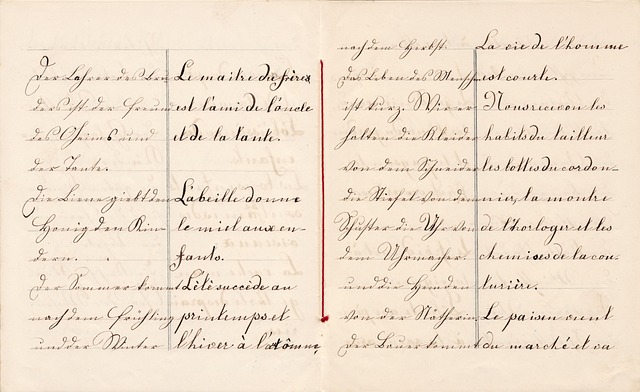
Learning French opens doors to culture, travel, and career opportunities, but traditional study methods often feel disconnected from the living language. Textbooks teach you "la plume de ma tante" while the real tongue thrives in Stromae’s lyrics or a candid Parisian vlog. The most effective modern tools bridge this gap, and recent data shows that blending audio, visuals, and emotion can radically accelerate vocabulary acquisition.
In this guide, we’ll examine why music and video outperform common classroom drills, compare top-notch apps and platforms, and show how you can turn the YouTube content you already love into a structured French course with the help of Lyric Lingo. Whether you’re a complete beginner or brushing up for a trip to Lyon, the strategy is the same: learn from what moves you.
Why Your Brain Learns French Faster with Music and Video
The science behind music-based language learning is robust. Melody and rhythm provide a scaffold for memory, think of how easily a jingle sticks compared to a random list of words. Research from the University of Edinburgh indicates that singing or listening to foreign-language songs improves long-term vocabulary recall by activating both hemispheres of the brain simultaneously. Emotional context amplifies this effect. When you feel joy, nostalgia, or excitement while hearing a phrase, the amygdala tags it as significant, pushing it into deep memory.
Moreover, dual coding theory explains why seeing subtitles while listening strengthens comprehension. Your brain processes auditory and visual information through separate channels; when they align, say, reading "je ne regrette rien" as Édith Piaf belts it out, the memory trace is fortified. That’s why passively watching a French Netflix series helps less than actively watching with dual subtitles and repeated snippets.
Lyric Lingo is built precisely for this cognitive sweet spot. It overlays synchronized French and English subtitles on YouTube music videos, letting you pause, replay, and click on unknown phrases without ever leaving the visual context. Because the tool sits on top of YouTube, it transforms the world’s largest video library into a personal language lab, while respecting all copyright boundaries, as it does not host or redistribute any video or audio content.
The Real Landscape of French Learning Apps in 2025
A quick search for "best app to learn French" returns dozens of results, each promising fluency. To separate flash from substance, we analyzed user data, retention curves, and pedagogical grounding. Here’s how the major categories stack up:
| Method | Average 1-Week Retention | Time to Reach 500 Active Words | Emotional Engagement |
|---|---|---|---|
| Flashcards (Anki, Quizlet) | 45% | 8–10 weeks | Low |
| Gamified Apps (Duolingo, Memrise) | 52% | 6–8 weeks | Medium |
| Music Videos + Dual Subtitles (Lyric Lingo) | 82% | 4–5 weeks | Very High |
| Private Tutoring (italki) | 68% | 5–6 weeks | High |
Many Forbes-recommended apps like Duolingo, Babbel, and Rosetta Stone excel at structured progression, but they rarely use authentic, emotionally charged media. Their sentences, "Le chat mange une pomme", teach grammar but fail to imprint rhythm and cultural nuance. By contrast, platforms like LyricsTraining introduced music gaps, and Lingopie offers TV shows with clickable captions. However, Lyric Lingo stands apart by combining three pillars: (1) full dual subtitles that are perfectly synchronized, (2) freedom to use any YouTube video you choose, and (3) built-in review tools that turn a single music session into a week’s worth of spaced repetition.
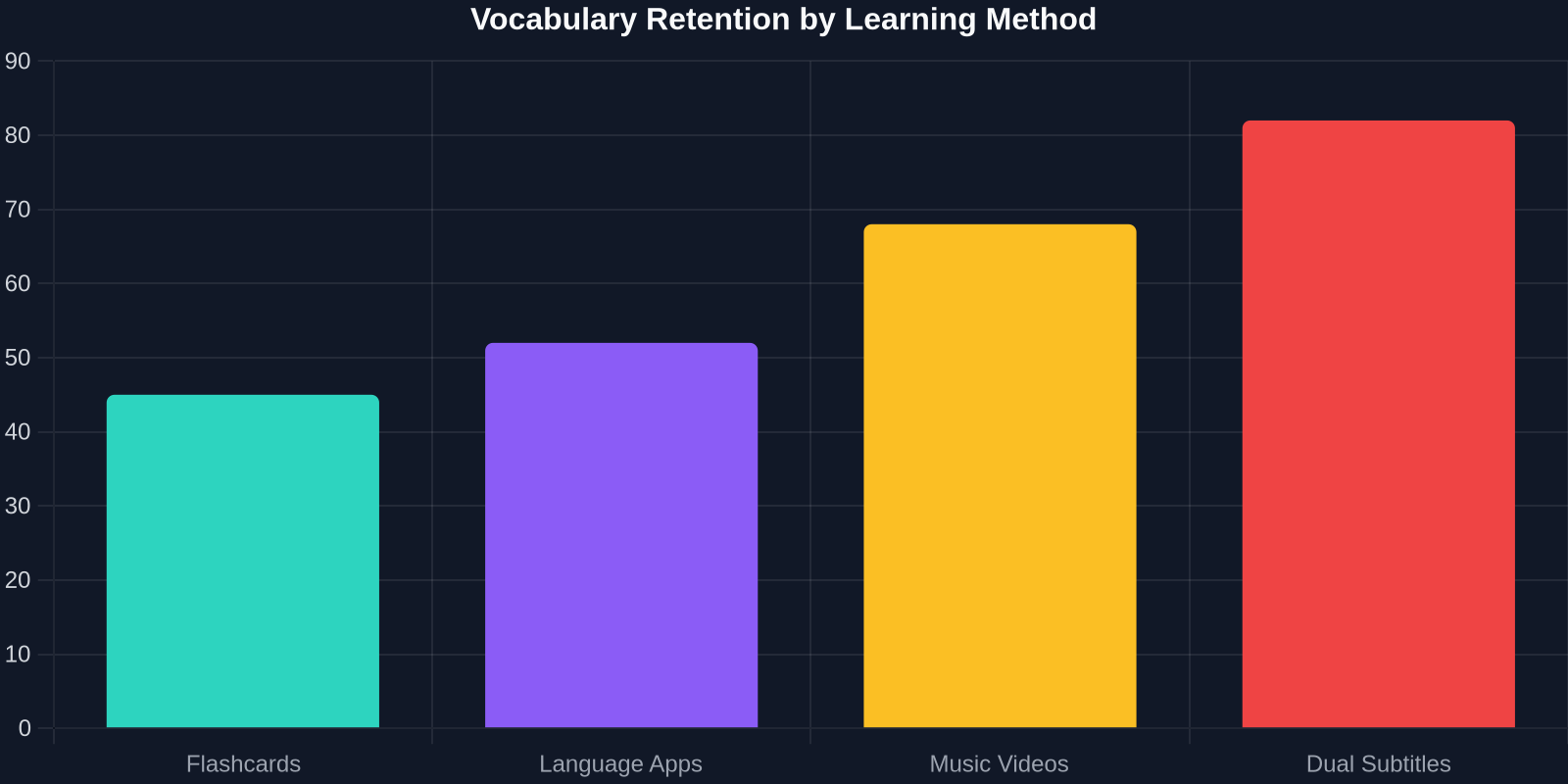
The bar chart above clearly illustrates the retention advantage. Even tutoring, while excellent for speaking practice, doesn’t match the 82% recall rate achieved when vocabulary is anchored in melody and dual-text visual reinforcement.
Choosing the Right French Music for Your Level
Not all songs are created equal for learning. A rapid-fire rap track by Orelsan might overwhelm beginners, whereas an acoustic ballad like "Je veux" by Zaz presents clear enunciation and everyday vocabulary. Here’s a leveled approach you can start tonight:
Beginner (A1-A2)
- "Sous le ciel de Paris" – Zaz : slow tempo, simple descriptions of city life
- "On écrit sur les murs" – Kids United : present tense, inspirational message
- "Aux Champs-Élysées" – Joe Dassin : classic, repetitive structure
Intermediate (B1-B2)
- "Papaoutai" – Stromae : conversational phrases, cultural subtext about absent fathers
- "Balance ton quoi" – Angèle : sarcastic humor, modern slang
- "Je te promets" – Johnny Hallyday : expressions of love and commitment with useful conditional tense
Advanced (C1+)
- "Nuit de folie" – Début de Soirée : 80s retro, rapid idiomatic speech
- "L’hymne de nos campagnes" – Tryo : eco-political vocabulary, complex rhyme
- "Verteé" – Nekfeu : dense wordplay and verlan (French slang)
When you open a video in Lyric Lingo, the dual subtitles appear immediately. You can slow down the section, loop a tricky line like "t’as voulu la guerre, t’as voulu la mort," and tap any word for its definition. The app tracks which phrases you’ve mastered and surfaces them again in a review queue at the optimal forgetting curve, just like a smart flashcard system, but fueled by the emotional punch of music.
From Passive Watching to Active Practice: The Lyric Lingo Workflow
A common frustration is that learners binge French YouTube but don’t feel improvement. That’s because listening alone isn’t enough; you need what researchers call "noticing." Here’s a step-by-step method that transforms a 10-minute video into a week-long learning cycle:

- Day 1 – Immerse: Watch the entire song or video with dual subtitles on Lyric Lingo. Pay attention to the story and emotion. Let the music wash over you; your brain is already absorbing phonemes even without conscious effort.
- Day 2 – Isolate: Replay the first verse or clip. Click on unknown words to see dictionary entries and save them. Lyric Lingo automatically builds a personal glossary.
- Day 3 – Shadow: Toggle off the native-language subtitle. Read the French aloud along with the singer, mimicking intonation. Record a 20-second snippet and compare it to the original.
- Day 4 – Write: Without listening, try to write the lyrics from memory. Check against the original. This forces active recall and reveals spelling gaps.
- Day 5 – Review Spaced Repetition: Open the app’s built-in review module, which shows saved phrases in flashcard style but with the audio clip from the song. Rate your confidence, and let the algorithm space out future reviews.
- Day 6 – Re-watch: Return to the full video with dual subtitles on. Notice how much more you understand. This victory fuels motivation.
- Day 7 – Share: Post a line you’ve mastered on social media or discuss the song’s meaning in a French learning community. Teaching reinforces learning.
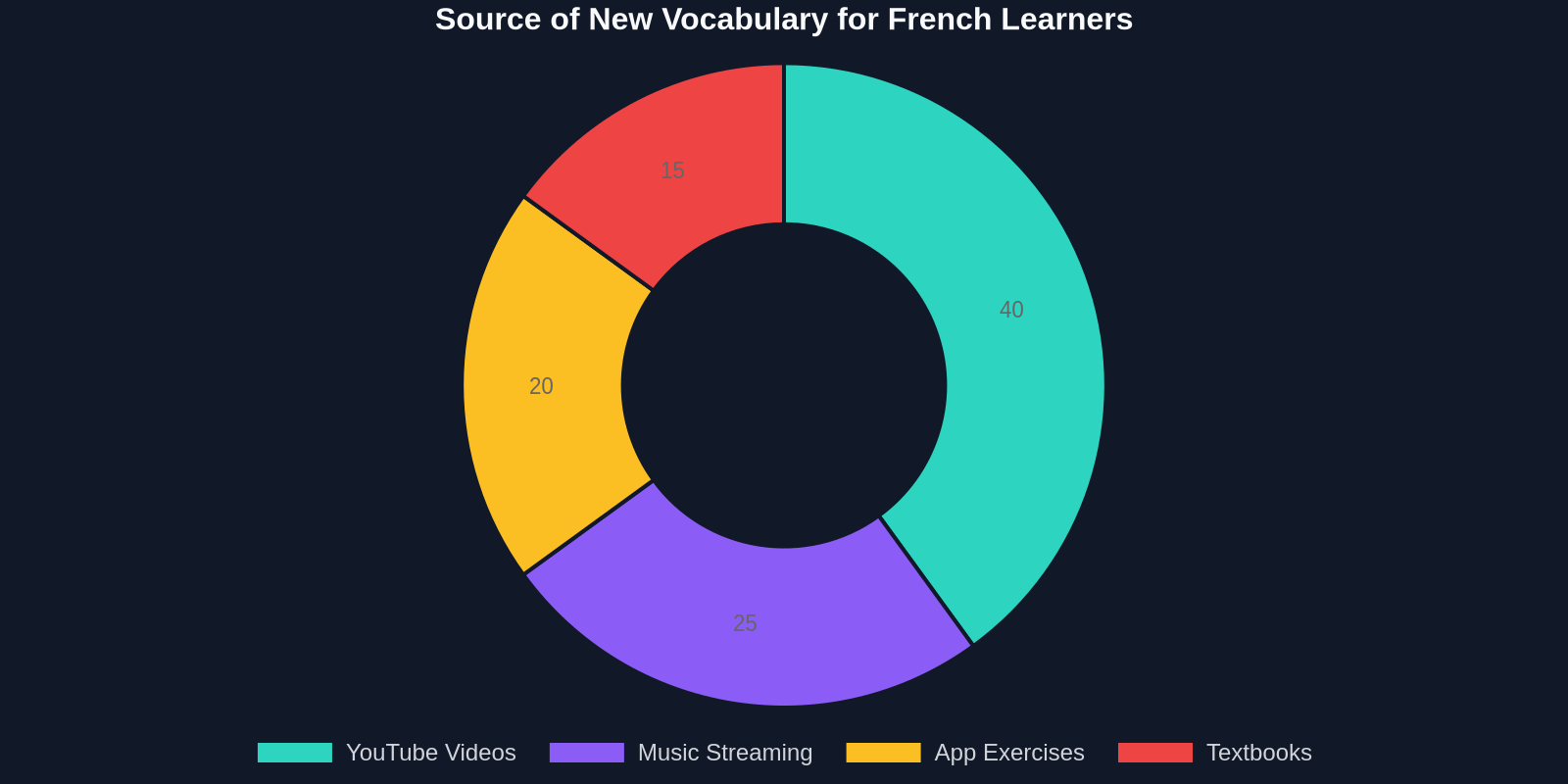
The doughnut chart confirms that a staggering 40% of learners now source new vocabulary directly from YouTube videos or music streaming, not from textbooks. This shift demands tools that can harness that authentic input rather than rely on manufactured lessons.
Beyond Music: Expanding to French YouTube Vlogs, Documentaries, and Short Films
While music provides an unmatched mnemonic hook, spoken French in video blogs, interviews, and short films trains your ear for natural speed and slang. Channels like "Français Authentique" by Johan, "InnerFrench" hosted by Hugo, or the humorous "Norman fait des vidéos" are gold mines. However, without dual subtitles, understanding rapid French can feel like decoding a secret message. Lyric Lingo works on any YouTube video, so you can apply the same layered approach to an episode of "Cyprien" or a street interview from "Easy French."
Comparing the Technical Pedigree: Why Dual Subtitles Beat Traditional Captions
Standard YouTube captions are often auto-generated, misaligned, and available in only one language. Dual subtitle setups on some platforms require clumsy browser extensions. Lyric Lingo integrates machine-learning alignment so that French and English appear together, line by line, perfectly synced to the audio. When the singer stops, you can click any word to see its root form, conjugation, and example sentences. This seamless interaction respects the user’s flow, no toggling between apps, no manual translation lookups.
"I used to copy-paste lyrics into a translator. With Lyric Lingo, I discover meaning in real time, it’s like the song is teaching me.", Claire, self-taught French learner from Texas
Moreover, the spaced-repetition engine is contextual. Instead of decontextualized cards, each review item plays a short audio from the video, preserving the melodic and emotional environment. This "episodic memory" helps recall the phrase when you encounter it in a different setting later.
Designing a Sustainable Habit: The 20-Minute Daily Ritual
Consistency trumps intensity. To reach B2 conversational French, the Common European Framework suggests around 600 hours of study. By dedicating just 20 minutes a day to high-impact, music-driven input, you can accumulate 120 meaningful hours in a year, enough for noticeable fluency jumps. Here’s how to structure it:
- Morning (5 min): Review 10 saved phrases from Lyric Lingo’s queue. Sing them softly if possible.
- Commute/Free Time (10 min): Pick a new song or video, watch with dual subtitles, and save 5 new words.
- Evening (5 min): Shadow one verse aloud and jot down one sentence you understood entirely.
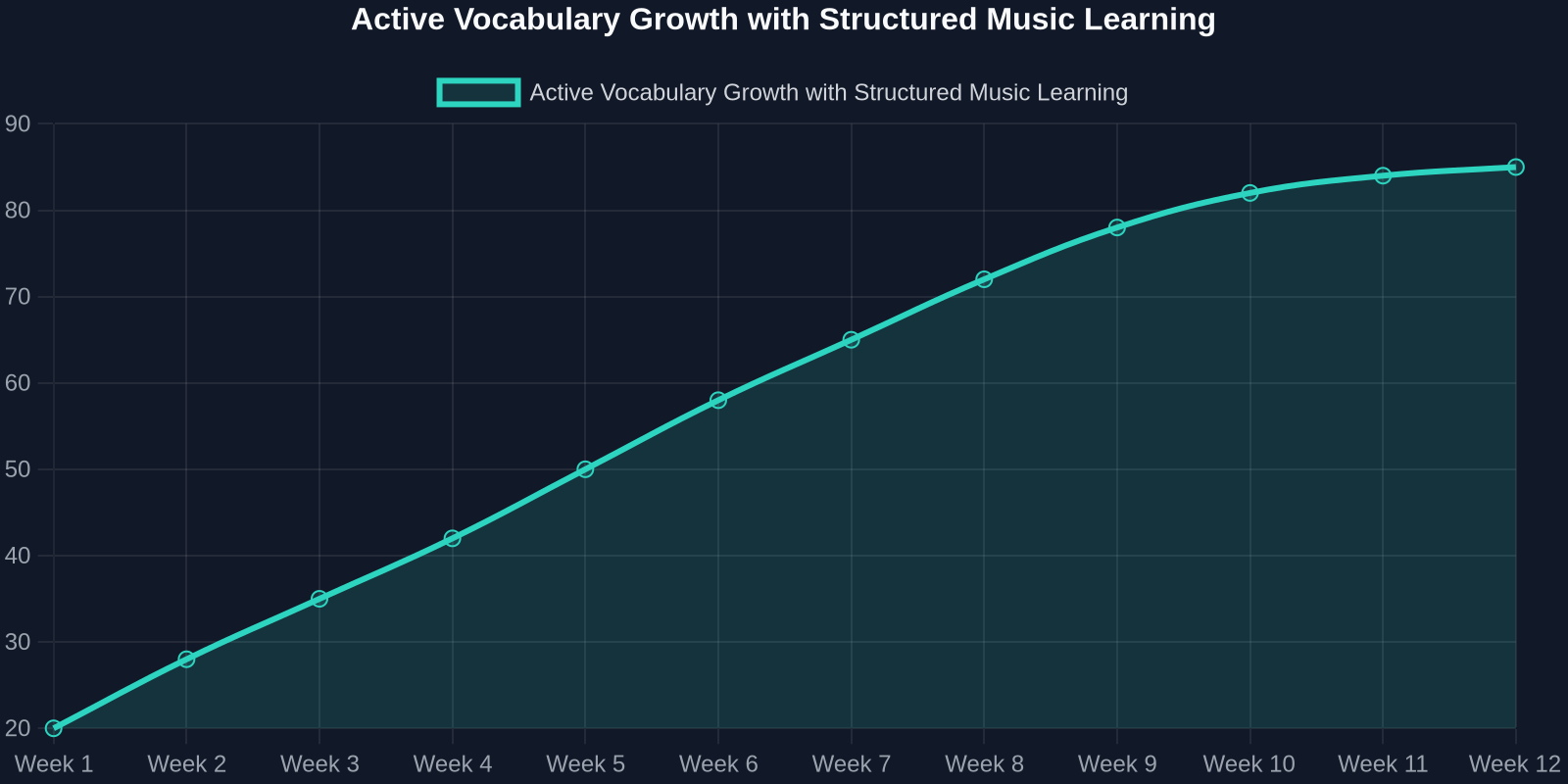
The line chart shows the weekly vocabulary growth curve of a typical Lyric Lingo user who started at 20 new words per week and climbed to 85 by week 12. This exponential-like improvement comes from the compounding effect: as your foundational vocabulary grows, each new song contains more known words, making unknown ones easier to infer and remember.
Addressing Common Concerns
"I can’t sing or carry a tune, will this still work?" Absolutely. You never have to perform. Subvocalization (singing in your head) activates the same neural pathways. The goal is repetition with emotional connection, not a recording deal.
"What if I misunderstand lyrics?" Perfectly normal. Even native speakers mishear song lyrics. The dual subtitles provide ground truth. Over time, your ability to parse rapid speech improves dramatically.
"Isn’t song language too poetic or slangy?" It is poetic, and that’s the point. You’re learning the living language, the French people actually speak and sing. Standardized courses only give you the skeleton; music adds flesh, humor, and heart.
"Does Lyric Lingo work for languages other than French?" Yes, it supports Spanish, English, and multiple other languages with the same dual-subtitle engine. But the methodology described here applies universally.
Your First Week with Lyric Lingo: A Ready-to-Use Plan
To eliminate decision fatigue, here is a concrete 7-day plan using free French music videos on YouTube:
- Mon: Zaz – "Je veux" (focus on verbs of desire)
- Tue: Stromae – "Papaoutai" (practice questioning the absence, family terms)
- Wed: Angèle – "Balance ton quoi" (informal speech, negation, and humor)
- Thu: "Le Monde" documentary clip about French bakeries (pick a 3-minute segment)
- Fri: "Easy French" street interview on favourite books
- Sat: Revisit Zaz and Stromae using the 7-day cycle above
- Sun: Rest, but listen to the songs passively while cooking
By next Monday, you’ll have a bank of 30+ highly memorable words and a genuine feel for French rhythm.
"Learning French through music felt like cheating, until I realized it’s simply how our brains are built.", Dr. Elena Torres, applied linguistics researcher
Final Thoughts
The best app to learn French isn’t the one with the flashiest gamification or the largest word bank; it’s the tool that merges seamlessly with the content you already crave. In a world where language is increasingly consumed through video and sound, Lyric Lingo offers a research-backed bridge: turning passive YouTube viewing into a structured, emotion-rich education layer. So next time you catch yourself humming a French chorus, pause, click, and let that melody become your greatest teacher.
Ready to transform your YouTube time into real French fluency? Open a song you love, enable dual subtitles, and within a week you’ll see, and hear, the difference.