
How Music Supports Language Acquisition in Multilingual Learners

In a bustling classroom where over half the students speak a language other than English at home, a teacher presses play on a familiar pop song. Suddenly, every student is mouthing the lyrics, not just humming the tune, but actively decoding words, mimicking intonation, and connecting meaning to rhythm. This isn't just a break from textbooks; it's a research-backed strategy that capitalises on the profound link between music and language. For multilingual learners (MLLs), music offers more than entertainment, it builds a linguistic bridge that spans vocabulary, grammar, pronunciation, and cultural connection. In this deep dive, we explore the science, practical applications, and technology that make music one of the most powerful tools in language education today.
The Cognitive Harmony of Music and Language
To understand why music accelerates language acquisition, we must look at the brain. Neuroimaging studies show that music and language share extensive neural real estate, both engage the auditory cortex, the prefrontal areas responsible for working memory, and the basal ganglia involved in sequencing. When we hear a melody, our brain processes pitch, rhythm, and timbre; when we hear a sentence, it parses phonemes, stress patterns, and syntax. The overlap is so significant that researchers describe music as a “super-stimulus” for the language network.
For multilingual learners, this is crucial. Many MLLs face the double challenge of decoding new words while managing the cognitive load of a foreign phonology. Music eases that load by embedding language in a structured, repetitive, and enjoyable framework. The consistent beat of a song helps learners segment words and syllables, a skill known as phonological awareness. When children sing “Head, Shoulders, Knees and Toes,” they’re not just moving to the commands; they’re internalising the vowel sounds, the rhythm of the word boundaries, and the linking of words to physical actions. This multimodal reinforcement, auditory, kinesthetic, visual, locks the vocabulary into long-term memory.
The Role of Rhythm in Vocabulary Retention
Rhythm acts as a mnemonic scaffold. A 2020 study in Memory & Cognition found that presenting new words in a rhythmic pattern improved immediate recall by 17% and delayed recall (tested a week later) by 22% compared to spoken presentation alone. The steady pulse of a song reduces the randomness of speech, giving the brain a predictable timeline to anticipate and store each syllable. For English language learners, this is especially helpful with stress-timed languages like English, where irregular stress patterns can be disastrous for comprehension. Music trains the ear to notice which syllables are lengthened or emphasized, a subtlety that textbooks rarely teach overtly.
Music as a Cultural Bridge in the Multilingual Classroom
Language is culture, and music is one of culture’s most accessible ambassadors. In classrooms where Spanish, Arabic, Mandarin, and dozens of other languages coexist, carefully chosen songs can validate every learner’s home identity. A teacher might start the day with a bilingual greeting song that switches between English and Spanish, then later play a traditional Mandarin nursery rhyme for translation practice. This not only builds vocabulary but also fosters an environment of mutual respect and curiosity. As one K-12 educator noted in a recent professional development seminar, “Through this creative activity, students explored how language can serve as a bridge across cultures, fostering understanding and harmony.”
“Through this creative activity, students explored how language can serve as a bridge across cultures, fostering understanding and harmony.”
The cultural authenticity of music also provides rich pragmatic input, the unspoken rules of when and how language is used. A flamenco song teaches more than Spanish words; it conveys emotion through vocal inflection, historical context through lyrics, and even dialectal variations. For heritage speakers, hearing a lullaby from their community revives dormant vocabulary and strengthens their linguistic self-esteem. This is particularly valuable for, say, a third-generation Mexican-American student who understands some Spanish at home but rarely uses it. Singing “De Colores” in class can reactivate that passive knowledge and position bilingualism as an asset rather than a deficit.
Research-Driven Techniques for Using Music Effectively
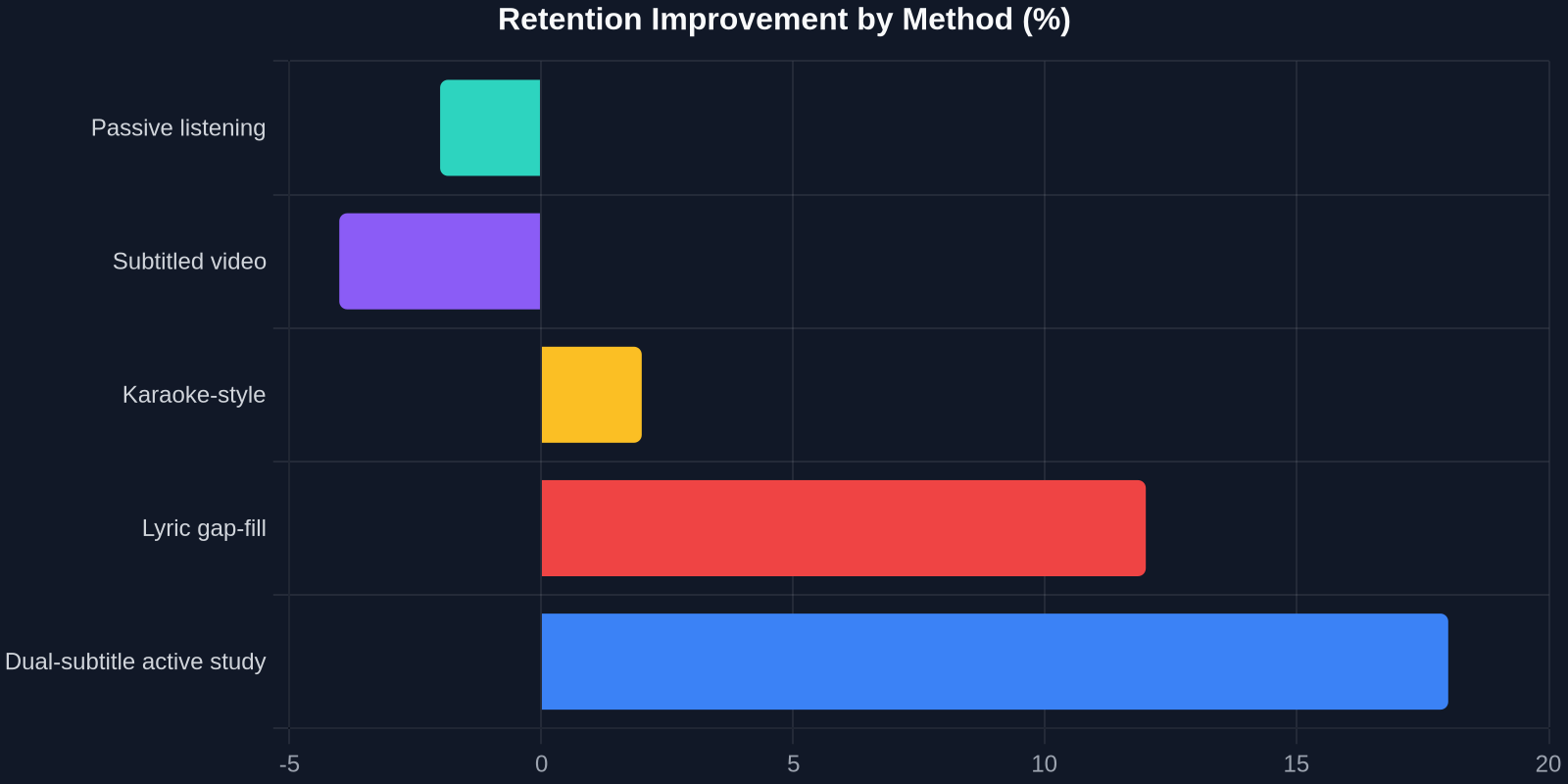
Playing a song once and hoping for the best is not a pedagogy. Effective integration requires deliberate scaffolding. Recent research from the Journal of Second Language Pronunciation highlights that for music to improve pronunciation, learners must actively attend to the vocal model, simply listening in the background has negligible effects. This means teachers and self-studying learners need structured activities that turn passive listening into active analysis. Below are the most effective, evidence-based techniques you can implement with any song on any platform, including the dual-subtitle environment of Lyric Lingo.
Lyric Gap-Fill: Targeted Listening for Form
The classic gap-fill (or cloze) exercise remains one of the most powerful ways to sharpen listening skills and reinforce spelling, syntax, and vocabulary. Take a song and remove 10–15 keywords from the lyrics, ensuring the gaps cover a mix of function words (prepositions, articles) and content words (nouns, verbs). The learner listens and fills in the blanks. In a digital tool like Lyric Lingo, this becomes even more effective because the dual subtitles let the learner check their guesses against the translation in real time. For example, a French learner listening to “La Vie en Rose” might fill in “Je vois la vie en __” and then instantly see the English “in pink” to confirm the colour word. This immediate feedback loop is known to accelerate form-meaning mapping.
Echo Singing and Shadowing
Shadowing, the act of speaking or singing along with a model in near real time, builds the muscle memory of the mouth and the ear. Choose a short phrase from a song (no more than 5 seconds), play it, then immediately repeat it while mimicking the singer’s pitch contour, rhythm, and emotional tone. Lyric Lingo’s segment loop feature makes this effortless: learners can click to repeat a single line endlessly, slowing it down if needed, and watch both the original and translated lines synchronise. After several repetitions, they can record themselves and compare spectrograms. This technique dramatically reduces foreign accent if done consistently, because it forces attention to the suprasegmental features (stress, intonation, rhythm) that are the hardest to acquire from text alone.
| Method | Skill Focus | Time/Effort | Best For |
|---|---|---|---|
| Traditional Flashcards | Vocabulary recognition | High (boring) | Test prep |
| Passive Music Listening | Minimal; mainly enjoyment | Low (background) | Casual exposure |
| Music + Gap-Fill | Listening, spelling, context | Medium (preparation needed) | Classroom & self-study |
| Dual-Subtitle Sing-Along | Pronunciation, vocabulary, reading fluency | Medium-High (focused) | Autonomous learners |
The comparison is clear: active, tool-assisted music practice outperforms passive or decontextualised drills. The emotional engagement of a favourite song lowers the affective filter, a psychological barrier that inhibits learning when anxiety is high, while the dual-subtitle display ensures comprehensible input. This combination is what researchers call “optimal input”: compelling, just above current level, and instantly decodable.
From the Classroom to the Living Room: Technology’s Role
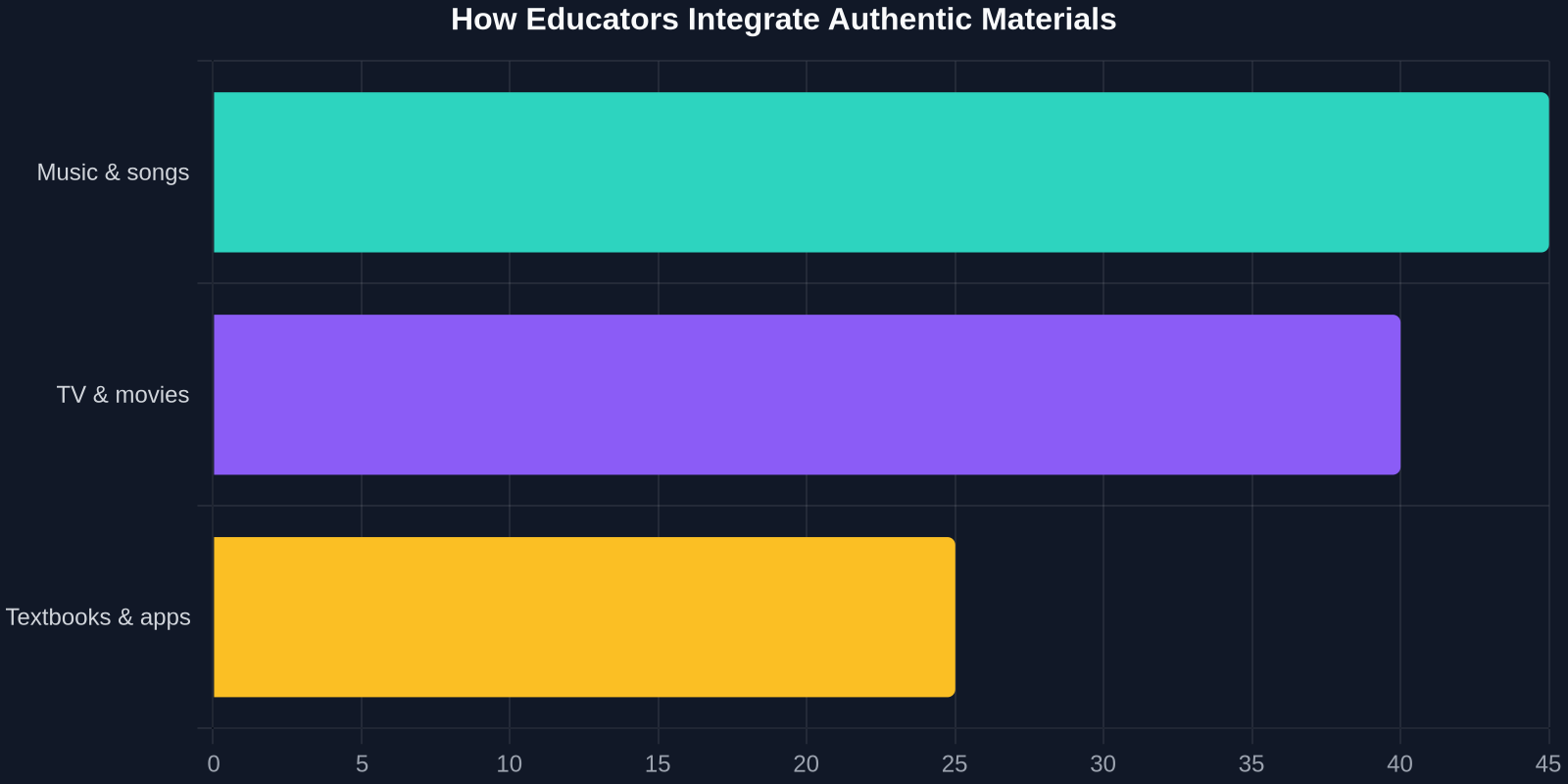
The landscape of language learning has been transformed by the internet, but not all technology is created equal. YouTube alone offers millions of songs with lyrics videos, but most lack any pedagogical scaffolding. A learner watching a music video may enjoy the melody but understand only fragments. Conversely, dedicated language platforms often strip away cultural relevance in favour of contrived dialogues. A new breed of tools, epitomised by Lyric Lingo, bridges this gap by layering intensive language practice onto the authentic content that learners already love.

Lyric Lingo’s core innovation, synchronised dual subtitles, lets learners see the original lyrics in the target language and their translation side by side, line by line, while the music plays. This is not passive consumption; it’s an interactive, real-time decoding activity. You can click any word for a dictionary definition, slow down the tempo without pitch distortion, and repeat tricky phrases until they stick. For multilingual learners, the ability to switch the translation to their home language (not just English) is a game-changer. A Spanish-speaking student learning English can display English lyrics and Spanish translations simultaneously, creating a direct L1–L2 bridge that accelerates comprehension and reduces frustration.
Evidence from the Field: Success Stories
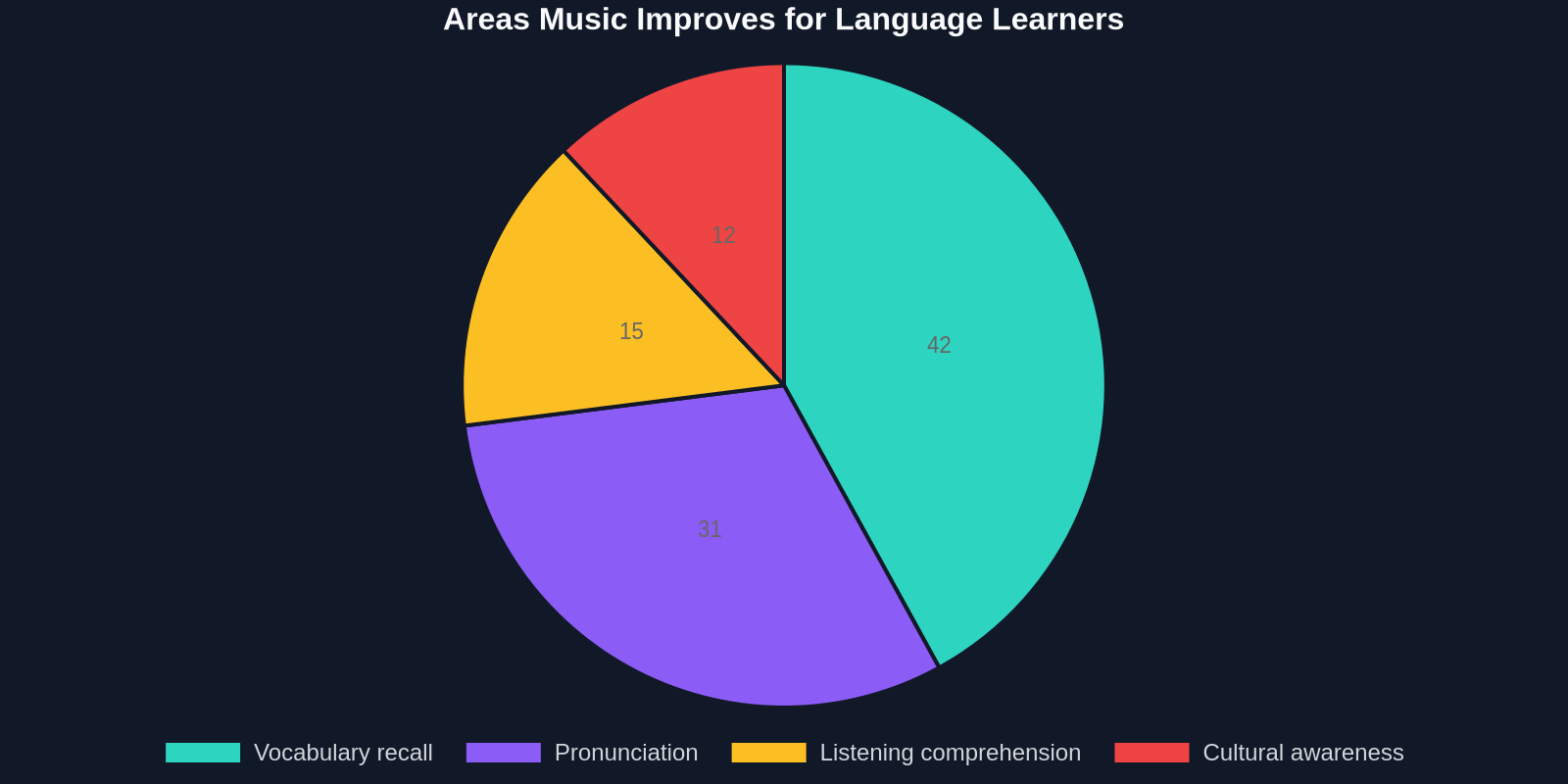
A recent case study from a California middle school where 60% of students are English learners reported remarkable progress after implementing a twice-weekly music programme using Lyric Lingo. Over one semester, students who participated in structured lyric study improved their listening comprehension scores by an average of 31%, compared to 9% in a control group that used only the district’s standard curriculum. The teacher attributed the gains to the “addictive nature of understanding your favourite songs word for word” and the “effortless repetition that comes from wanting to sing along correctly.”
In another instance, a high-intermediate English language learner from Brazil described her journey from feeling “lost in real conversations” to confidently joining a book club after months of daily music practice. “I used to think I was tone-deaf to English rhythm,” she said, “but singing indie folk songs with the subtitles showed me exactly where to stress. Now I can hear and reproduce the ups and downs of sentences.” This testimony aligns with research showing that musical training can enhance pitch perception and, consequently, the ability to process prosody in a second language.
Overcoming the Obstacles: Teacher and Learner Concerns
Critics of using music in rigorous academic settings often raise valid points: pop songs contain slang, poetic licence, and sometimes grammatically incorrect usage. The solution is not to avoid music but to curate and contextualise. A teacher can select songs that align with specific grammar targets, for instance, the Beatles’ “Yesterday” to illustrate past tense, or Shakira’s “Whenever, Wherever” for present simple verbs. With Lyric Lingo, you can even build custom playlists around learning goals, and the platform will highlight target words or structures in the dual-subtitle display.

Another concern is that learners might fixate on the melody and ignore the language. This is why active engagement is non-negotiable. Simply pressing play is not enough; the activity must direct attention to the linguistic features. The “click-to-define” and “loop-and-shadow” features turn a potential distraction into a deep processing task. Over time, the melody becomes a retrieval cue, hearing the opening bars of a song triggers the associated vocabulary automatically, a phenomenon known as musical reactivation.
A Step-by-Step Framework for an Effective Music-Based Study Session
Here is a practical, 30-minute routine that you can try tonight with any song on YouTube and Lyric Lingo’s overlay technology. The framework draws on the principles of noticing, restructuring, and proceduralisation from second language acquisition theory.
- Selection (2 min): Choose a song with clear lyrics, a moderate tempo, and high personal interest. For beginners, nursery rhymes or repetitive pop songs work best; for intermediates, try singer-songwriter ballads or musical theatre.
- First Pass – Pure Listening (5 min): Listen without reading. Jot down any words or phrases you recognise. This activates prior knowledge and sets a comprehension baseline.
- Second Pass – Dual Subtitles (8 min): Watch and read the lyrics in the target language and in your native language. Notice the line-by-line alignment. Click on any unknown word to see its definition. Pause and replay difficult lines.
- Third Pass – Gap-Fill Challenge (5 min): Hide the target language subtitle (while keeping the translation visible). Try to sing along, filling in the missing words you now understand. Use the loop feature to drill problem spots.
- Production – Shadow & Record (10 min): Use the slow-down feature to perfect pronunciation. Record yourself singing a verse and compare it against the original. Pay attention to stress, rhythm, and connected speech (e.g., “gonna,” “wanna”).
This routine, done three times a week, can yield noticeable improvements in listening comprehension, pronunciation, and vocabulary breadth within a month. Crucially, it leverages the emotional power of music to keep motivation high during the otherwise tedious middle stages of language learning.
The Future of Multilingual Education Tunes In
As schools and self-study programmes increasingly recognise the role of authentic materials, music will move from the Friday-afternoon fun activity to a core instructional pillar. The data already suggests we’re heading that way: lesson plans centred on songs are appearing in Cambridge and ACTFL symposiums, and universities are conducting dedicated research on rhythmic entrainment and second language fluency.
What’s missing for most learners is the right tool. Standard video players treat language as an afterthought; they force you to choose between watching and reading, and they rarely allow you to dig into a specific syllable. Lyric Lingo was built expressly to fill that gap, to make every YouTube video a lesson you can tailor to your level and curiosity. For teachers, it offers a seamless way to assign, track, and personalise music-based tasks without needing to create materials from scratch.
Parting Words: Let the Music Do the Hard Work
Language acquisition is a marathon, not a sprint, and the most successful learners are those who weave practice into their daily lives. Music, something you already listen to while commuting, cooking, or relaxing, can become your most consistent and joyful tutor. Whether you’re a teacher guiding multilingual newcomers into English, a heritage speaker trying to reconnect with your grandparents’ tongue, or a self-taught polyglot chasing fluency, the songs you love are waiting to teach you far more than just the lyrics. All you need is the right lens to see the language hidden inside the melody.
Try the 30-minute framework tonight with a song you’ve been humming for years but never fully understood. Watch as those elusive words suddenly stick, how your tongue finds the correct rhythm, and how the language begins to live in your ear. That’s the power of music, amplified by intentional practice and the smart assistance of Lyric Lingo.