


How Heritage Speakers Build Fluency Using Music and Video: A Linguistic Deep Dive
For millions of Latino adults in the United States, Spanish is not a foreign language they are learning from scratch. It is the language of Sunday dinners, corridos playing from a car radio, and the scolding voice of an abuela demanding they finish their soup. Yet, for these “heritage speakers,” the path to true fluency is often paved with cultural guilt and linguistic frustration. The term “No Sabo Kid,” once a playground taunt leveled at Latinos with imperfect Spanish, has been reclaimed by a generation determined to reconnect with their roots on their own terms.
If you are a heritage speaker, someone who grew up hearing Spanish at home but predominantly speaks English, you possess a hidden linguistic superpower that a textbook learner would envy. You already have a nuanced ear for phonetics, a vast passive vocabulary bank, and an intuitive grasp of informal syntax. The challenge lies not in learning the language from the ground up, but in activating what is dormant. To move from passive understanding to confident speaking, you don't need another grammar worksheet; you need emotional context, repetitive rhythm, and authentic input.
Music and video, specifically YouTube, offer the most scientifically robust pathway to achieve this re-activation. By transforming the passive act of consuming media into a structured linguistic exercise, you can bridge the gap between the Spanish in your head and the Spanish on your tongue.
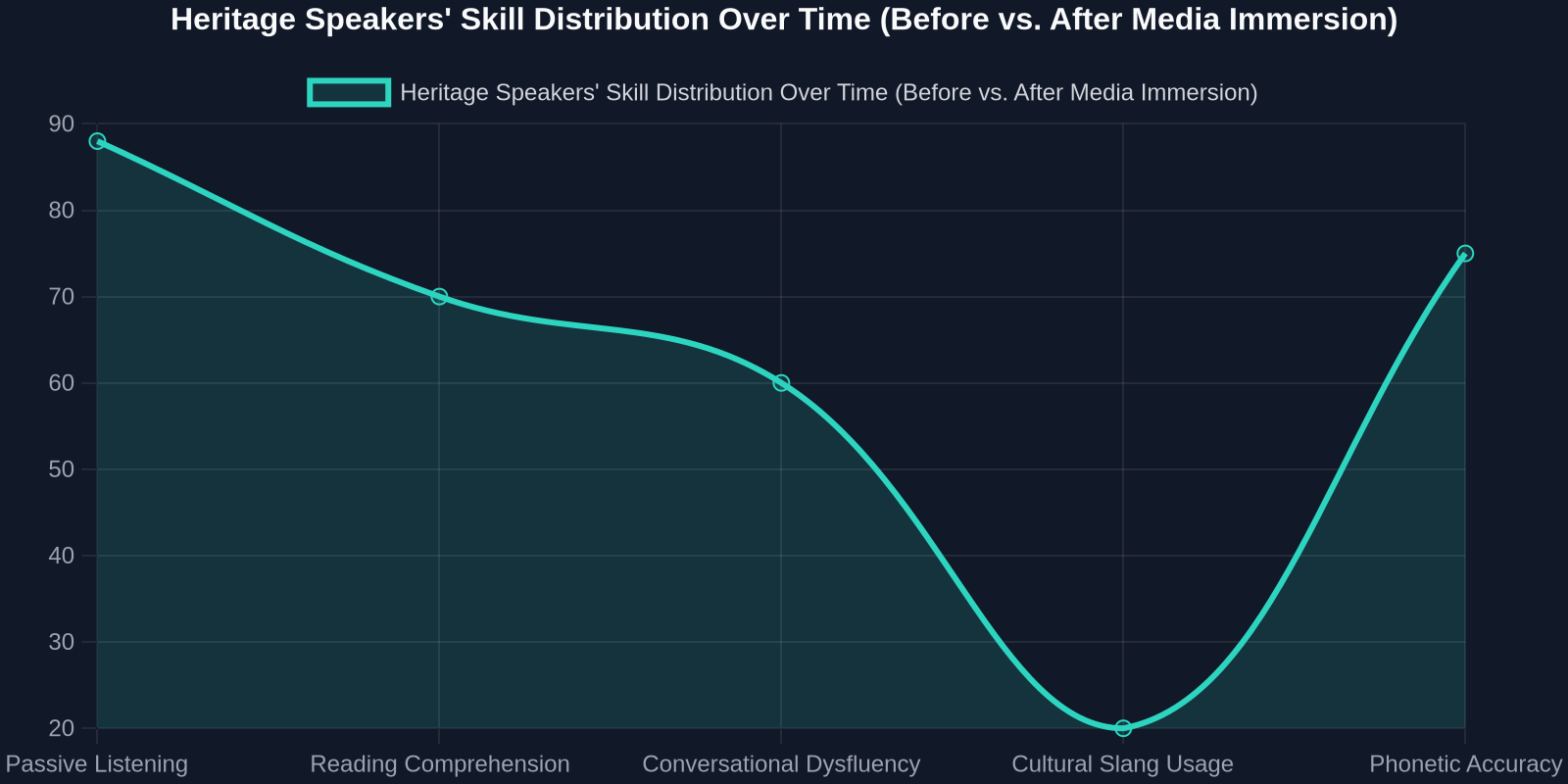
Heritage speakers often have a 'phonological advantage', they can perceive and produce native-like sounds effortlessly. The struggle is usually lexical (vocabulary gaps) and syntactical (mixing English grammar structures), not auditory.
The Neuroscience of Music and Memory Retention
Why does a song lyric from twenty years ago pop into your head unbidden, yet the Spanish conjugation table you tried to memorize last week evaporates? The answer lies in the brain’s architecture. Language learning is not a single monolithic process confined to the Broca’s area. When we memorize a dry list of words, we engage declarative memory, which requires conscious effort and is frustratingly fragile. However, when we pair words with melody, we hijack the brain's procedural memory system, the same system that allows us to ride a bike or type on a keyboard without thinking.
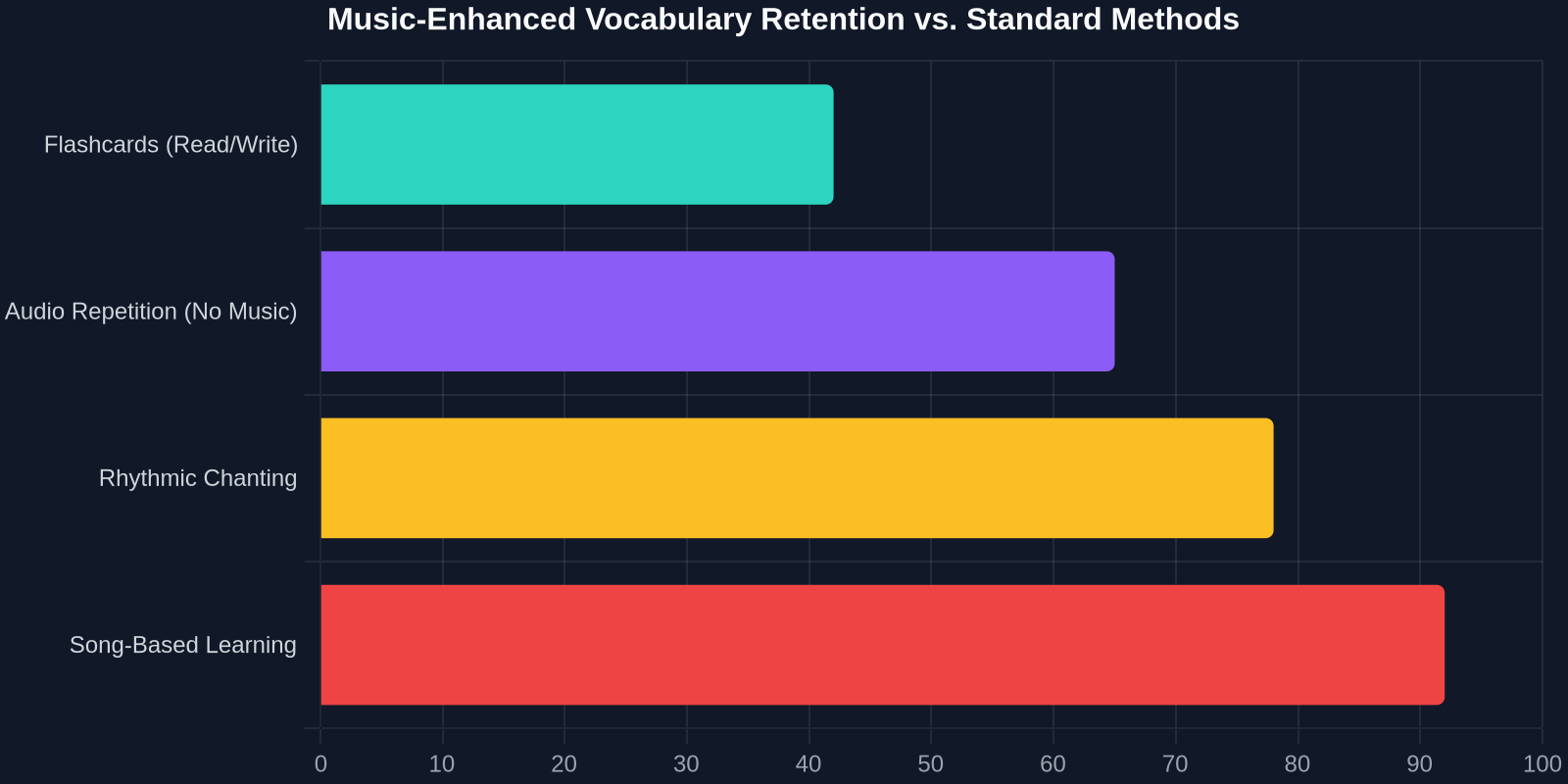
Dr. Karen Ludke, a researcher in applied linguistics, published findings demonstrating that “listen-and-repeat” singing drills significantly outperformed rhythmic poetry or spoken metrics in vocabulary retention among second-language learners. The melody provides a mental scaffold. For heritage speakers, this neural scaffolding is crucial because it lowers the anxiety filter (often a crippling barrier born from fear of judgment) and allows the brain to predict the next word in a sequence. When Bad Bunny laments heartbreak in a slowed-down reggaeton beat, the emotional narrative helps your brain prioritize the vocabulary as 'survival-relevant' information, moving it into long-term memory faster than a flashcard ever could.
From Passive Hearing to Active Practice on YouTube
Watching a YouTube video is technically a "passive" activity, but it contains the raw materials for the most intense active recall session you can design. The digital age has transformed video from a lean-back medium into a textual database. Every interview, music video, or vlog becomes a searchable transcript that you can mine for linguistic gold.
Consider the cultural nuance embedded in a conversation between two native speakers. A phrase like “pasando el mal rato” (going through a rough spot) or “échale ganas” (a colloquial encouragement roughly meaning “give it your all”) is a pragmatic chunk that raw textbook translation fails to capture. These are phrases your parents used but you might not know how to deploy correctly. By watching interviews where these phrases occur organically, you attach not just a definition, but a situational usage to the sounds.
However, the magic happens in the layer between the audio and the text. To effectively “study” this content, you need a consistent method:
The Dual-Subtitles Advantage
As noted in the comparison, the highest efficiency comes from structured video practice, particularly when leveraging dual subtitles. The standard advice, "Turn off the English subtitles to force your brain to listen", is scientifically outdated for intermediate heritage speakers. If you do not understand 98% of the words in a text, you stop learning and start guessing. This is known as the optimal input hypothesis.
A strategic approach requires you to see the native Spanish transcription (to map the sound to the word your ear fails to isolate) alongside an English gloss (to confirm meaning instantly). By reading the Spanish, you activate your already existing passive vocabulary. You realize, “Oh, I’ve said that word a thousand times in my head, but I’ve been pronouncing it wrong because I never connected the spelling.” By glancing at the English, you bridge the gap in real-time without pausing the video, thus maintaining the musicality and flow of the speech.
“Music bypasses our psychological defenses; you learn the grammar of emotion before you learn the grammar of the verb.”
Tackling the ‘No Sabo’ Anxiety Through Pattern Recognition
The anxiety heritage speakers feel often stems from an internalized voice of a family member correcting them, or the fear of sounding like a “gringo” despite looking like a native. This emotional barrier activates the amygdala, the brain’s fear center, which literally blocks the prefrontal cortex from retrieving language memory. When you are scared, you can’t speak.
The antidote to this shame is high-volume input that normalizes imperfection. Immersing yourself in contemporary Latino media reveals a brilliant truth: there is no single “correct” Spanish. The Spanish of a Miami Cuban in a Pedro Capó music video is a lyrical, truncated, aspirated universe different from the crisp, zeta-laden chit-chat of a Madrid YouTuber. By analyzing songs and videos, you realize that “code-switching” (mixing English and Spanish) is not a deficit; it’s a dialect in itself, and a legitimate linguistic phenomenon. Reclaiming these patterns is the central ethos of the empowerment movement emerging from conversations around Latinidad.
How to Turn a Music Video into a Fluency Workout
Listening alone won't rewire a heritage speaker’s interlanguage (the unique linguistic system between your first and second language). You need deliberate practice. Here is a blueprint to apply to your favorite Spanish-language content, whether it’s an acoustic cover or a fiery interview.
1. The Gist Scan (First Listen)
Watch the video without text first. You will likely catch a scattered array of nouns and maybe the chorus. That’s okay. This phase assesses your raw auditory processing. Note the specific moment where the words became an indistinguishable stream of sound. Was it when the singer slurred their consonants? Was it when a regional slang word appeared?
2. The Orthographic Mapping (Visual Scaffolding)
This is where dual-subtitles become mission-critical. Replay the segment that you lost. Read the Spanish transcription as the audio plays. For heritage speakers, this step frequently resolves the mystery instantly. You know the word “reloj” (clock/watch) when you see it, but the swallowed final 'j' might have sounded like silence. This visual mapping recalibrates your ear.
Pause the video at dense lyrical phrases. Look for idiomatic expressions that don't have a literal translation, these are usually the keys to sounding natural. For example, 'se me hace agua la boca' literally means 'it makes my mouth water,' but using it correctly in conversation signals high cultural fluency.
3. Echoing and Shadowing (The Vocal Re-activation)
To overcome the oral-motor barrier that makes heritage speakers “sound American,” you must physically retrain your mouth. Play a short line or a sung phrase. Pause it. “Shadow” the exact pronunciation, mimic not just the words, but the intonation, the pouting of the vowels, and the clipped rhythm of the consonants. This technique, known as phonetic shadowing, bridges the gap between perceptual knowledge (knowing how it should sound) and productive knowledge (making your mouth do it).
The Linguistic Gold Mine of Regional Vine and Colloquialisms
Textbook Spanish is rarely the Spanish that shuts down a family argument or makes your cousin laugh until they cry. Heritage speakers often lack the colloquial register. You know how to ask for directions to the library (la biblioteca), but not how to naturally react to a shocking story (¡No me digas! or ¡Qué bárbaro! depending on the region).
Video content, particularly interviews and vlogs, exposes you to discourse markers (filler words like pues, a ver, o sea) that give you the milliseconds you need to think while speaking Spanish, preventing you from freezing up. When you watch a Mexican vlogger, you’ll hear them begin seemingly every explanation with “Es que…”, a subtle linguistic lubricant that softens statements. Collecting these discourse markers via content analysis makes your speech flow organically rather than sounding like a stilted translation of English thoughts.
Why Lyrics Stick Better than Prose
Song lyrics are essentially high-frequency vocabulary wrapped in rhyme and alliteration. Because many Spanish songs utilize the subjunctive mood heavily for emotional expression (“Quiero que sepas...”), you are subconsciously internalizing complex grammar schemas. When Rauw Alejandro sings a line with a flipped syntax for artistic effect, your brain notices the pattern anomaly more vividly than it would notice a similar structure in a silent reading assignment. The catchiness of the tune acts as a retrieval cue. When you need the vocabulary later in a conversation, you don’t pluck it from a dark mental filing cabinet; the melody triggers the recall.
Be cautious with loosely translated lyric videos online. User-generated lyrics often contain homophone errors ('hay' vs. 'ay' vs. 'ahí') that can fossilize incorrect spelling in heritage speakers. Always prioritize verified sources or tools that pull official transcripts.
Building a Structured Routine for the Self-Taught Linguist
Motivation ebbs and flows, but a system powered by the entertainment you already enjoy is sustainable. To make the leap from a YouTube viewer to a proactive language curator, you need a routine that respects your busy adult life.
Adopt the Micro-Dipping approach. Instead of carving out an hour to “study Spanish,” you need a catalyst for constant, brief engagement. Watch just one song analysis or interview clip (about 3-5 minutes) per session. Your goal is to interact with the text layer deeply during that short window.
Your 90-Day Re-Activation Protocol
The human brain excels at pattern recognition; it craves sequences. Setting a 15-minute “playlist analysis” session during your morning commute or lunch break provides a trigger that signals to the brain, “It’s time to switch into Spanish mode.” Here is how to layer the skills week by week:
- Weeks 1-4 (De-shaming & Sound Mapping): Pick slow-tempo reggaeton or acoustic pop (think Camilo or Kany García). Focus entirely on syncing the sound to the text. Your goal is simply to hear where you were deaf before.
- Weeks 5-8 (Shadowing & Intonation): Move to rhythmic hip-hop or faster pop. Echo short phrases. Record your voice and compare it brutally to the artist’s tone. You are training for physical fluency, not grammatical perfection.
- Weeks 9-12 (Textual Mining & Output): Analyze a vlog or interview. Note five new idiomatic chunks. Use them in a journal entry about the video. Play the video silently and try to narrate the situation out loud in Spanish (visual cueing strategy).
“Connecting with a culture through language is about sharing a feeling. Music is the fastest vehicle from the ears to the heart.”