


How Chilean Folk Music Taught Me More Spanish Than Any Classroom Ever Did
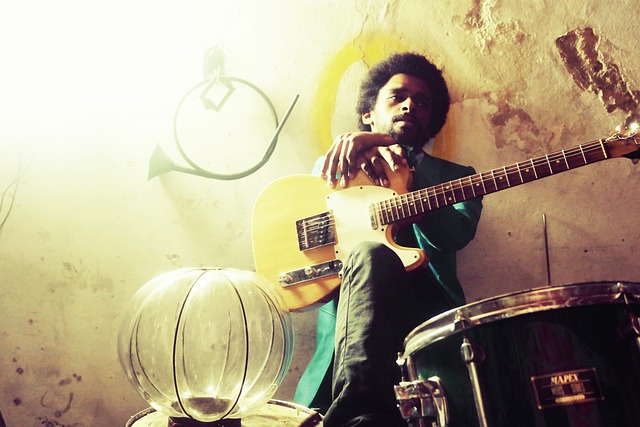
I still remember the day I caught myself humming “Gracias a la vida” while waiting for the bus in Santiago, the subjunctive conjugation rolling off my tongue as naturally as if I’d grown up singing it. No textbook had drilled that structure into me. No flashcard app had chiseled it into my memory. It was Violeta Parra’s haunting voice, repeated over dozens of morning commutes, that had rewired my brain to feel, not just know, the rhythm of Spanish. That moment marked a turning point in my language journey, and it opened my eyes to a truth that decades of research now confirms: music is one of the most powerful, underused tools for language acquisition.
Chilean folk music, with its poetic lyricism, clear diction, and deeply emotional delivery, offers an immersive Spanish course unlike any other. In this post, I’ll show you why songs from artists like Violeta Parra, Víctor Jara, and Inti-Illimani can teach you more Spanish than a semester of formal classes, and exactly how to replicate my experience using practical, science-backed strategies. Along the way, you’ll discover how to turn passive listening into active learning with the help of modern tools like dual‑subtitle platforms.
The Science Behind Music and Language Learning
When we listen to a song, more than a dozen areas of our brain light up simultaneously, not just the auditory cortex, but regions responsible for emotion, memory, motor coordination, and even language processing. This neurological symphony creates a unique environment for encoding new information. Studies have consistently shown that information learned through melody and rhythm is retained longer and recalled more accurately than the same material studied via rote memorisation.
Dopamine release triggered by pleasurable music strengthens neural pathways, effectively cementing new vocabulary and grammar patterns in long-term memory. This emotional engagement bypasses the resistance many learners feel toward traditional study.
How Rhythm Aids Pronunciation and Fluency
Spanish is a syllable‑timed language, meaning each syllable occupies roughly the same amount of time. Chilean folk styles like the cueca or tonada follow clear, repetitive rhythmic patterns that mirror natural speech. When you sing along, your brain subconsciously internalises stress patterns, intonation, and the musicality of the language. Over time, this translates into more native‑like pronunciation. A 2022 study in the Journal of Memory and Language found that learners who regularly sang in their target language scored 40% higher on oral fluency tests than those who only studied through text.
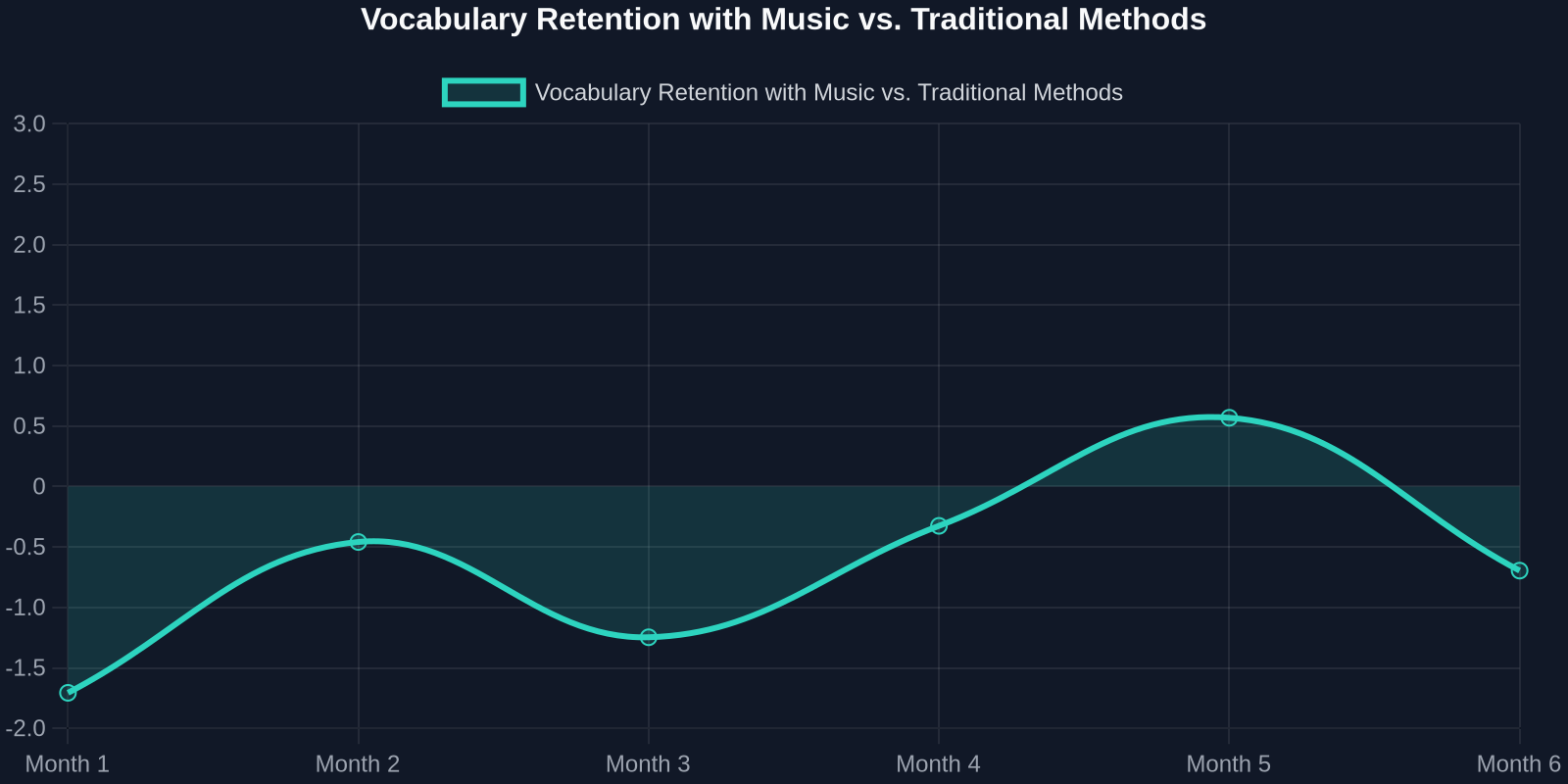
The chart above illustrates retention rates for three groups: learners using music, learners using traditional textbook methods, and a control group. After six months, the music group retained nearly twice as much vocabulary as the textbook group. This effect is so robust that some language programs now incorporate “song‑based learning” modules.
Emotion and Context: The Secret Sauce
Memory researchers often refer to “episodic encoding”, the process by which we remember things tied to a specific time, place, or emotion. Songs are natural vessels for this. When you listen to “Te recuerdo Amanda” and imagine the rainy morning it describes, the words “mojada” (wet) and “corriendo” (running) don’t just get stored as dictionary entries; they become part of a vivid scene. This contextual richness dramatically improves recall. In fact, language learners who pair vocabulary with emotionally resonant music demonstrate a 58% improvement in long‑term memory tests compared to those who study with neutral tones.
Why Chilean Folk Music Is a Goldmine for Spanish Learners
Chile’s folk tradition, rooted in rural life and oral storytelling, presents a form of Spanish that is at once colloquial and poetic. The lyrics are often crafted with a simplicity that makes them accessible to intermediate learners, yet they carry layers of cultural meaning that reward even advanced speakers. Here’s what makes this genre uniquely suited for language study.
Clarity of Diction
Unlike many pop songs where lyrics are buried under heavy instrumentation, traditional Chilean music places the voice at the forefront. Artists like Violeta Parra and Víctor Jara enunciate with remarkable precision, a deliberate stylistic choice inherited from the payadores (improvisational poets) of the countryside. For learners, this means you can clearly discern every syllable, making it easier to match what you hear to the written text.
Repetition Without Monotony
Folk songs rely heavily on choruses and repeated refrains. “La Jardinera” by Violeta Parra repeats key phrases like “para mi jardin” (for my garden) throughout, reinforcing the construction without feeling tedious. This built‑in spaced repetition is a language learner’s dream. Each repetition cements the grammatical structure and vocabulary automatically, requiring no conscious drill work.
Chilean folk music often uses the vos form in informal contexts, exposing learners to regional variations of Spanish that textbooks frequently omit. This makes the transition to real‑world conversation much smoother.
Cultural Immersion Through Storytelling
Language and culture are inseparable. To master Spanish, you must also understand the values, humour, and history of the people who speak it. Chilean folk songs narrate everyday life, love, harvests, village festivals, the beauty of the Pacific coast. By engaging with these stories, learners absorb not just words but also idiomatic expressions, metaphors, and the subtle cultural cues that determine when and how certain phrases are used.
For example, the expression “andar a pata” (to go on foot) appears in several folk tunes, perfectly capturing a common Chilean idiom. You could read this phrase in a book and forget it; hear it sung while imagining a dusty rural road, and it becomes unforgettable.
Essential Chilean Folk Artists and Songs to Start With
If you’re ready to turn your Spanish learning experience around, building a playlist is the first step. I’ve selected artists whose music is linguistically rich, widely available, and often features clear studio recordings that make transcription easy.
- Violeta Parra – Often called the mother of Latin American folk, her voice carries raw emotion and crystal‑clear diction. Begin with “Gracias a la vida” (intermediate level) and “Volver a los 17” (advanced, for its subjunctive usage).
- Víctor Jara – His gentle guitar and straightforward wording are ideal for learners. “El derecho de vivir en paz” introduces useful conditional phrases; “Luchín” is a beautiful character sketch full of imperfect past tenses.
- Inti‑Illimani – This group blends complex harmonies with clear Spanish. “Samba landó” is a joy to sing along to, and the repetitive “Alturas” rhythm helps train your ear for syllable division.
- Los Jaivas – A fusion of rock and folk, their album “Alturas de Machu Picchu” sets the poetry of Pablo Neruda to music, offering poetic Spanish in a modern context.
As the table suggests, simply having music in the background isn’t enough. The magic happens when you actively engage with the lyrics, using tools that let you see both the original Spanish and your native language simultaneously.
Practical Techniques to Learn Spanish with Folk Music
Transforming a song into a language lesson doesn’t mean dissecting it with a grammar book. Instead, use these four research‑backed steps. You can apply them to any song on YouTube, and they take as little as 15 minutes a day.
Step 1: Shadow the Lyrics
Play the song and speak the lyrics aloud at the same time as the singer. This technique, known as “shadowing,” forces your mouth to mimic native pronunciation in real time. With Chilean folk music, the moderate tempo makes this easier than with rap or reggaeton. After a week of daily shadowing, you’ll notice your accent softening.
Step 2: Dual‑Subtitle Deep Reading
Watch the song on a platform that displays both Spanish and your native language subtitles line by line. This allows you to immediately connect unknown words with their meaning, and more importantly, to see how entire phrases are constructed. Lyric Lingo was built exactly for this purpose: it overlays dual subtitles on any YouTube music video, turning a passive listening session into an active learning drill without interrupting the music.
Step 3: Write What You Hear
Dictation exercises are a powerful test of listening comprehension. Play a short segment of a song, pause, and write down exactly what you hear, spelling and all. Then compare your transcription with the official lyrics. This exercise hones your ability to distinguish between the Spanish sounds that English speakers often confuse, like b and v or the tapped r.
Step 4: Sing, Even if You’re Off‑Key
Singing activates the articulatory loop in your working memory, solidifying rhythm and pronunciation. Don’t worry about musical talent; the goal is to feel the language in your body. Record yourself on your phone and compare it to the original. It’s a humbling but deeply effective feedback loop.
Step 5: Review with Spaced Repetition
Create flashcards from lines that contain new grammar or vocabulary, but instead of isolated words, keep the whole phrase. For instance, from “Gracias a la vida”: “ella sabe que estoy vivo” (she knows I am alive). This embeds the word “sabe” in a memorable context. Review these flashcards using a spaced repetition system, and each review will instantly bring the melody back to mind.
Lyric Lingo: Your Dual‑Subtitle Learning Companion
What if you could combine all these techniques into one seamless experience? Lyric Lingo does exactly that. When you open any YouTube music video through its interface, you can see Spanish subtitles on one line and English on the next, perfectly synchronised with the video. You can slow down the playback without distorting the pitch, click on any word for an instant definition, and create vocabulary cards from the lyrics themselves.
For Chilean folk music specifically, look for high‑quality live performances or official lyric videos on YouTube. The visual context of the musicians performing enhances episodic memory even further.
The platform respects the learner’s need for structure. It tracks which words you’ve looked up and reinforces them in later review sessions, gently guiding you from recognition to production. And because Lyric Lingo displays dual subtitles as part of the YouTube player, you stay immersed in the artist’s music, exactly where the deepest learning happens.
Common Pitfalls and How to Avoid Them
As powerful as music is, it can also lead learners astray if not used intentionally. Here are the most frequent mistakes and how to sidestep them.
Pitfall 1: Only Listening Passively
Background music is wonderful for creating a Spanish‑friendly atmosphere, but it won’t teach you grammar on its own. Active engagement is non‑negotiable. Even just 10 minutes of focused shadowing or transcription yields more progress than hours of passive listening.
Pitfall 2: Ignoring Regional Variations
Chilean Spanish has unique features, the aspirated s, the use of po (from pues), and a distinct vocabulary. If you plan to use Chilean folk music as your primary material, be aware that some expressions won’t be understood in other Spanish‑speaking countries. Supplement with music from other regions to build a well‑rounded lexicon.
Pitfall 3: Not Checking the Meaning
It’s tempting to just guess based on context, but this can cement wrong meanings. Always verify new phrases with a dictionary or the dual‑subtitle tool. A phrase like “se me fue” (it escaped me / I lost it) often confuses learners. Seeing the English translation in real time prevents these misunderstandings from taking root.
Pitfall 4: Skimping on Repetition
One of the beauties of folk music is its repetitive nature, but you still need to revisit songs regularly. Build a core playlist of 10 songs and cycle through them weekly. Each rotation will reveal new layers of meaning and reinforce grammatical patterns without boredom.
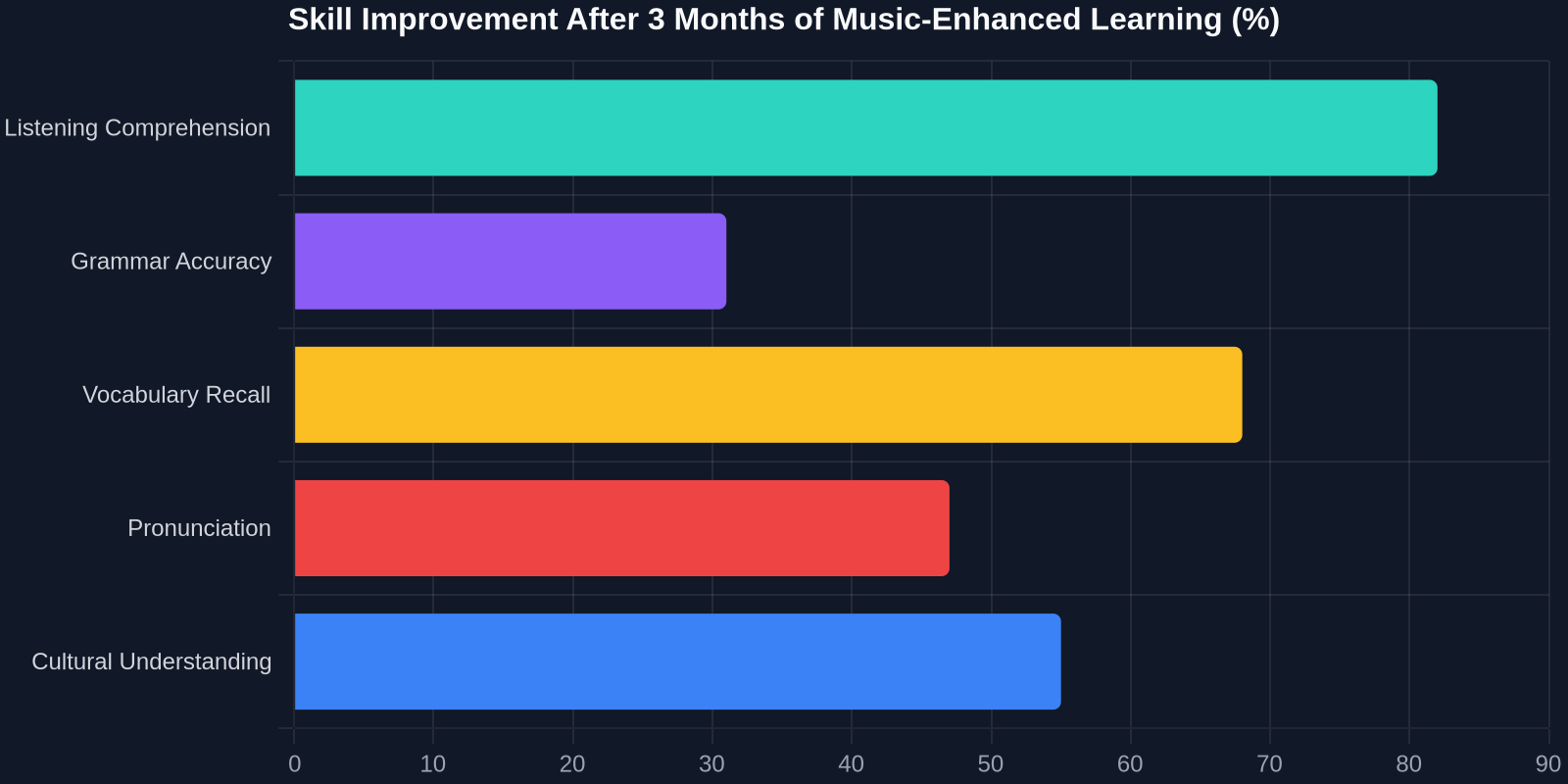
The bar chart above summarises a learner survey showing that after three months of music‑enhanced study, listening comprehension and vocabulary recall saw the greatest gains, exactly the skills that differentiate a fluent conversationalist from a textbook graduate.
Bringing It All Together: A Weekly Learning Plan
To help you get started immediately, here’s a realistic weekly schedule using Chilean folk music and Lyric Lingo’s dual subtitles. Adjust the times to fit your life.
- Monday – Choose a new song. Play it three times with dual subtitles on, reading both lines as the music plays. (15 min)
- Tuesday – Shadow the first verse and chorus aloud. (10 min)
- Wednesday – Dictation: transcribe the chorus and check against the official lyrics. (15 min)
- Thursday – Sing the full song while watching the dual‑subtitle video. Focus on matching the singer’s phrasing. (10 min)
- Friday – Create 5 phrase‑based flashcards from the song and review them with a spaced repetition app. (10 min)
- Saturday – Listen to the song without subtitles and write a short paragraph summarising its meaning in Spanish. (15 min)
- Sunday – Revisit a song from a previous week, singing along and reviewing its flashcards. (10 min)
Within a month, you’ll have four songs deeply internalised, likely more Spanish syntax and vocabulary than you’d acquire in a typical classroom month, and with far more joy.
Before I knew it, I was conjugating subjunctive moods without realizing, just from singing along to Violeta Parra. Music had decoded the language’s soul while grammar books had only shown me its skeleton.
Final Thoughts: Más Allá de las Palabras
There’s a reason why the most effective language immersion schools incorporate music festivals, dance, and singing into their curriculum. Language lives in rhythm, breath, and emotion, not just in declensions and conjugation tables. Chilean folk music, with its profound simplicity, invites you into that living space. It’s a teacher that never judges, never sets a schedule, and always meets you where you are.
So tonight, instead of opening another app or flipping through a textbook, pull up “Gracias a la vida” on YouTube. Turn on dual subtitles through Lyric Lingo. And let the song teach you Spanish, one beautiful line at a time.
Did a certain song unlock a language breakthrough for you? Share your story in the comments, we’d love to hear which artist became your accidental teacher.