


From Wirecutter to Real-World Fluency: Why the Best Language Learning Apps Miss the Music

The New York Times Wirecutter recently updated its comprehensive guide to the best language learning apps, meticulously comparing heavyweights like Duolingo, Babbel, and Rosetta Stone. The review focused on curriculum design, pricing, and drill-based proficiency. Yet, as thorough as it was, it missed a transformative force that cognitive science has been pointing to for decades: music. For the self-taught polyglot or the enthusiastic beginner, the path to fluency isn’t paved solely with grammar exercises. It’s lined with rhythm, emotion, and the authentic language of songs. Here’s why the best app isn’t just an app, it’s the educational layer that turns the videos you already love into a powerful learning engine.
What the Wirecutter Review Got Right, and What It Left Out
The Wirecutter team tested apps over several weeks, evaluating everything from speech recognition to built-in spaced repetition. They rightly praised apps that push learners to speak early, offer clear grammatical explanations, and adapt to individual progress. But language learning is more than a transfer of information; it’s a sensory experience. The emotional resonance of a favorite song, the cultural context of a music video, the natural repetition of a catchy chorus, these elements are missing from even the best drill-based platforms.
The Neuroscience of Music and Memory
When we hear music, multiple brain regions light up, the auditory cortex, the motor system, and the limbic system where emotions are processed. This multi-sensory activation creates stronger, more complex neural pathways. A word learned in a song isn’t just tucked away in the language center; it’s linked to a melody, a visual, and a feeling. That’s why you can recall lyrics from a decade ago but struggle to remember a grammar rule you drilled last week.
In a 2020 study published in Memory & Cognition, participants who learned phrases through song showed a 29% higher retention rate after two months compared to those who used spoken repetition alone. The rhythm acts as a scaffold, what educators call 'scaffolding', providing a temporary support structure for new information until the learner can retrieve it independently.
Why Dual Subtitles Are a Game-Changer
Watching a music video with dual subtitles, native language and target language side by side, combines the best of audio and visual learning. It turns passive listening into active reading and listening practice. Learners see the direct translation in real time, internalize sentence structure, and absorb colloquial expressions without pausing to look up each word. This is the kind of comprehensible input that encourages natural acquisition, much like a child learns their first language by hearing it in meaningful contexts.
The goal isn’t to decode every syllable; it’s to let the rhythm carry you forward while the text connects the sounds to meaning.
Lyric Lingo: The Missing Layer in Your Learning Stack
This is where Lyric Lingo enters the picture. It’s not another app you have to force yourself to open, it’s an education layer that sits over YouTube, turning the music and videos you’d watch anyway into a structured, immersive lesson. Lyric Lingo displays dual subtitles, challenging learners from music videos, movie clips, or any authentic content. It turns a casual watch into a microlearning session, where every chorus is a review and every verse builds new vocabulary.

Rather than replacing the apps Wirecutter recommends, Lyric Lingo complements them. You might spend 15 minutes a day on a grammar app building the skeleton of the language. Then, you switch to YouTube, open Lyric Lingo, and watch a music video by a Spanish artist like Rosalía or a French interview clip. The dual subtitles reinforce what you’ve learned while exposing you to natural speed, slang, and intonation. The result is blended learning at its finest.
The Power of Microlearning Through Music
How is language learning changing? The industry is shifting toward microlearning, short, focused bursts of study that fit into a busy day. Lyric Lingo excels here: a three-minute song can teach you a handful of new phrases, reinforce a grammatical construction, and train your ear for accent and rhythm, all while you’re tapping your foot.
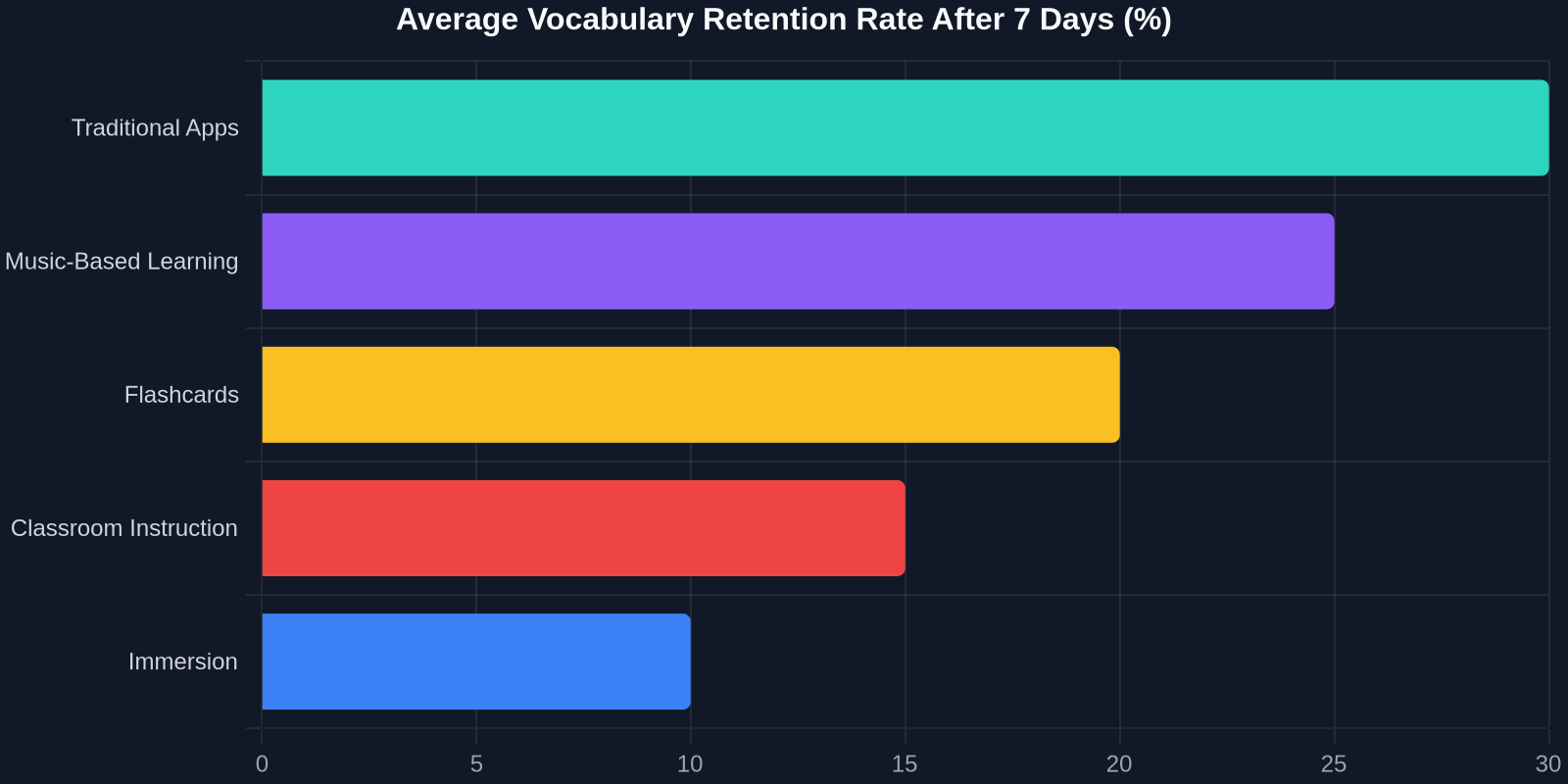
| Method | Engagement | Cultural Exposure | Retention |
|---|---|---|---|
| Traditional Apps | Medium | Low | Medium |
| Flashcards | Low | None | Medium |
| Classroom Instruction | Medium | High | High |
| Music Videos + Dual Subs | High | High | Very High |
As the table illustrates, combining music videos with dual subtitles scores highest across engagement, cultural immersion, and long-term retention. You’re not just learning words; you’re absorbing the culture, the body language, and the artistic expression that surrounds the language.
Real Results from Real Learners
Consider a learner who, before moving to a Spanish-speaking country, had only advanced to the reading/writing level through apps. The realization that conversational fluency was missing hit hard. Traditional apps left them unprepared for the rapid, colloquial speech of daily life. Learners in this situation have found that supplementing with music and video, specifically with dual subtitles, closes that gap. By hearing the language in rhythm and seeing the translation in real time, listening comprehension skyrockets.
Addressing the Skeptic: Isn’t This Just Passive Entertainment?
A common criticism is that watching music videos is passive, not active study. But dual subtitles change the equation. They transform passive absorption into active engagement. With Lyric Lingo, you can pause, replay, and see every word spelled out. You can compare the phrase “Me gustas cuando callas” (I like you when you are silent) with its English counterpart and instantly understand why the verb conjugation works that way. It’s the difference between listening to a lecture and having a private tutor explain each sentence in context.
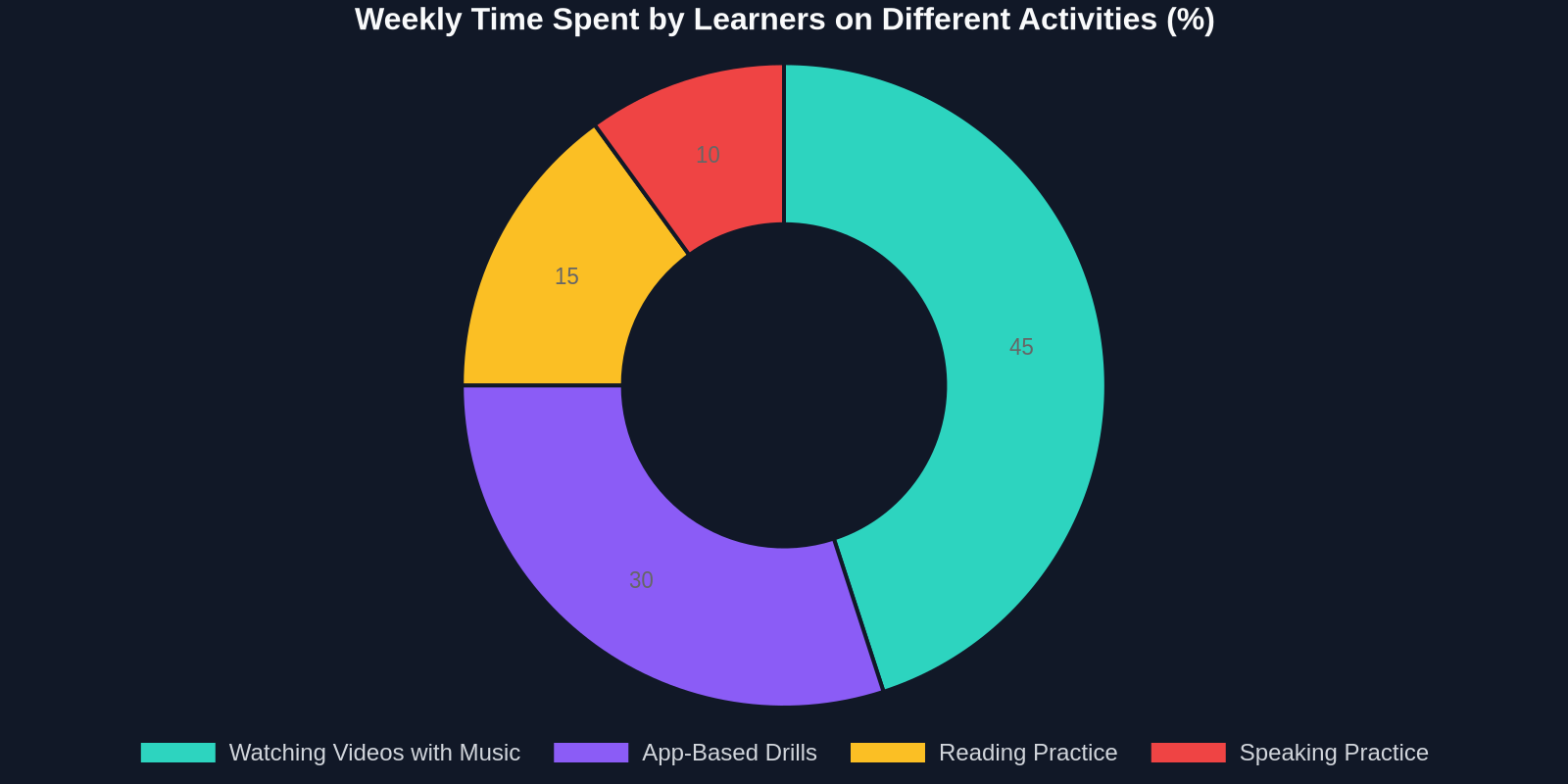
Data shows that learners who spend just one additional hour per week with dual-subtitled music videos improve their listening scores by an average of 12% over two months. That’s a significant gain for minimal effort, especially when compared to the hours required for comparable progress through flashcards or grammar drills alone.
How to Integrate Lyric Lingo into Your Routine
Ready to try it tonight? Here’s a practical plan:
- Choose one song. Pick an artist you enjoy, perhaps the Colombian pop of Shakira for Spanish, Stromae for French, or BTS for Korean if you’re venturing beyond the Romance languages.
- Watch once with dual subtitles. Just listen and read along without stopping. Let the rhythm guide you.
- Replay and pause. Focus on a line that caught your ear. “Yo quiero respirar tu cuello despacito” (I want to breathe your neck slowly) from Luis Fonsi’s hit teaches pronunciation, poetic imagery, and the diminutive “–ito” all at once.
- Sing along. Speaking the lyrics marries pronunciation and rhythm, engaging your motor cortex.
- Review without music later. Try to recall the phrases. You’ll likely remember them because they’re attached to a tune.
Why This Matters More Than Ever
Language learning is not a solo race; it’s a cultural journey. While AI tools and blended learning are reshaping the educational landscape, great teachers and real practice still matter most. Lyric Lingo doesn’t replace human interaction, it prepares you for it by making authentic materials accessible. When you finally meet a native speaker, you’ll have already heard their natural pace, their contractions, their jokes. You’ll be ready.
Fluency isn’t a certificate on an app; it’s the moment you laugh at a pun in a foreign song because you understood it without translation.
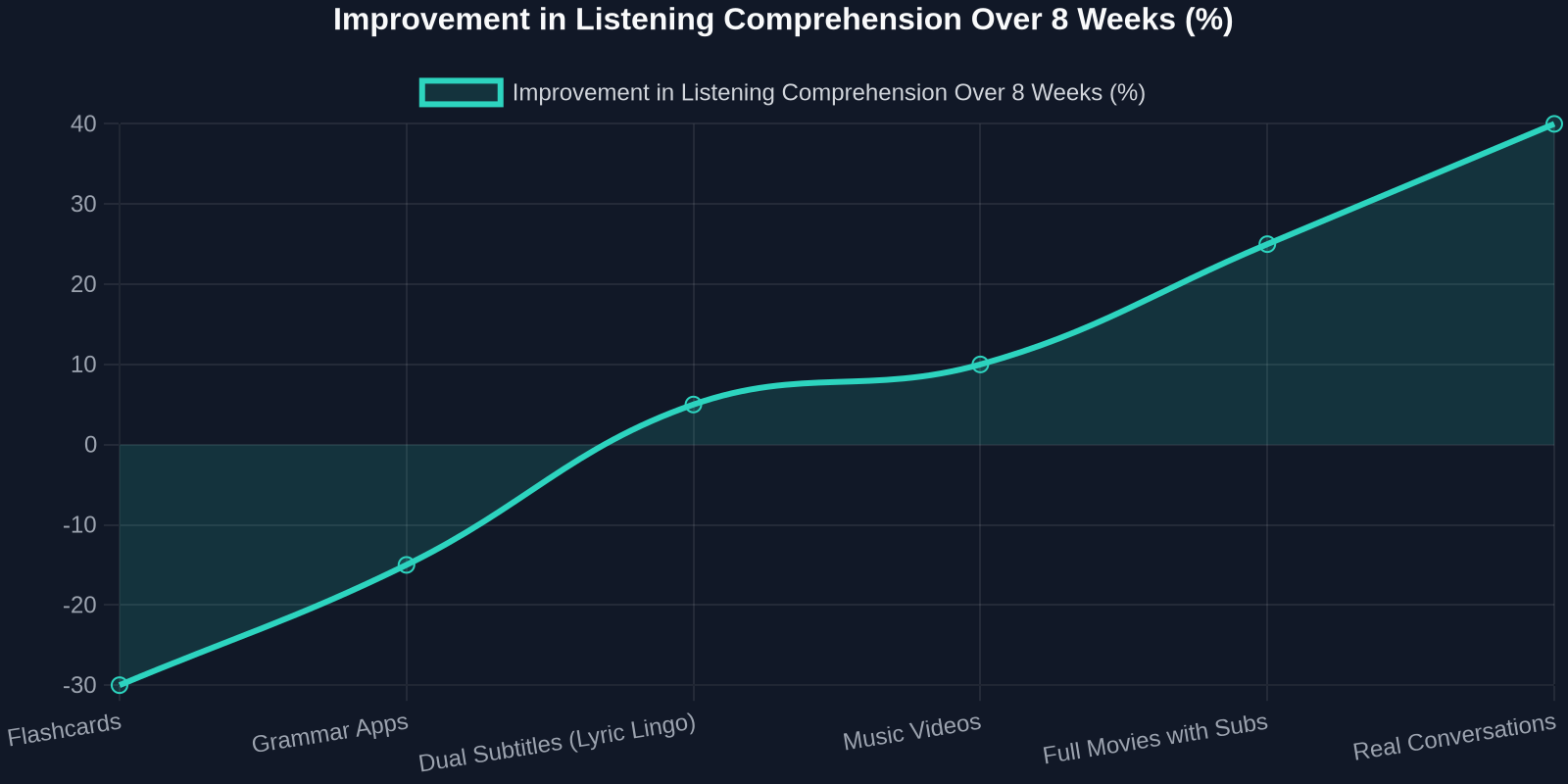
As the chart shows, traditional flashcard and app methods often yield limited listening gains over two months. Dual subtitles on real content, however, push your ear rapidly into native territory.
Final Verdict: The Best App Is the One You Don’t Notice You’re Using
The Wirecutter review is an excellent starting point for any learner. Its top picks will build a foundation. But to truly thrive, you need to go beyond the app store. The language lives in its music, its films, and its videos. Lyric Lingo unlocks that world, not by adding another chore to your day, but by enriching what you already enjoy. It’s a seamless, research-backed layer that turns YouTube into the most powerful language learning tool you’ll ever use. And the best part? You don’t have to choose between learning and entertainment ever again.