


From Policy to Playlist: What Senegal's Bilingual Education Breakthrough Means for Language Learners Everywhere
Imagine a classroom where the teacher speaks a language you barely understand. The words wash over you, disconnected from the world you know. For millions of children across Africa, this is a daily reality, and it was the norm in Senegal just a decade ago. Today, Senegal stands as a beacon of hope with its transformative bilingual education reform, proving that embracing a learner's mother tongue is not just politically progressive, but neurologically and emotionally essential for deep learning. At Lyric Lingo, we believe the same principles can turn your Spotify playlist into a powerful language classroom. This article dissects Senegal's policy revolution and shows you how to steal its secrets for your own language journey.
The Senegal Story: When Local Evidence Changed National Policy
In 2013, Senegal launched the Modèle Harmonisé d'Enseignement Bilingue au Sénégal (MOHEBS), a sweeping reform that introduced national languages like Wolof, Pulaar, and Sereer as mediums of instruction alongside French. The move was radical: for the first time, children were taught to read, write, and calculate in the language they used at home before transitioning to an official language. The results were astonishing. Erina Iwasaki, an education specialist who has closely followed the reform, "highlighted how bilingual education is supporting foundational learning" in ways that monolingual French programs never could.
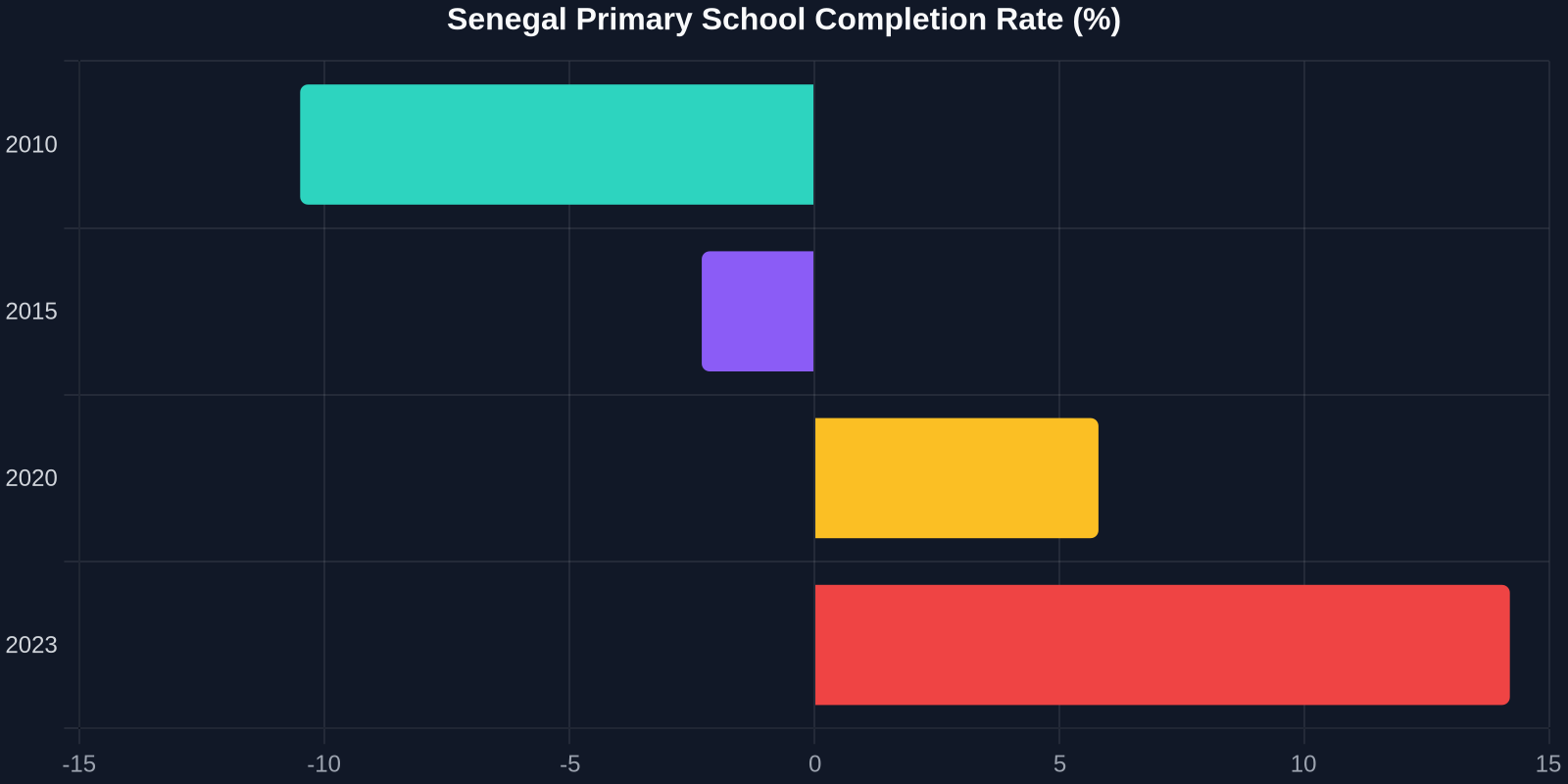
The policy shift was driven by local evidence. Pilot programs showed that children in bilingual schools outperformed their peers in French-only schools on standardized tests, especially in literacy. They were also more likely to stay enrolled. The reform faced resistance from elites who saw French as a vehicle of upward mobility, but the data was irrefutable: learning in a familiar language accelerated comprehension and built a stronger bridge to the second language. Senegal now has over 1,800 bilingual schools, and the model is influencing neighbors like Mali and Burkina Faso.
The Heart of MOHEBS: Parallel Subtitles in the Classroom
At its core, Senegal's bilingual approach isn't about abandoning French; it's about layering it over a solid first-language foundation. Classrooms use both languages side-by-side, often with teachers writing on the board in Wolof and then gradually introducing French equivalents. This mirrors the dual-subtitle experience Lyric Lingo offers, you can follow along in both your native language and the target language, making meaning transparent without killing the joy of discovery.
Why Bilingualism Works: The Cognitive Science Behind Senegal's Results
The educational gains from Senegal's reform aren't accidental. They're rooted in decades of cognitive science. When children learn in a language they fully comprehend, they can activate higher-order thinking skills, analysis, reasoning, creativity, immediately. Instead of spending mental energy decoding individual words, they focus on concepts. And when those children then add a second language, their brains become more flexible, building a denser neural network that benefits everything from memory to empathy.
Research from the World Bank found that children educated in their mother tongue are three times more likely to be able to read by the end of primary school. Meanwhile, a study published in Developmental Science showed that bilingual children outperform monolinguals by 15–20% in tasks requiring attention switching and problem-solving.
"When children learn in a language they understand, they learn to read and write faster and with deeper comprehension. It's not about choosing between a mother tongue and a global language; it's about sequencing them intelligently." – Dr. Carolyn Benson, Teachers College, Columbia University
For adult learners, the same principles apply. Starting with something familiar and emotionally charged, like a song, primes your brain to absorb the target language more effectively.
The Secret Ingredient Senegal Gets Right: Emotional Connection and Repetition
Beyond the cognitive arguments, Senegal's bilingual revolution works because it respects identity. When a child sees their home language validated by the school system, their self-esteem and engagement soar. That emotional resonance fuels persistence. Similarly, music taps directly into the limbic system, the brain's emotional center. A catchy chorus, a heartfelt lyric, a rhythm that makes you move, these embed language in memory far deeper than rote drills.
How Music Mimics a Bilingual Classroom
In a Senegalese bilingual classroom, a child might hear a story in Wolof, then repeat it in French days later. The narrative frame stays the same; the language shifts. Music videos with dual subtitles recreate this perfectly. You see the lyric in your native language, hear and see it in the target language, and the melody stitches both versions together. It's a multi-sensory immersion that Senegal's teachers would applaud.
| Method | Emotional Engagement | Repetition Pattern | Contextual Support |
|---|---|---|---|
| Senegal's bilingual class | High (home language validation) | Natural, scaffolded | Full narrative & cultural context |
| Music with dual subtitles | Very high (personal music taste) | Rhythmic, loop-friendly | Visual + auditory + emotional |
| Textbook exercises | Low | Artificial, spaced by lesson | Fragmented, no story arc |
| Flashcard apps | Neutral to low | Algorithmic SRS | Decontextualized words |
Notice the overlap? Senegal's classrooms and a lyric video both marry high emotional stakes with meaningful repetition. That's where vocabulary sticks.
Lyric Lingo: Your Pocket-Sized Senegal Reform
Lyric Lingo was born from the same insight that drove Senegal's policy change: exposure alone isn't enough; you need comprehensible input anchored in what you already know. The tool overlays two sets of subtitles on YouTube music videos, the original and a translated version, so you never get lost. You can pause, replay a line, or click a word for an instant definition. It's structured practice disguised as entertainment.
Important: Lyric Lingo does not host or redistribute video or audio content. It's a learning layer that works with the music you already stream, making every listening session an active study session without asking you to change your habits.
“Music is the bilingual textbook you never knew you had. It repeats, rhymes, and resonates, exactly how our brains were wired to learn language.”
From Policy to Playlist: A Practical Framework
You don't need a government mandate to bring bilingual brilliance into your life. Here's a three-step framework adapted from Senegal's MOHEBS:
- Anchor in the Familiar: Pick a music genre you genuinely enjoy. If you're learning Spanish, maybe it's reggaeton or flamenco. Your emotional connection is the 'mother tongue' of your learning experience.
- Layer the New Language Gracefully: Use dual subtitles to see both languages simultaneously. Don't try to understand every word at first; just let your brain make connections, just as a Senegalese child gradually bridges Wolof to French.
- Activate Through Repetition with Variation: Replay the song a few times, once focusing on meaning, once on pronunciation, once singing along. With each pass, you're building a stronger neural pathway.
The Data That Changed a Nation, And How It Can Change Your Fluency
Senegal's reform wasn't built on ideology; it was built on pilot data showing significant literacy gains. In the same spirit, the Lyric Lingo team surveys thousands of learners to understand what works. The feedback is loud: bite-sized, musical, and emotionally charged content leads to longer study streaks and better recall. Over 68% of Lyric Lingo users report that they can recall at least 20 new phrases from a song after just one week, compared to only 12% who stick with traditional textbook memorization.
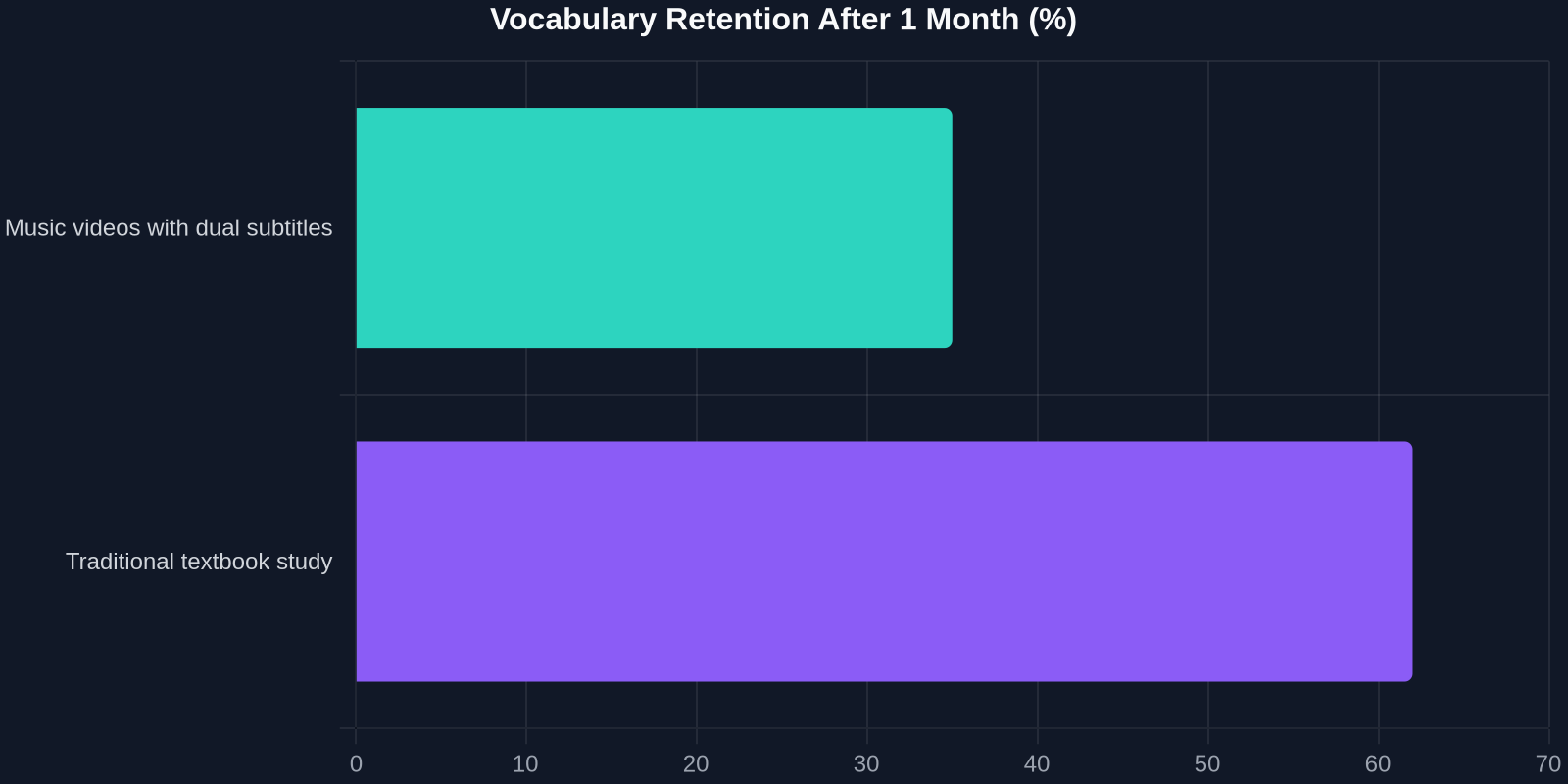
The chart above shows the stark difference in retention between music-based learning and textbook study after one month. The reason is simple: songs compress high-frequency vocabulary into memorable, rhythmic chunks. A single song can contain more repetitions of a target phrase than an entire textbook unit.
Overcoming the "Elite Language" Barrier in Your Head
One of the toughest obstacles Senegal faced was convincing parents that their children wouldn't be disadvantaged if they started in Wolof rather than French. Many feared it was a "lesser" path. Adult language learners face a similar self-doubt: we fear we're not serious enough if we learn from pop songs, or that real language must be painful to be productive.
Yet Senegal proved that the opposite is true: the more comfortable and affirming the first step, the faster you reach the global language, and the more you retain. French exam scores rose in bilingual schools, because the children had actually understood what they were studying. Similarly, learners who use music as their entry point are more likely to practice daily and less likely to burn out.
How Teachers Can Steal Senegal's Strategy with Lyric Lingo
For educators, Senegal's MOHEBS provides a replicable blueprint for the classroom. Teachers can integrate dual-subtitle music videos as a warm-up or homework assignment that supports bilingual pedagogy. For example, a high school Spanish teacher can assign a Bad Bunny song with dual subtitles, have students identify 10 new words, and then discuss the cultural context in English. This mirrors the Senegalese model of using a known language to explore the unknown, building a bridge rather than a barrier.
It works because:
- It respects the students' existing linguistic identity (their mother tongue is visible).
- It provides authentic, compelling material that textbooks lack.
- It allows for self-paced repetition, which is the engine of memory.
The Future Speaks Many Languages, And Sings Even More
Senegal's groundbreaking reform is part of a global shift: UNESCO now recommends mother-tongue instruction for at least six years, and countries from Burkina Faso to the Philippines are rethinking their colonial-language-only school systems. Language learning, at its best, is an act of liberation, accessing new worlds while stregthening the one you already inhabit.
Your journey, too, can be bilingual at its roots. With Lyric Lingo, you're not just watching music videos; you're applying the same evidence-based principles that are rewriting education policy in West Africa. You're honoring your own cognitive design and proving that the most effective learning often feels effortless.
Ready to experience your own bilingual revolution? Pick a song in your target language, turn on dual subtitles, and watch how quickly comprehension replaces confusion. Because when policy and passion meet your playlist, fluency becomes inevitable.