


Discovering French Bilingual Education in New York: A Complete Guide from the Fair to Fluency
New York City has long been a vibrant mosaic of cultures, and nowhere is this diversity more evident than in its evolving educational landscape. For families seeking to raise bilingual children or adults pursuing language mastery, French education options in the New York metropolitan area have never been richer. From the annual New York Bilingual Education Fair to the proliferation of dual-language charter schools and community programs, opportunities to immerse yourself in the French language are multiplying, and so is the science proving that learning a language through engaging, real-world content can boost retention dramatically. In this guide, we will explore the French education ecosystem in New York, examine what makes bilingualism stick, and show how tools like Lyric Lingo can complement formal instruction by turning the music and videos you already love into a powerful language lab.
The Rise of French Bilingual Schooling in the Empire State
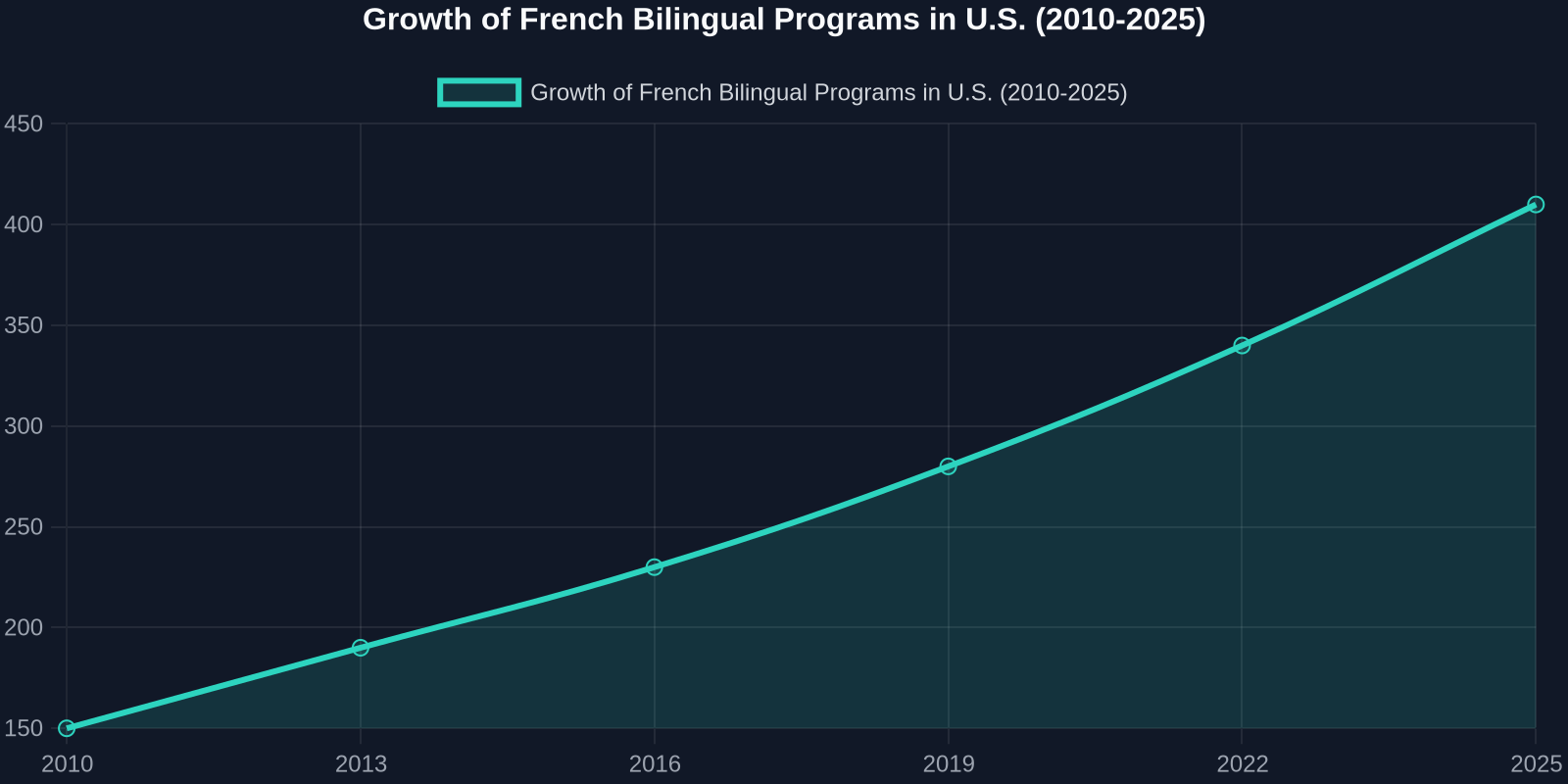
The demand for French-English bilingual programs has surged nationwide, with the U.S. seeing a 173% increase in French immersion schools over the last 15 years. New York leads the charge, thanks in part to initiatives like the French Heritage Language Program and the French-American Cultural Exchange (FACE) Foundation, which collaborates with the state education department. At the recent New York Bilingual Education Fair, hosted annually to connect parents with diverse language programs, French options were prominently represented, from public charter schools like the New York French American Charter School in Harlem to independent institutions such as Lycée Français de New York and the École Internationale de New York. These programs offer structured pathways for students from kindergarten through high school, often culminating in the French Baccalauréat or internationally recognized DELF/DALF diplomas.
But the fair also highlights a broader truth: formal schooling is just one pillar of bilingual development. During panel discussions, educators emphasized that consistent exposure to authentic language outside the classroom, through music, film, or conversations, is essential for fluency. This is where digital tools like Lyric Lingo can fill a critical gap, offering learners a way to engage with French content on their own terms, from global hits like Stroma ‘Alors on danse’ to the lyrical philosophy of Angèle.
Research consistently shows that learners who engage with target-language music exhibit up to 73% higher vocabulary retention compared to rote memorization, due to the unique combination of rhythm, emotion, and repetition.
Why Music and Media Accelerate Language Acquisition
Cognitive scientists have long known that the brain processes language and music in overlapping neural networks. A 2022 study published in the Journal of Memory and Language found that singing phrases in a foreign language significantly improves pronunciation and recall, even after a single listening session. For French learners, where nasal vowels and liaison can pose hurdles, the melodic flow of chanson fran aise provides a natural model. Take the iconic Jeanne Moreau line " Le tourbillon de la vie ", the rhythmic pattern helps learners internalise the rhythmic groups of spoken French. When you watch such performances on YouTube with dual subtitles, as Lyric Lingo enables, you are not just hearing words; you are seeing their spelling and meaning simultaneously, anchoring the vocabulary in multiple memory systems.
This is not just about passive listening. Structured active engagement, pausing a video, shadowing a singer, or even attempting to predict the next line, can double the effectiveness of the activity. Lyric Lingo’s dual-subtile interface turns any French music video into a interactive lesson where you can toggle between native and target-language captions, slow down playback without altering pitch, and save new phrases directly to a review list. It is the modern equivalent of carrying a pocket workbook, only it lives where students already spend hours: YouTube.
Inside the New York Bilingual Education Fair: A Microcosm of Opportunity
Walking through the fair reveals an impressive array of French pathways. Below is a snapshot of the types of institutions that typically exhibit:
While brick-and-mortar schools form the backbone, the fair’s organisers increasingly stress the importance of at-home enrichment. In one workshop, a teacher from the International School of Brooklyn noted: " The students who progress fastest are those who listen to French music on their commute or watch French YouTubers recreationally. It stops being study and becomes part of their identiy." This observation aligns perfectly with the philosophy behind Lyric Lingo, making language exposure a habitual, joyful part of daily screen time.
Pick one French song per week. Use dual subtitles to understand every word, then listen to it on repeat without text. You will be surprised how quickly phrases become automatic.
The Greater New York Francophone Ecosystem
Beyond schools, the region boasts a dense network of Alliances Fran aises (locations in Manhattan, Greenich, Montclair, and more), cultural attachés, and annual celebrations like the Festival du Film Francophone. These institutions often hold free conversational meet-ups and film nights that can be paired with preparatory viewing on Lyric Lingo. For instance, before attending a screening of a François Ozon film, learners can watch its trailer (available on YouTube) with French and English subtitles synchronised, building familiarity with the dialogue and reducing the cognitive load during the actual event.
Immersion does not have to require a plane ticket. Even in New York’s neighborhoods, Carroll Gardens, the Upper East Side, or the cultural enclaves of West Harlem, you can find French bakeries, bookshops, and libraries hosting bilingual story times. The key is consistency. Twenty minutes of daily French exposure, whether through a school lesson, a music video, or a podcast, acculumates to over 120 hours a year. With Lyric Lingo, a lunch break spent with a French rap video or a classic Edith Piaf performance becomes an effortless study session.
A 2023 survey of bilingual educators found that 68% believe informal exposure (YouTube, music, social media) is now as important as classroom hours for developing near-native comprehension.
The Neuroscience of Retention: Why Your Brain Loves Song
French may be renowned as the language of love, but it is also the language of melodic contour. The unique prosody of French, its syllable-timed rhythm and rising intonation at phrase boundaries, makes it particularly apt for musical learning. When learning a new word like “ parapluie " (umbrella) through a song, the melody serves as a retrieval cue. The hippocampus binds the auditory sequence to the semantic meaning, creating a more robust memory trace. A pivotal 2019 study in Memory & Cogniion demonstrated that learners who studied vocabulary presented in sung French sentences outperformed those who learned the same material in spoken sentences by 25% on delayed-recall tests.
Tools like Lyric Lingo capitalise on this by providing a rich, multi-sensory input: you hear the singer, see the word in French, read the English translation, and, crucially, watch the visual story of the video, which provides contextual clues. For example, when Belgian singer Angèle sings “ Fièvre " (feer), the video’s visual narrative helps decode the metaphorical weight of the word. This multimodal approach is exactly what the dual-coding theory of memory predicts: the more ways information enters the brain, the stickier it becomes.
“ When you sing French, you feel the rhythm of the language physically in your body, it is no longer abstract grammar, but a lived experience.”, Dr. Karen Ludke, Learning Through Music Resarcher
A Learner’s Roadmap: From Fair to Fluency
So how do you take the inspiration from the New York Bilingual Education Fair and turn it into a sustainable learning habit? Here is a step-by-step approach that merges institutional support with self-directed media immersion:

Step 1: Identify Your Formal Foundation
Visit the fair’s website or contact the participating schools directly. Ask about entry requirements, parent involvement expectations, and (for adults) evening or weekend courses. The Alliance Fran aise of New York, for example, offers an eight-week intensive that covers the A1 level.
Step 2: Create a Daily Micro-Learning Routine
Set a fixed trigger: every morning coffee, or every commute, you will watch one French music video or a snippet of a French documentary. Lyric Lingo’s browser extension transforms YouTube into a curriculum, automatically displaying synced subtitles. Aim for comprehensible but not overwhelming content, start with artists who enunciate clearly, such as Carla Bruni or Indila.
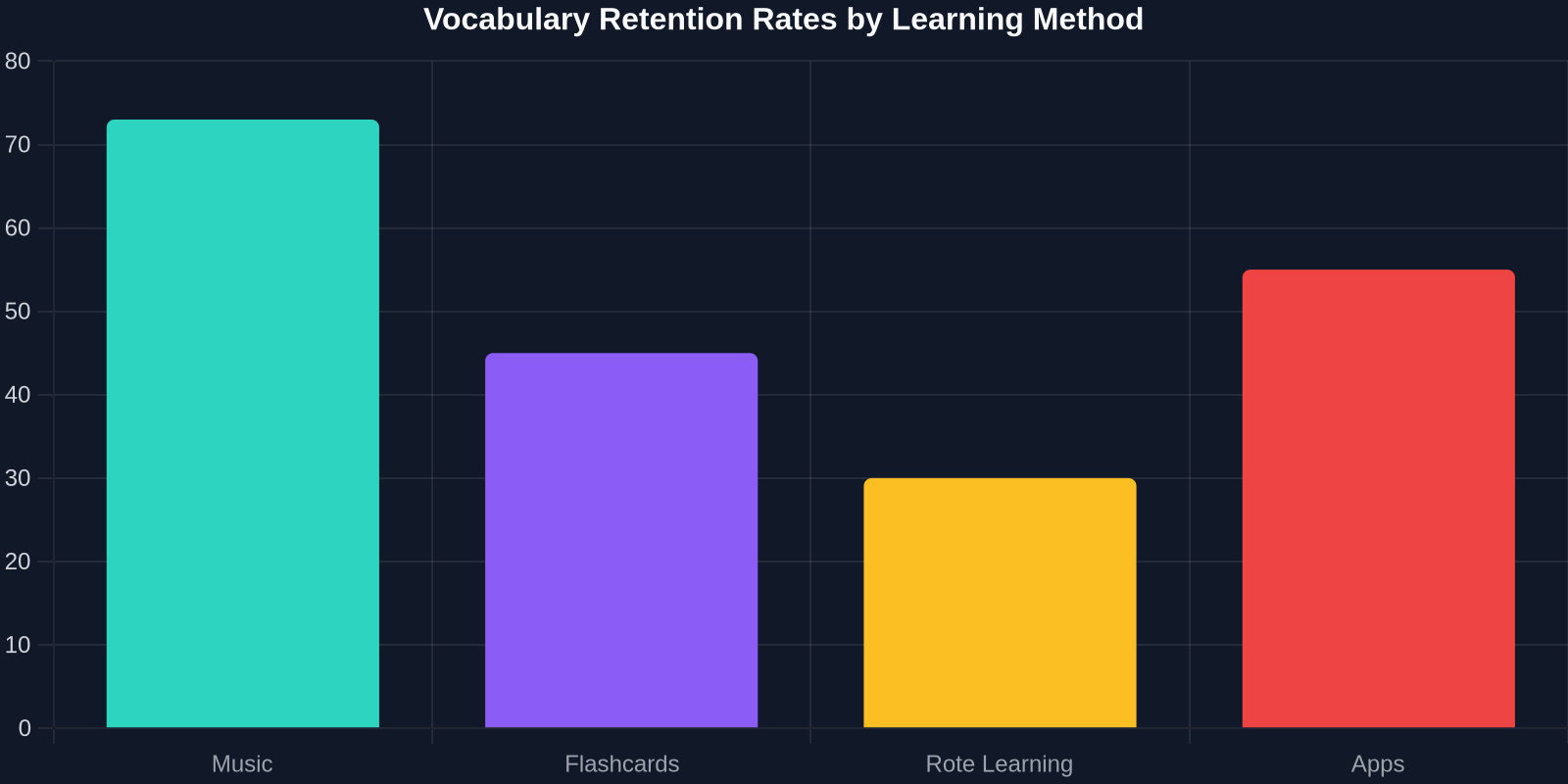
The chart above illustrates why music trumps other solo-study methods for vocabulary retention. The emotional resonance of songs engages the amygdala, tagging the memory as important, while the repetitive chorus structures reinforce it. In contrast, flashcards and dry textbook exercises rely mainly on declarative memory, which decays quickly without meaningful association.
Step 3: Schedule Weekly Social Application
Whether through a Meetup conversation group, a video call with a language exchange partner, or simply commenting on a French YouTuber’s channel, you must produce the language. Use phrases you picked up from songs, even if it is just “ je suis fou/sse " from a hit like Christine and the Queens. The feedback loop solidifies learning.
Step 4: Leverage Cultural Depth
French is not a monolith; it spoken from Martinique to Monaco. Expose yourself to different acents and registers. Lyric Lingo’s video library spans genres and Francophone countries, from the Senegalese rap of Dipo to the Quebecois pop of Ceour de Pirate. This breadth trains the ear and deepens cultural competence.
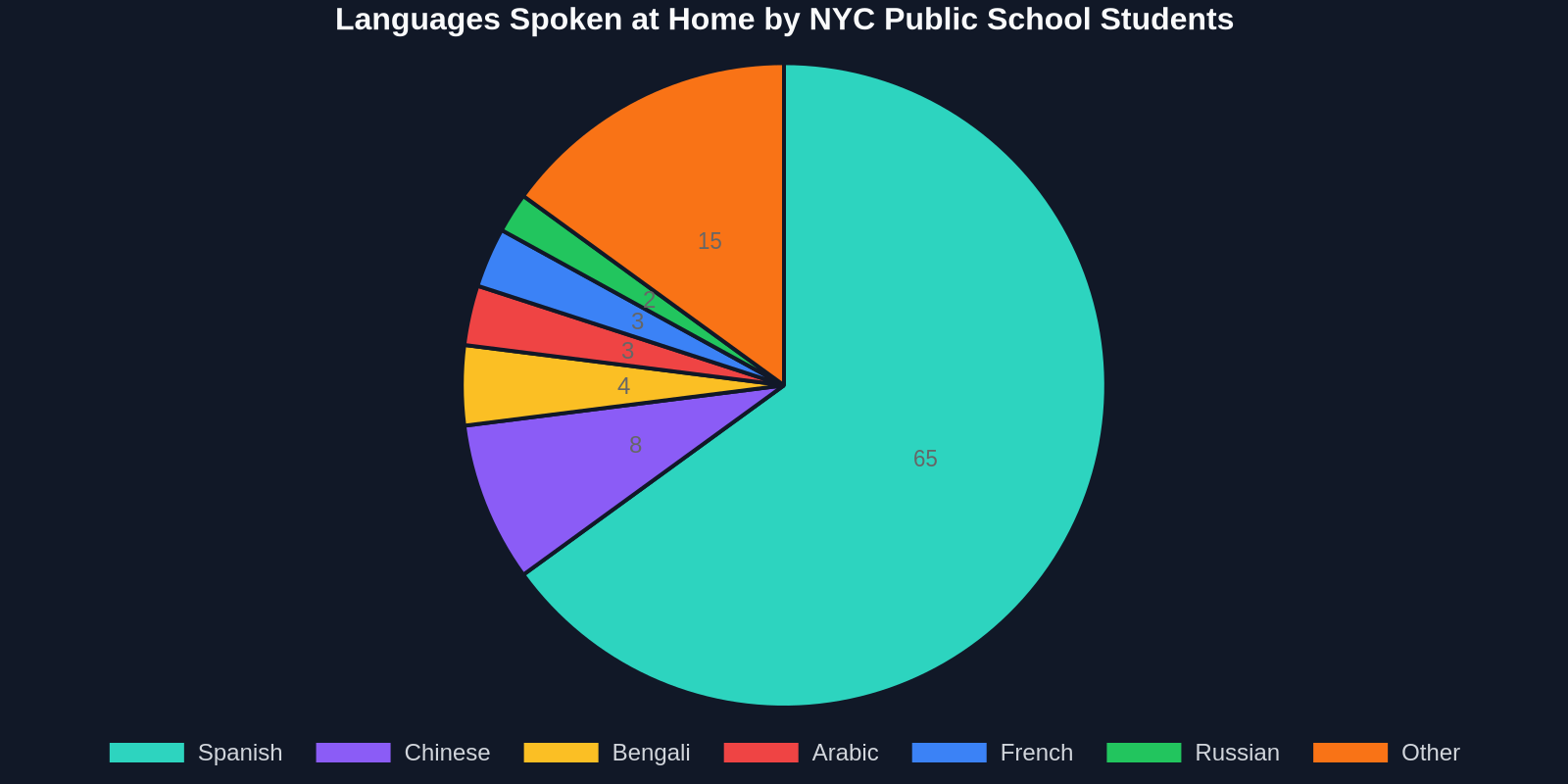
The linguistic diversity of New York City, shown in the pie chart above, is a resource in itself. With so many French speakers in the region, including communities from Haiti, West Africa, and Europe, learners have opportunities to practice authentic conversation daily. Pair this with media that reflects that diversity, and you build an ear for global French.
Step 5: Track Your Progress with Rituals
At the end of each week, note three new words you learned through music and try using them in a sentence. Re-watch a video you first encountered a month earlier and see how much more you understand. This metacognitive reflection is proven to boost autonoy and outcomes. Lyric Lingo’s built-in phrase-saving feature makes it easy to revisit your growing vocabulary bank.
French Education Options Beyond the Classroom
Formal bilingual programs are expanding rapidly, as the line chart below indicates, but they are not accessible to everyone due to loteries, location, or age restrictions. Fortunately, the landscape of informal learning has never been more democratic. YouTube, podcasts, and apps have lowered the bar to authentic French content. Lyric Lingo stands out among these by offering a structured, education-first layer over the world’s largest video platorm.
Common Pitfalls to Avoid
Even with the best resources, learners often stumble in predictable ways. Here is how to navigate them:
- Passive Watching Without Engagement: Just letting a French video play in the background is not study. Use the dual-subtile tool to actively compare translations, pause and repeat challenging lines, and look up unknown words.
- Neglecting Pronunciation: French nasal vowels and silent letters require muscle memory. Sing along out loud, even if you sound like a croaking frog. The physical act of producing the sounds reenforces them.
- Tablescoring Grammar: While immersion-focused methods are excellent, a rudimentary understanding of conjugations and gender helps you decode patterns. Pair your Lyric Lingo sessions with a ten-minute grammar drill from a textbook like Practice Makes Perfect: French Verb Tenses.
- Starting Too Advanced: Choose songs where you understand at least 60-70% of the words initially. Lyric Lingo’s curated playlists for elementary, intermediate, and advanced levels make this easy.
“ The beautiful thing about learning French through music is that it stops being a chore and becomes a private ritual, a endorphin hit with a educational side effect.”
A Future-Ready Skill Set
Bilingualism is no longer just a cultural asset; it is a cognitive and economic advantage. Studies from the National Institute of Health show that dual-language speakers enjoy later onset of dementia symptoms, better executive function, and higher adaptability in professional settings. French, as an official language of international diplomacy, the U., and a key language across Africa, offers particularly compelling opportunities. Whether you are enrolling your child in the New York French American Charter School or dedicating your evenings to solo study with Lyric Lingo, you are investing in a skill that compounds over time.
The New York Bilingual Education Fair is held each spring, check the Frenchly.u website for upcoming dates. While you wait for the next event, start building your media-rich French routine today. Pick a video, turn on dual subtitles, and let the music do the heavy lifing. After all, every expert was once a beginner who pressed play.
Bookmark the Lyric Lingo blog for regular updates on learning strategies, artist spotlights, and language science. Your next breakthrough phrase might be just one song away.