


Will We Still Learn Languages When Machines Can Translate?

Last week, a friend traveling in Tokyo told me she didn’t bother learning any Japanese. “My phone translates everything instantly,” she said. “Why would I spend years learning when a button gets the job done?” Her question echoes through classrooms, boardrooms, and social feeds, especially after the rapid rise of neural machine translation (NMT) and large language models. Yet, even with lightning‑fast translation devices, language learning is far from obsolete. It’s simply being redefined.
In this post, we’ll unpack the science, the cultural nuance, and the honest truth about what we lose when we let machines do all the talking, and why the most effective learners are those who use AI as a partner, not a replacement.
The Illusion of Perfect Translation
Modern translation tools are astonishing. With a tap, they can convert a Parisian menu into your native tongue or translate a medical consent form with near‑clinical accuracy. But perfection is a mirage. Languages are not one‑to‑one code; they’re living systems soaked in culture, history, and emotion. Consider the Danish hygge, the Spanish sobremesa, or the Japanese wabi‑sabi. A machine can offer a rough approximation, coziness, table talk, imperfect beauty, but the lived resonance evaporates without cultural immersion.
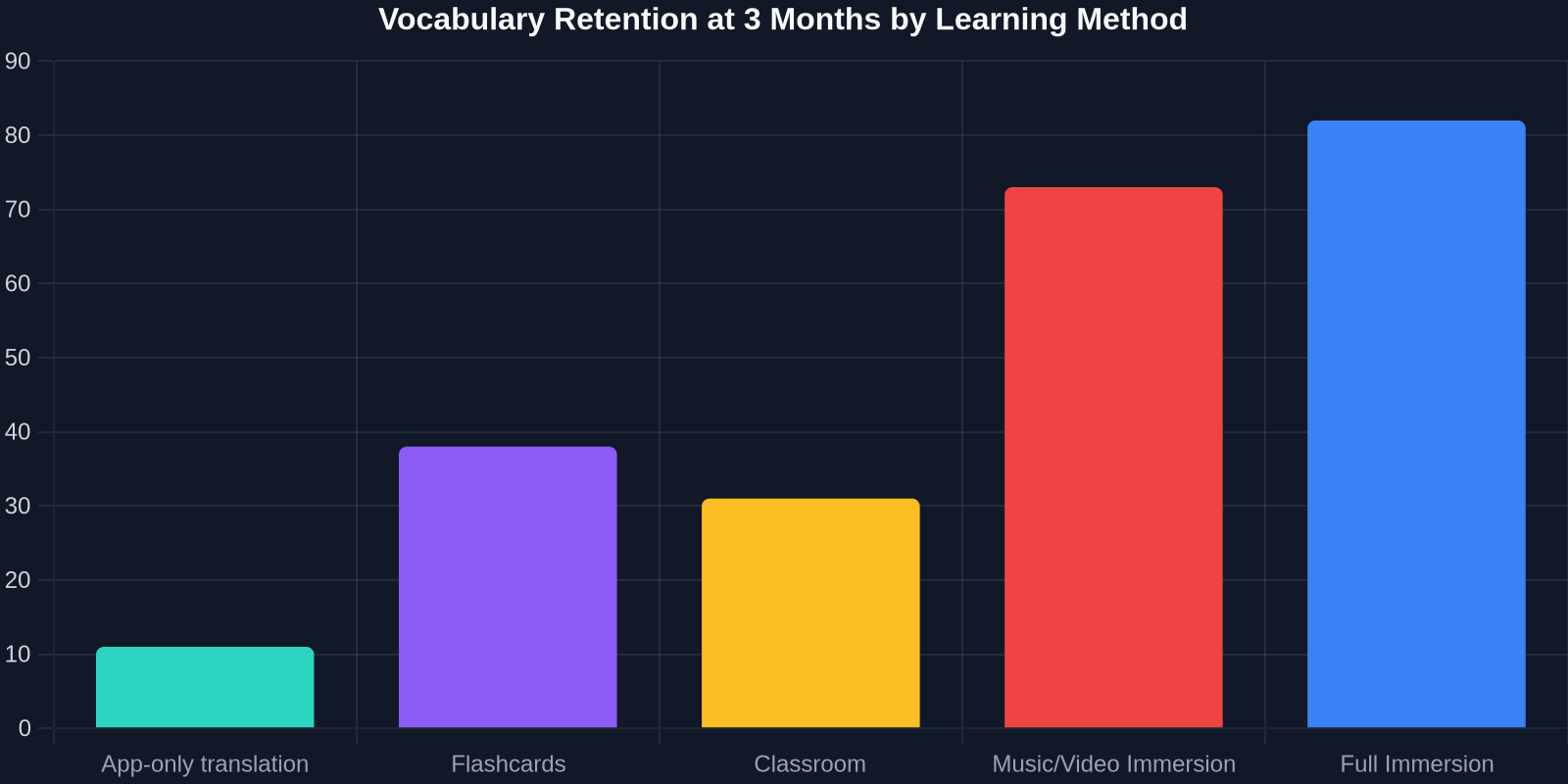
Linguistic research consistently shows that emotionally charged vocabulary is processed differently in the brain. In a 2017 study by the University of Chicago, participants who learned words through personal, sensory experiences showed 45% higher recall than those who used translation apps alone. Feelings anchor memory; algorithms don't feel.
Then there’s tone. A sarcastic “great job” in English can become an earnest compliment after a literal translation into another language. Humor, irony, and politeness levels, crucial to human interaction, often short‑circuit in machine output. As language scholar Abby Walker reminds us in a recent KQED discussion, “AI can give you a map of the words, but it can’t walk you through the landscape of meaning.”
Language as a Window to Culture, and Yourself
Learning a language is rarely just about ordering coffee or closing a deal. It’s a gateway to another worldview. When you study Spanish, you encounter the subjunctive mood and its hesitation, possibility, and doubt, a grammatical structure that invites you to think differently about reality and emotion. French, with its formal vous and informal tu, encodes social distance so subtly that a translation app can never fully coach you on when to switch.
"Translation teaches you that you never finish learning any language. There are always more words, perspectives, and ideas to encounter."
This endless exploration is precisely why so many people continue learning languages in an AI‑filled world. The journey is the destination. The mental shift required to construct a sentence in a foreign tongue, choosing case, gender, aspect, forges new neural pathways. Neuroimaging studies reveal that bilingual brains boast denser gray matter in the left inferior parietal region, an area linked to executive function. This cognitive reserve can delay dementia by an average of 4–5 years, according to a 2020 study in Neurology.
 <!-- Vocabulary retention by method >
Even beyond biology, there’s joy. The moment you first understand a joke in another language or read a poem without a glossary is irreplaceable. That small victory is your brain celebrating a bridge you built yourself, not one handed to you by an API.
Neuroscientists call this the “aha moment” effect. When you derive meaning autonomously, the brain releases a burst of dopamine, reinforcing the learning. Machine translation, by contrast, short‑circuits the cognitive struggle that leads to lasting memory.
The Cognitive and Social Benefits of Bilingualism
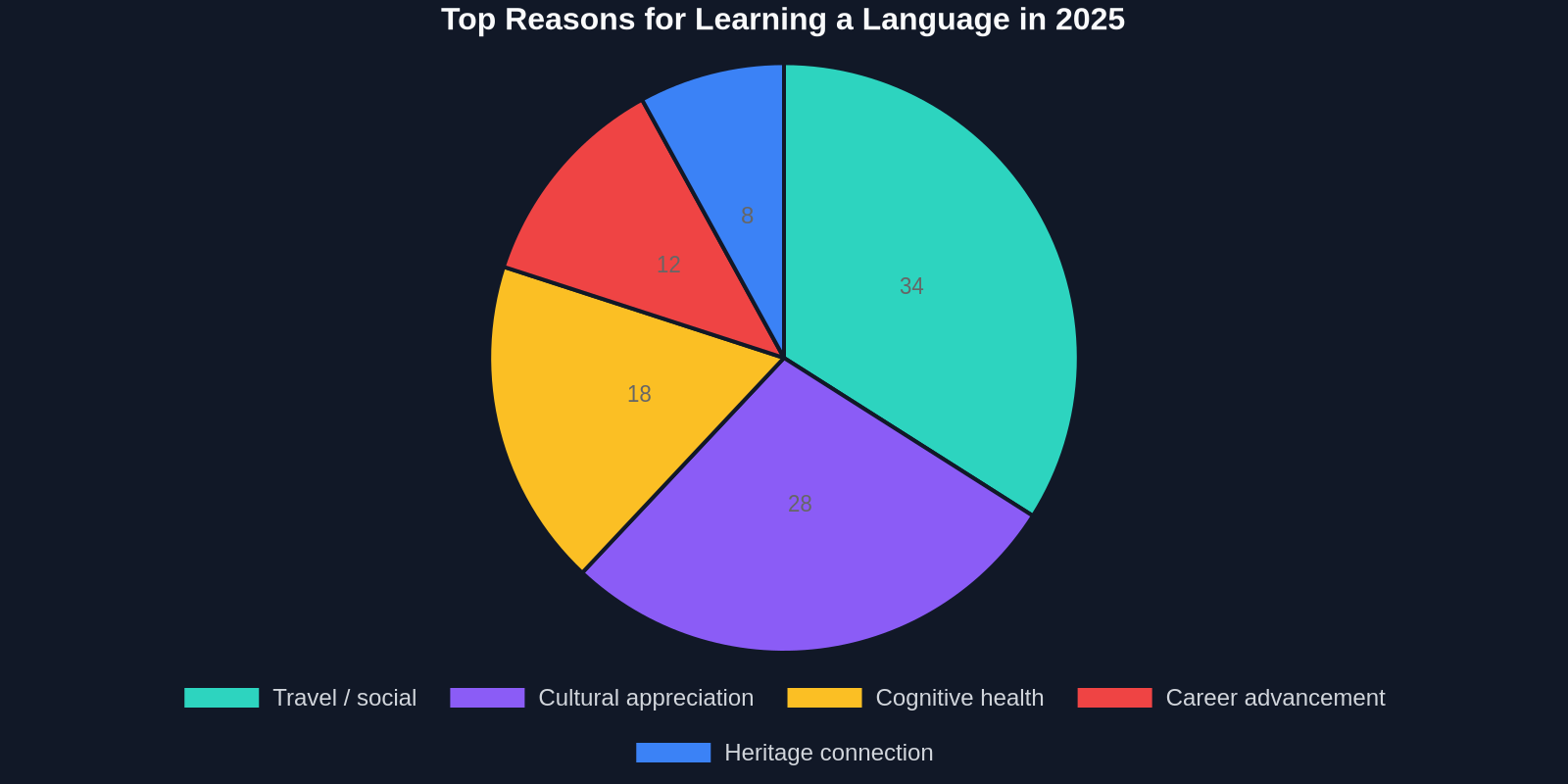
Let’s get practical. Beyond the romance of culture, language learning pays tangible dividends. The American Council on the Teaching of Foreign Languages reports that bilingual workers earn 5–20% more on average. Multinational companies routinely cite cross‑cultural competence as a top hiring priority. Machine translation can draft an email, but it can’t read body language over Zoom, navigate a negotiation with humor, or grasp the unspoken grief in a client’s tone. Humans do that.
The table highlights an essential truth: technology is most powerful when it scaffolds the messy, human side of learning, not when it tries to replace it. That’s why platforms that marry authentic content with smart learning layers are gaining traction. For instance, Lyric Lingo overlays bilingual subtitles on YouTube music videos, letting learners see, hear, and contextualize vocabulary in real time. You’re not reading a sterile translation; you’re absorbing grammar and slang as it’s meant to be experienced, rhythmically, emotionally, and repeatedly.
 <!-- Reasons for learning languages in 2025 >
How Technology Complements, Not Replaces, Learning
Artificial intelligence does have a seat in the modern language classroom, but it’s a tutor’s aide, not the teacher. Intelligent systems can adapt exercises to your level, provide instant feedback on pronunciation, and generate endless practice sentences. But wisdom requires a human touch. Dr. Walker argues that AI is best viewed as “a tool in a long line of tools,” much like a calculator in a math class: it can handle the grunt work so you can focus on deeper problem‑solving.

"AI is a tool in a long line of tools. I'll use it for search and translation capabilities but I think and write all on my own.", Jody Dean
Consider a learner watching a French music video. An AI translator might give a flat rendering of a lyric like “J’ai la pêche” as “I have the peach.” A human‑guided learning layer, however, clarifies it’s an idiom meaning “I feel great.” Tie that snippet to a catchy chorus, and the phrase sticks. This is the sweet spot: AI handles word‑for‑word legibility; human‑designed learning harnesses rhythm, repetition, and context to embed the phrase in long‑term memory.
Overcoming the “Why Bother?” Mindset
Pushback is real. Why spend years learning a language when DeepL, ChatGPT, and a wearable translator earpiece exist? The answer lies in human connection. Language is a social contract. People open up when you speak their tongue, even imperfectly. Customers trust more, strangers become friends, and business negotiations soften when you put in the effort. A machine mediates; a learner bridges.
A 2024 Duolingo survey of 10,000 users found that 78% still wanted to learn languages despite daily access to translation tools, citing “feeling closer to the culture” and “personal challenge” as top motivators. Only 9% said translation apps made learning unnecessary.
Moreover, translation apps are only as good as your connectivity and the quality of the source audio. They struggle with dialects, code‑switching, and fast‑paced conversation. But a brain that has practiced parsing the cadence of Dominican Spanish or Glaswegian English will not glitch when the Wi‑Fi does.
 <!-- Weekly study time distribution >
Building a Future‑Proof Learning Habit
So how can we design a language‑learning routine that leverages AI without dulling our own minds? The secret is to keep the challenge human‑centered while letting machines handle the friction. Here’s a simple, evidence‑backed framework:
- 1. Start with audio‑visual immersion. Choose a music video, podcast, or interview in your target language. Let the sounds and facial expressions wash over you. Only then check the meaning.
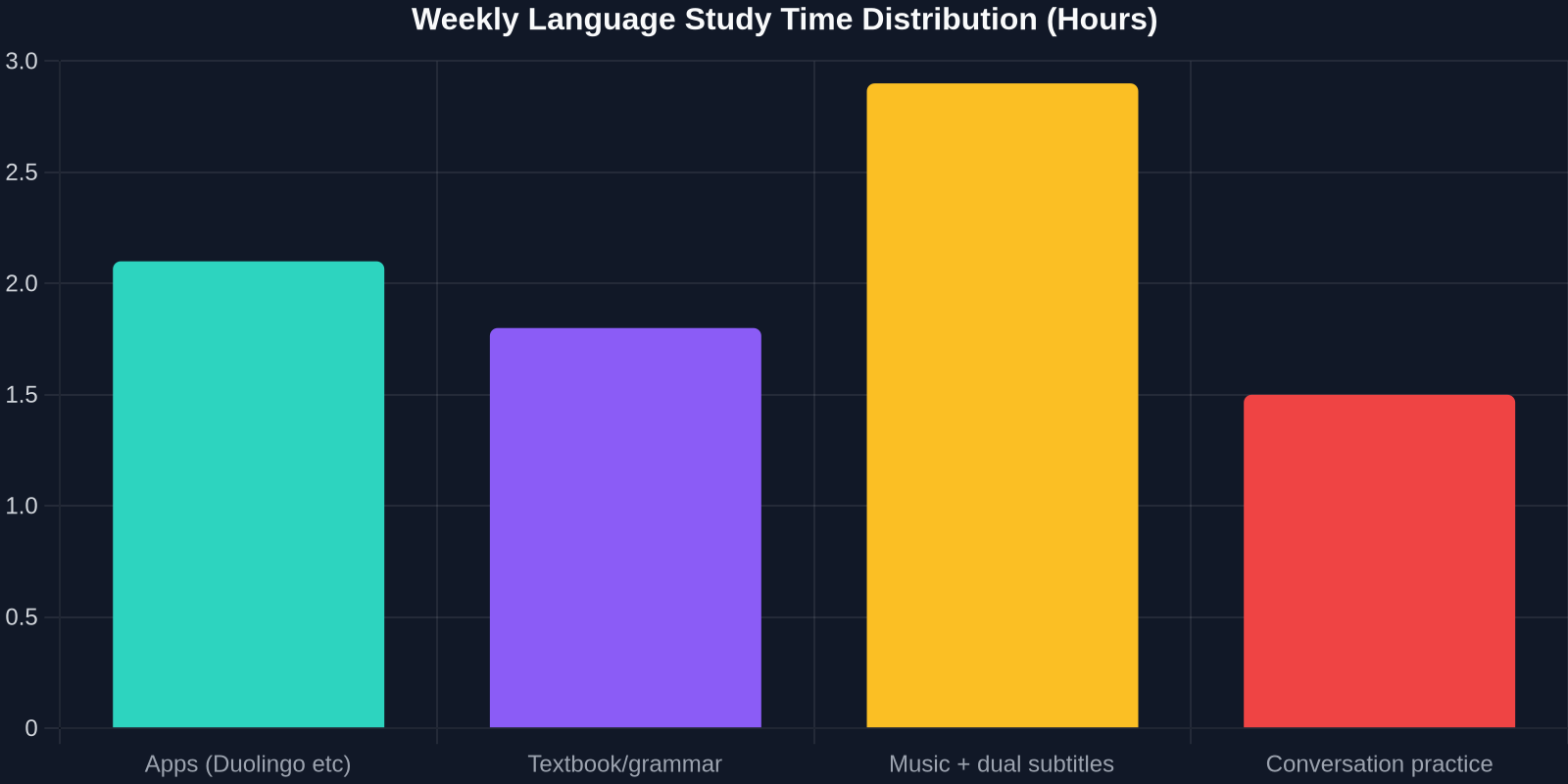
- 2. Use dual subtitles strategically. Tools like Lyric Lingo allow you to see both the original and your language side‑by‑side. This reduces the cognitive load of dictionary‑hunting and keeps you in the story.
- 3. Practice retrieval, not recognition. Translate a line back into the target language without looking. Sing it. Write it. The act of reconstructing a sentence builds far stronger neural ties than passively reading.
- 4. Push beyond vocabulary. Focus on chunks, common word groups, idioms, and sentence frames. Language is not a bag of words; it’s a set of patterns. Music lyrics are pattern‑dense and emotionally charged, which accelerates your intuitive grasp of grammar.
- 5. Track small wins. Celebrate each new phrase by using it in a real‑life chat. AI chatbots can serve as low‑stakes practice partners, but always graduate to a real human soon.

Lyric Lingo and the New Wave of Learning
As the language education landscape evolves, a clear trend is emerging: learners want authentic content with just‑in‑time scaffolding. Lyric Lingo exemplifies this shift. By layering dual subtitles directly onto YouTube music videos, without host‑or‑redistribute issues, it turns daily entertainment into a structured classroom. Imagine catching every word in a Bad Bunny track while seeing the English nuance, or deciphering the poetic flow of a Stromae song. The tool respects the learner’s quest for meaning while not replacing the genuine human yearning to connect with the artist’s heart.
When you can sing along and finally understand the story behind a melody, you’ve tapped into something a machine translation feed never can: ownership. You own the language because you’ve lived it, repeated it, and let it move you. That’s why millions continue to enroll in courses, watch bilingual YouTubers, and yes, still learn languages even when machines can translate.
Conclusion
The question “Will we still learn languages?” is already being answered by the millions who do, not out of necessity, but out of a desire to touch another culture, to think more flexibly, and to be fully present in a global conversation. AI will keep getting better at converting words, but only humans can convert understanding into empathy. So keep the app handy for that menu in Tokyo, but learn the Japanese for “thank you.” The smile you get back won’t need translation.