


Lo que la revolución del examen bilingüe de ciencias de Sudáfrica significa para los estudiantes de idiomas en todas partes
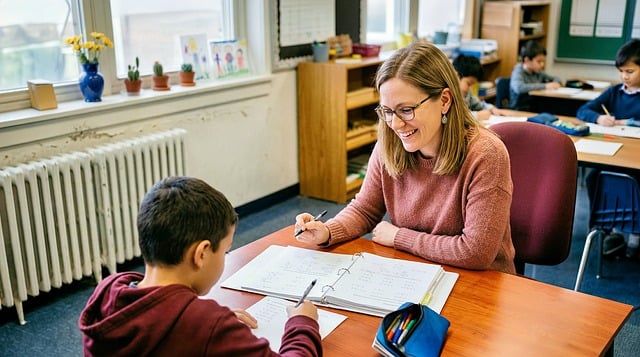
En una escuela pequeña y decidida de Sudáfrica, los maestros tomaron una decisión que trastocaría décadas de sabiduría convencional: comenzaron a evaluar ciencias en dos idiomas. En lugar de exámenes solo en inglés, los estudiantes recibieron evaluaciones tanto en inglés como en su lengua materna, el isiXhosa. Los resultados no solo fueron impresionantes, sino transformadores. Las calificaciones subieron, la ansiedad se desplomó y los estudiantes que habían permanecido en silencio comenzaron a responder preguntas con la profundidad que sus maestros siempre sospecharon que tenían. Este experimento real, reportado por The Conversation, ofrece una lección poderosa no solo para educadores, sino para cualquiera que esté aprendiendo un idioma. Demuestra que cuando le damos al cerebro múltiples anclajes lingüísticos, la comprensión se profundiza y la confianza se dispara. En Lyric Lingo, hemos visto este principio iluminar los ojos de los estudiantes de idiomas que usan música y subtítulos dobles para estudiar, porque la misma magia cognitiva que desbloqueó las ciencias para los adolescentes sudafricanos puede desbloquear el español, el francés o el inglés para ti.
El experimento: la audaz decisión de una escuela hacia la evaluación bilingüe
Durante años, la suposición predeterminada en muchas sociedades multilingües ha sido que las pruebas de alto riesgo deberían realizarse en el idioma dominante, generalmente inglés, francés o portugués. El razonamiento es simple: los estudiantes necesitan demostrar que pueden funcionar en el idioma de la vida académica y profesional futura. Pero, ¿qué pasa si esa suposición en realidad está perjudicando tanto el aprendizaje como la evaluación?
En una escuela secundaria sudafricana, los profesores de ciencias e investigadores decidieron poner a prueba la hipótesis. Le dieron al mismo grupo de estudiantes dos versiones de un examen de ciencias: una solo en inglés y otra que presentaba cada pregunta en inglés junto con una traducción al isiXhosa, la lengua materna de los estudiantes. Los resultados fueron sorprendentes.
Los estudiantes que antes tenían dificultades para expresar ideas científicas complejas en inglés de repente demostraron una comprensión mucho más rica cuando podían leer la pregunta en su lengua materna. El formato bilingüe no solo tradujo palabras; activó un procesamiento cognitivo más profundo. Los estudiantes podían usar el isiXhosa para desglosar el concepto y luego mapear esa comprensión en la terminología en inglés que necesitarían después. Era un puente, no una muleta.
Por qué funcionan las pruebas bilingües: la ciencia del anclaje bilingüe
Este hallazgo no es un milagro aislado. Se hace eco de décadas de investigación en educación bilingüe y psicología cognitiva. El cerebro humano no es un archivador donde cada idioma se almacena por separado; es una red interconectada. Cuando un estudiante se encuentra con un concepto en un idioma, se activan las vías neuronales asociadas con ese concepto. Agregue un segundo idioma, y la red se vuelve más rica, más redundante y más resistente.

La ventaja de la recuperación
Piensa en cómo recuerdas una palabra en tu idioma de destino. A menudo, primero recuerdas la traducción, luego la palabra en sí. Eso no es una señal de debilidad, es el mecanismo natural de recuperación del cerebro. En el estudio sudafricano, cuando los estudiantes vieron la palabra en isiXhosa para "fotosíntesis" (ukufumana isondlo), desencadenó todo el concepto científico, no solo una definición de diccionario. Luego podían seleccionar el término correcto en inglés porque ya entendían el significado. Esta es la ventaja de recuperación de la instrucción bilingüe.
La seguridad emocional reduce el filtro afectivo
El aprendizaje de idiomas es profundamente emocional. Cuando tienes miedo de cometer un error, el filtro afectivo de tu cerebro se eleva, bloqueando la entrada. Los estudiantes sudafricanos informaron sentirse significativamente menos ansiosos durante los exámenes bilingües. Ya no se evaluaba su competencia en inglés; se evaluaban sus conocimientos de ciencias. Ese cambio de enfoque lo es todo.
"Cuando dejamos que los estudiantes piensen en su lengua materna, desbloqueamos un universo de comprensión que siempre estuvo ahí, esperando la llave correcta."
Del aula de ciencias al aprendizaje de idiomas: el principio bilingüe
En Lyric Lingo, diseñamos nuestra plataforma basándonos en este mismo principio. No teníamos un laboratorio de ciencias, pero sí teníamos millones de videos de YouTube y una corazonada: si ver dos idiomas lado a lado podía desbloquear una materia compleja como la biología, podría hacer lo mismo con una canción de amor en español o un verso de rap en francés.
Cuando ves un video musical con subtítulos dobles, la letra original y la traducción a tu idioma nativo, estás recreando la condición del examen bilingüe, pero en un contexto mucho más atractivo emocionalmente. La melodía, el ritmo y la historia proporcionan los ganchos cognitivos que hacen que el vocabulario se pegue. Y al igual que los estudiantes sudafricanos, no estás traduciendo en el vacío; estás conectando el nuevo idioma con un significado que ya entiendes.
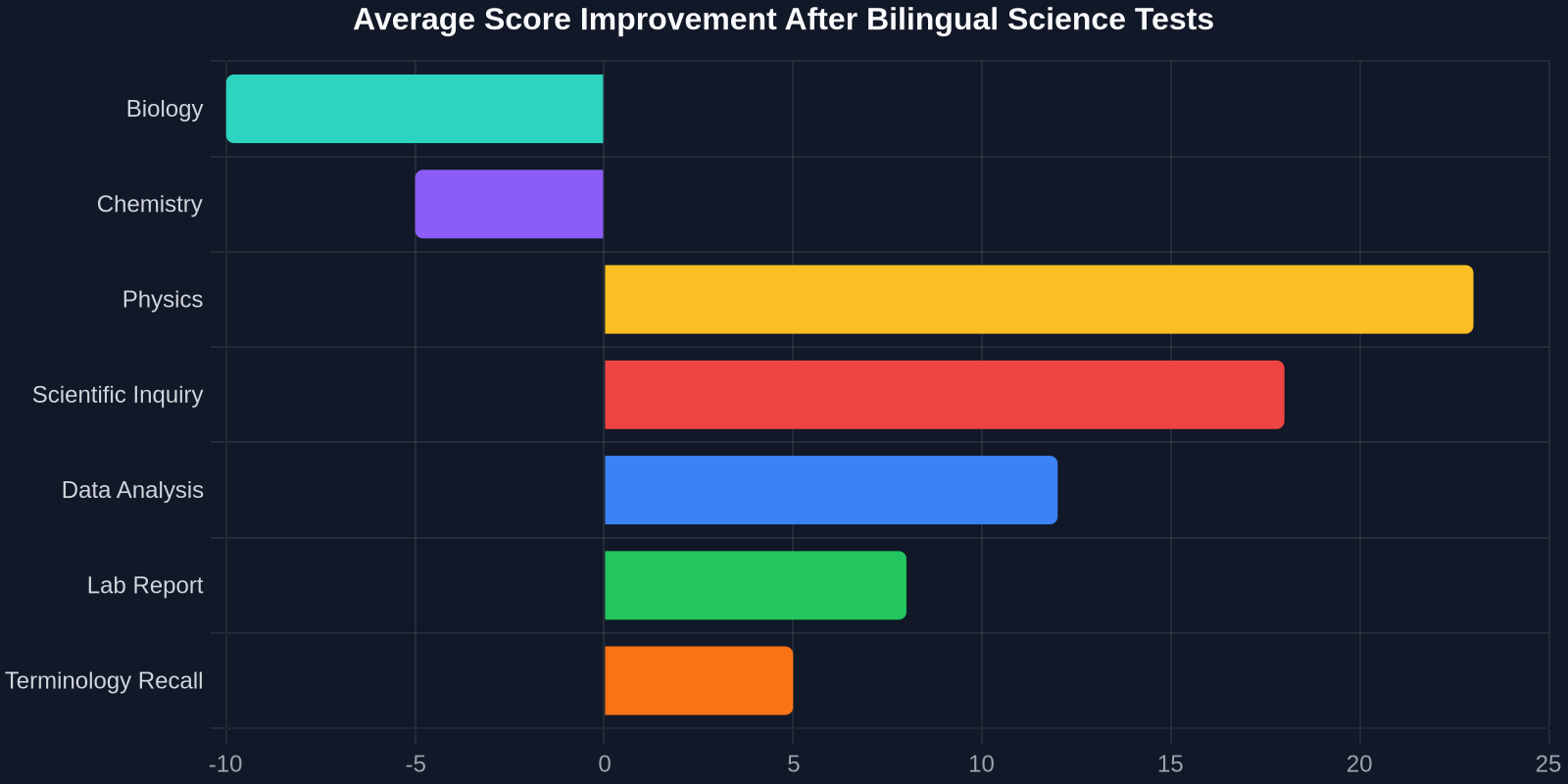
Cómo la música y los subtítulos dobles aceleran la retención de vocabulario
La música es el vehículo de aprendizaje bilingüe definitivo. Combina rima, repetición, ritmo y emoción, todo lo cual son potenciadores de memoria comprobados. Desglosemos la ciencia cognitiva.
1. La repetición rítmica construye memoria procedimental
Cuando escuchas un coro pegadizo, el sistema de memoria procedimental de tu cerebro (el mismo que aprende a andar en bicicleta) codifica el patrón. Repite una línea como "Despacito, quiero respirar tu cuello despacito" suficientes veces, y las palabras se vuelven automáticas. Los subtítulos dobles aseguran que la primera vez que te encuentres con esa frase, ya sepas lo que significa, por lo que no solo estás memorizando sonidos, sino aprendiendo significado.
2. El compromiso emocional fortalece la codificación
La amígdala, el centro emocional de tu cerebro, está justo al lado del hipocampo, que maneja la formación de la memoria. Cuando sientes algo durante una canción, emoción, tristeza, alegría, tu cerebro etiqueta el vocabulario como importante. Es por eso que puedes recordar cada palabra de una canción de desamor de hace años pero olvidar una lista de un libro de texto para mañana. En el estudio sudafricano, la ansiedad reducida no fue solo una comodidad; fue un potenciador cognitivo. La emoción positiva reduce el filtro afectivo y fortalece la retención.
3. La riqueza contextual crea múltiples vías de recuperación
Una palabra aprendida de forma aislada se almacena en una vía única y frágil. Una palabra aprendida en una canción con una historia, un video y una traducción se almacena en una red de asociaciones. Cuando más tarde necesites recordar "lluvia", podrías recordar la escena lluviosa del video musical, la suave guitarra y el subtítulo en inglés "rain". Eso son múltiples rutas hacia el mismo recuerdo, haciendo que la recuperación sea más rápida y confiable.
| Learning Method | Cognitive Load | Vocabulary Retention | Emotional Engagement | Practical Application |
|---|---|---|---|---|
| Flashcards | Medium | Low-Medium | Low | Decontextualized |
| English-Only Listening | High | Low | High | Passive |
| Bilingual Dual Subtitles | Low-Medium | High | Very High | Active, contextual |
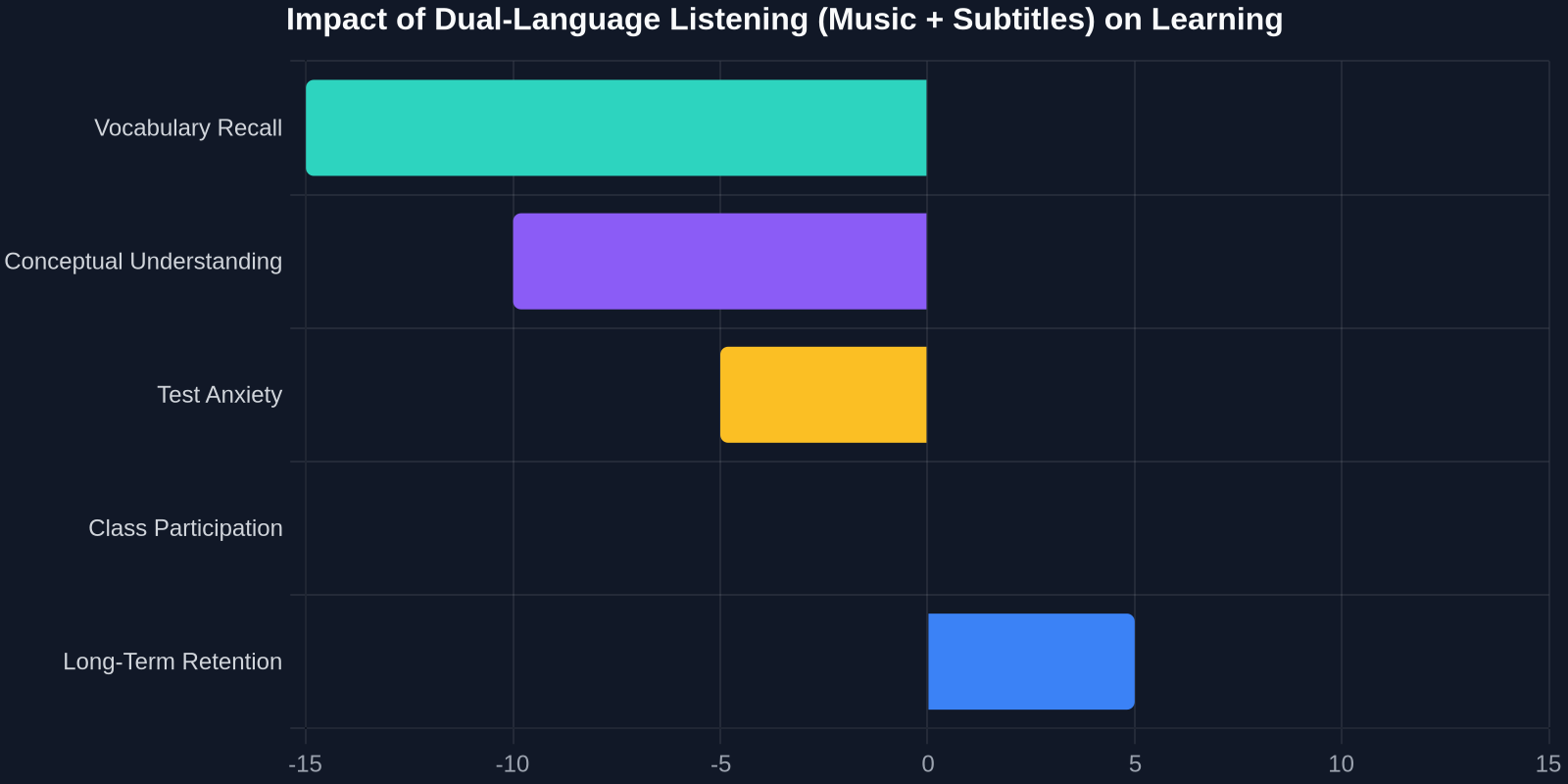
Pasos prácticos: crea tu propio entorno de aprendizaje bilingüe esta misma noche
No necesitas estar en un aula sudafricana para beneficiarte de las pruebas bilingües. El mismo poder está disponible en tu teléfono, tableta o computadora portátil, y comienza con la música que ya amas.
Paso 1: Elige una canción con la que ya te conectes
Elige una canción en tu idioma de destino que realmente disfrutes. La conexión emocional no es opcional; es la base del método. Si estás aprendiendo español, quizás sea un tema de Rosalía o Bad Bunny. Para francés, prueba con Stromae o Angèle. La familiaridad de la melodía hará que tu cerebro sea receptivo.### Paso 2: Mira con subtítulos duales primero Aquí es donde Lyric Lingo transforma tu experiencia en YouTube. En lugar de alternar entre subtítulos en inglés y en tu idioma objetivo, o buscar palabras una por una, ves ambas líneas simultáneamente. Mira el video una vez, solo leyendo la traducción y absorbiendo la historia. No intentes memorizar; solo deja que tu cerebro forme las conexiones.
Paso 3: Concéntrate en el idioma objetivo, mirando la traducción solo cuando sea necesario
En la segunda visualización, intenta leer las letras originales tanto como sea posible. Solo mira la traducción cuando te encuentres con una palabra que no conozcas. Esto imita el formato de prueba bilingüe: intentas recordar el significado, pero tienes una red de seguridad que evita la frustración y la ansiedad.
Paso 4: Canta
Esta es la fase de recuerdo activo. Cantar te obliga a producir el idioma, lo que fortalece la memoria motora y la pronunciación. Como ya has construido el significado a través de los subtítulos duales, no solo estás repitiendo sonidos, sino expresando ideas.
El panorama general: Inclusión lingüística en la educación y más allá
El estudio de pruebas bilingües sudafricano es más que un astuto ajuste en el aula; es un espejo que refleja cómo a menudo malinterpretamos el lenguaje y el aprendizaje. Asumimos que la inmersión en el idioma objetivo por sí sola es la ruta más rápida hacia la fluidez, pero la investigación y los resultados del mundo real muestran que el uso estratégico de la lengua materna, o de un idioma bien conocido, puede acelerar la comprensión profunda.
Para los profesores, esto significa replantear el papel de las lenguas maternas en el aula. En lugar de verlas como un obstáculo, pueden ser una plataforma de lanzamiento. Para los estudiantes de idiomas, significa liberarse de la culpa de traducir. Usar subtítulos duales no es hacer trampa; es la forma más eficiente de construir un rico léxico mental interconectado.
Lyric Lingo fue creado para este momento exacto, cuando nos damos cuenta de que las herramientas que usamos a diario, como YouTube, pueden convertirse en entornos de aprendizaje poderosos con la capa adecuada. Al añadir una capa educativa bilingüe a los videos que ya ves, transformamos el entretenimiento pasivo en práctica activa y respaldada por la evidencia. Y al igual que esa escuela sudafricana, estamos viendo cómo los estudiantes se iluminan, no porque de repente se volvieran más inteligentes, sino porque finalmente les dimos la llave para abrir lo que ya sabían.
Por qué esto es importante para las 464 escuelas sin Matemáticas
Volviendo a la estadística de que 464 escuelas públicas sudafricanas aún no ofrecen Matemáticas, la conexión lingüística es imposible de ignorar. Las Matemáticas, como la ciencia, están llenas de conceptos abstractos y vocabulario especializado. Cuando los estudiantes son enseñados y evaluados exclusivamente en un idioma que aún están dominando, la materia se vuelve inaccesible. La evaluación bilingüe no es una bala de plata, pero es un paso crucial hacia la equidad educativa. Dice: tu lengua materna no es una barrera, es un recurso.
Como estudiantes de idiomas, podemos adoptar la misma mentalidad. Cada vez que usas tu idioma nativo para entender una frase en francés, no estás tomando un atajo, estás construyendo un puente. Y cuando cruzas ese puente suficientes veces, el destino se vuelve tan familiar que puedes caminar sin el puente.
Conclusión: Convierte tu próxima sesión de YouTube en un avance bilingüe
El experimento de la escuela sudafricana confirma lo que muchos de nosotros hemos sentido intuitivamente: el cerebro prospera en la conexión, no en el aislamiento. Cuando aprendes un idioma a través de subtítulos duales, no solo estás adquiriendo palabras, sino experimentando la cultura, la emoción y la música al mismo tiempo. Eso es aprendizaje profundo, y está disponible ahora mismo en la misma plataforma que probablemente estás usando para procrastinar.
Esta noche, abre Lyric Lingo, busca una canción que ames en el idioma que estás aprendiendo y mira cómo sucede la magia. Verás la traducción aparecer justo debajo de la letra original y, por primera vez, entenderás cada palabra sin pausar. Ese es tu momento de prueba científica bilingüe. Ese es el sonido de tu cerebro haciendo conexiones que durarán.
Y si eres profesor, imagina lo que esto podría hacer por tus estudiantes, no solo en ciencias, sino en cada materia donde el idioma sea un guardián. La revolución ya está ocurriendo, una letra a la vez.