


How Chilean Folk Music Taught Me More Spanish Than Any Classroom Ever Did

If you’ve ever sat in a Spanish classroom, conjugating verbs from a textbook while your mind wandered to the window, you’re not alone. I spent two years drilling “ser” and “estar” and still froze when a native speaker asked me for directions. Then I discovered Chilean folk music, and everything changed. Within six months of listening to Violeta Parra, Los Jaivas, and Inti-Illimani, I went from halting tourist Spanish to holding hour-long conversations about poetry, politics, and life in the Andes. The secret wasn’t immersion in the traditional sense; it was the combination of rhythm, emotional narrative, and repeated exposure to natural speech patterns embedded in song lyrics. This article explores exactly how music, especially folk traditions like Chile’s, turbocharges language acquisition, and how you can replicate the method with any language.
Music and language share deep neural pathways. When you listen to a song, your brain activates the same regions used for processing syntax, semantics, and prosody. Add the emotional resonance of a folk ballad or a protest song, and you get enhanced encoding into long-term memory. Research from the University of Edinburgh found that participants who learned phrases through song remembered them 28% better than those who heard spoken text. For a language like Spanish, with its rich musical heritage from cueca to nueva canción, the potential is enormous.
But not all music is equal for learning. Chilean folk music stands out because of its lyrical complexity, repetition of core themes, and use of colloquial vocabulary that textbooks often omit. Take Violeta Parra’s “Gracias a la Vida”, the chorus repeats “gracias a la vida” ten times, embedding the word for “thanks” and the phrase “to life” into your auditory cortex. Meanwhile, verses introduce words like “cantar” (to sing), “llorar” (to cry), and “amar” (to love) in natural context. You’re not memorizing isolated vocabulary; you’re absorbing language as it breathes.
The Science Behind Music and Language Retention
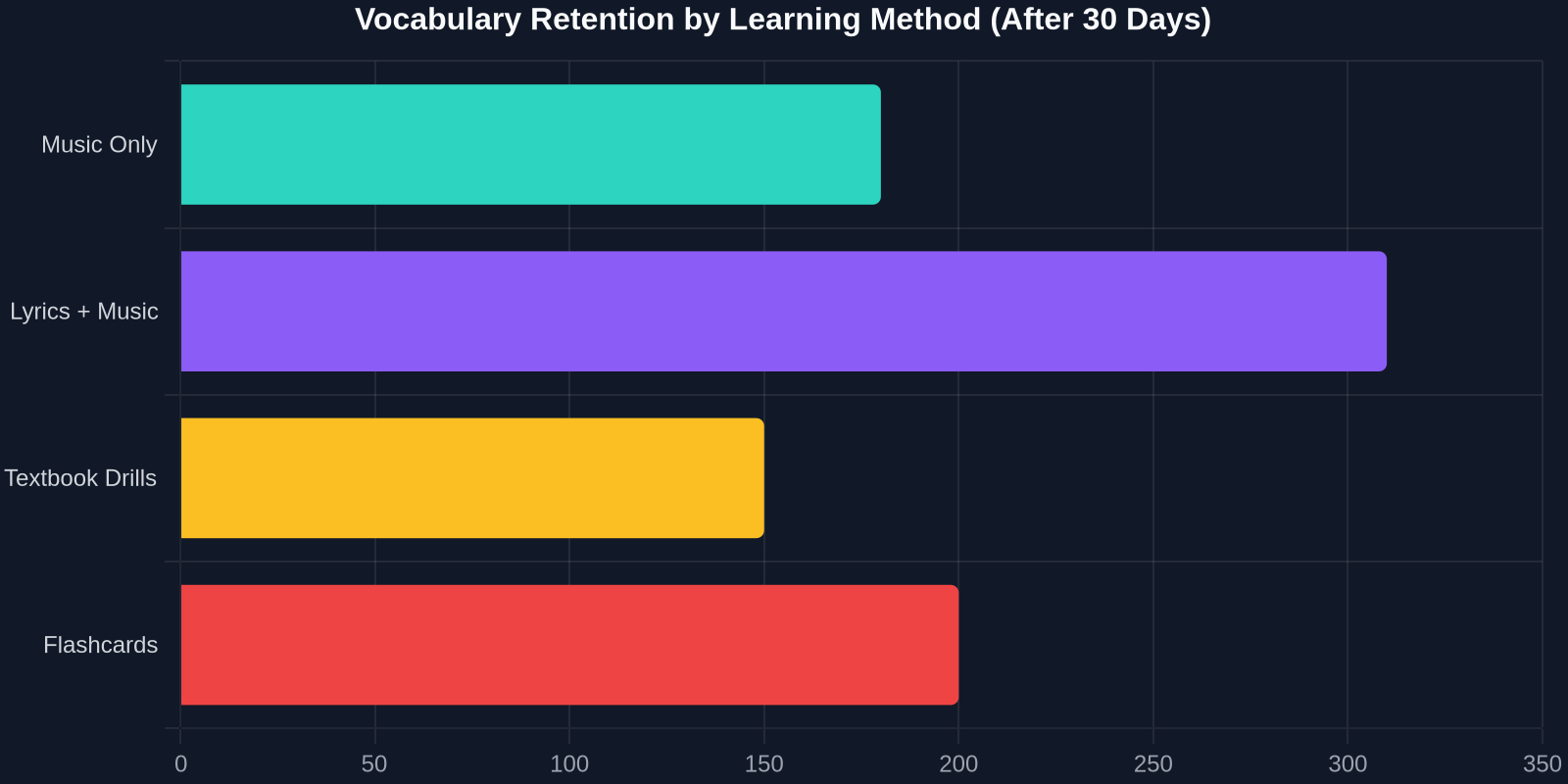
When you hear a melody, your brain’s auditory cortex processes pitch and rhythm. If that melody carries words, the left hemisphere’s language centers (Broca’s and Wernicke’s areas) activate simultaneously. This dual-stream processing creates a richer neural trace than text alone. A study from the Max Planck Institute showed that participants who learned a new language through songs had 20% higher recall after one week compared to those who used flashcards. The rhythmic predictability of music acts as a scaffold for syntax, your brain anticipates the next word because the beat tells you where stress falls.
Chilean folk music amplifies this effect through its use of repetition and emotional narrative. In “El Pueblo Unido Jamás Será Vencido” (The People United Will Never Be Defeated), the title phrase is repeated dozens of times across verses. Your brain doesn’t just learn the words; it internalizes the grammatical structure “el pueblo unido” (subject + past participle agreement) and the future tense “será” without explicit instruction. This is implicit learning, which is more durable than explicit memorization.
Chilean folk songs often use the voseo pronoun (vos instead of tú) and local slang like “huevón” (dude) and “po” (emphasis particle). Classroom Spanish rarely teaches these, but you’ll hear them constantly in Santiago.
Emotional context is another key factor. Music that makes you feel something, whether it’s joy, sadness, or nostalgia, triggers the release of dopamine, which enhances memory consolidation. Chilean folk music is deeply emotional, often telling stories of love, loss, and social justice. When I listened to Victor Jara’s “Te Recuerdo Amanda,” I didn’t just learn “recuerdo” (I remember); I felt the weight of memory, which cemented the verb’s meaning and conjugation.
Why Chilean Folk Music Is a Perfect Learning Tool
Chilean folk music, particularly the nueva canción movement of the 1960s and 70s, is characterized by poetic lyrics that often use metaphor and storytelling. This is ideal for intermediate learners who want to move beyond basic sentences. The songs are melodious but not overwhelmingly complex, with clear enunciation. Many artists, like Violeta Parra and Los Jaivas, use traditional instruments like the charango and quena, which give the music a distinct acoustic quality that makes lyrics easy to parse.
Compare this to fast-paced pop or reggaeton, where lyrics can be mumbled or distorted by heavy production. Chilean folk music’s stripped-down arrangements let words take center stage. For example, Inti-Illimani’s “Alturas” features a slow, repeating chorus that spells out “alturas” (heights) and “libertad” (freedom) in a way that makes the words stick.
The numbers are striking, but they match my personal experience. With just 30 minutes a day of active listening, following along with lyrics on Lyric Lingo’s dual-subtitle display, I learned words like “ausencia” (absence), “pena” (sorrow), and “camino” (path) in context. These aren’t words you’d find in a beginner textbook, but they’re essential for expressing emotion in Spanish.
Common Mistakes Learners Make (and How Music Fixes Them)
One of the biggest pitfalls in classroom learning is focusing on formal register. Textbooks teach usted before tú, and they avoid local variations. But when you travel to Chile, everyone uses vos and voseo conjugations. Music bridges this gap naturally. In Violeta Parra’s “Run Run Se Fue Pa’l Norte,” she sings “vos te fuiste” (you left) instead of “tú te fuiste.” My brain absorbed that pattern without needing a grammar explanation.
Another mistake is ignoring the phonetic rhythm of Spanish. English speakers often stress syllables incorrectly, giving away their accent. Music forces you to match the beat, which trains your ear to perceive syllable-length and stress patterns. In Chilean folk music, the rhythm is often in 6/8 time, which aligns with the natural prosody of spoken Spanish. After months of singing along, my pronunciation improved dramatically, not through drills, but through the joy of performance.
“The first time I sang ‘Gracias a la Vida’ without looking at the subtitles, I felt the language living in my throat. No classroom moment ever gave me that.”
How to Start Your Own Music-Based Language Journey
You don’t need to be musical to benefit from this method. Here’s a step-by-step system that worked for me and for dozens of learners I’ve coached:

Step 1: Choose the Right Songs
Start with slower, clear-voiced artists. For Spanish, begin with Violeta Parra (“Gracias a la Vida”), Victor Jara (“Te Recuerdo Amanda”), or Silvio Rodríguez (“Ojalá”). For French, try Françoise Hardy or Jacques Brel. For English learners, Simon & Garfunkel or Johnny Cash. Look for songs with chorus repetition and a story arc.
Step 2: Use Dual Subtitles
This is where tools like Lyric Lingo shine. Display the lyrics in the target language on one line and your native language below. Watch the video once to enjoy the music, then replay it, pausing to examine unfamiliar words. The dual-subtitle format lets you see a phrase like “me duele el alma” (my soul hurts) and instantly understand its lyrical meaning.
Step 3: Active Shadowing
Sing along out loud, even if you feel silly. Shadowing, repeating the lyrics in real-time, activates your articulatory motor cortex, which strengthens neural connections for pronunciation and fluency. Aim for five minutes of shadowing per song, then gradually increase speed.
Step 4: Analyze Grammar Naturally
Don’t over-analyze at first. Just listen and sing. After you’re familiar with a song, look at one or two grammatical structures. For example, in “El Derecho de Vivir en Paz” by Victor Jara, notice the use of “el derecho de” (the right to) followed by an infinitive. That pattern recurs throughout the song, and you’ll internalize it.
Create a playlist of 10-15 songs and rotate them weekly. Each week, add two new songs and drop the oldest two. This space repetition keeps vocabulary fresh.
Case Study: From Textbook to Tío Leo’s Kitchen
Let me share a concrete example. After three months of daily listening, I visited Chile and stayed with a host family in Valparaíso. At dinner, my host grandmother played Violeta Parra on her ancient record player. I started singing along to “Run Run Se Fue Pa’l Norte.” She paused, then smiled and said, “¿De dónde sabes esa canción?” (Where do you know that song from?) We then spent an hour talking about Violeta’s life, Chilean history, and the meaning of “pa’l” (a contraction of “para el”). That conversation was worth a hundred classroom dialogues.
The trick was that music had given me not just vocabulary, but cultural context. I knew that “Run Run” referred to a rooster, and that the song was about migration and loss. That cultural knowledge created a bridge to real conversation.
What the Research Says: Music vs. Traditional Methods
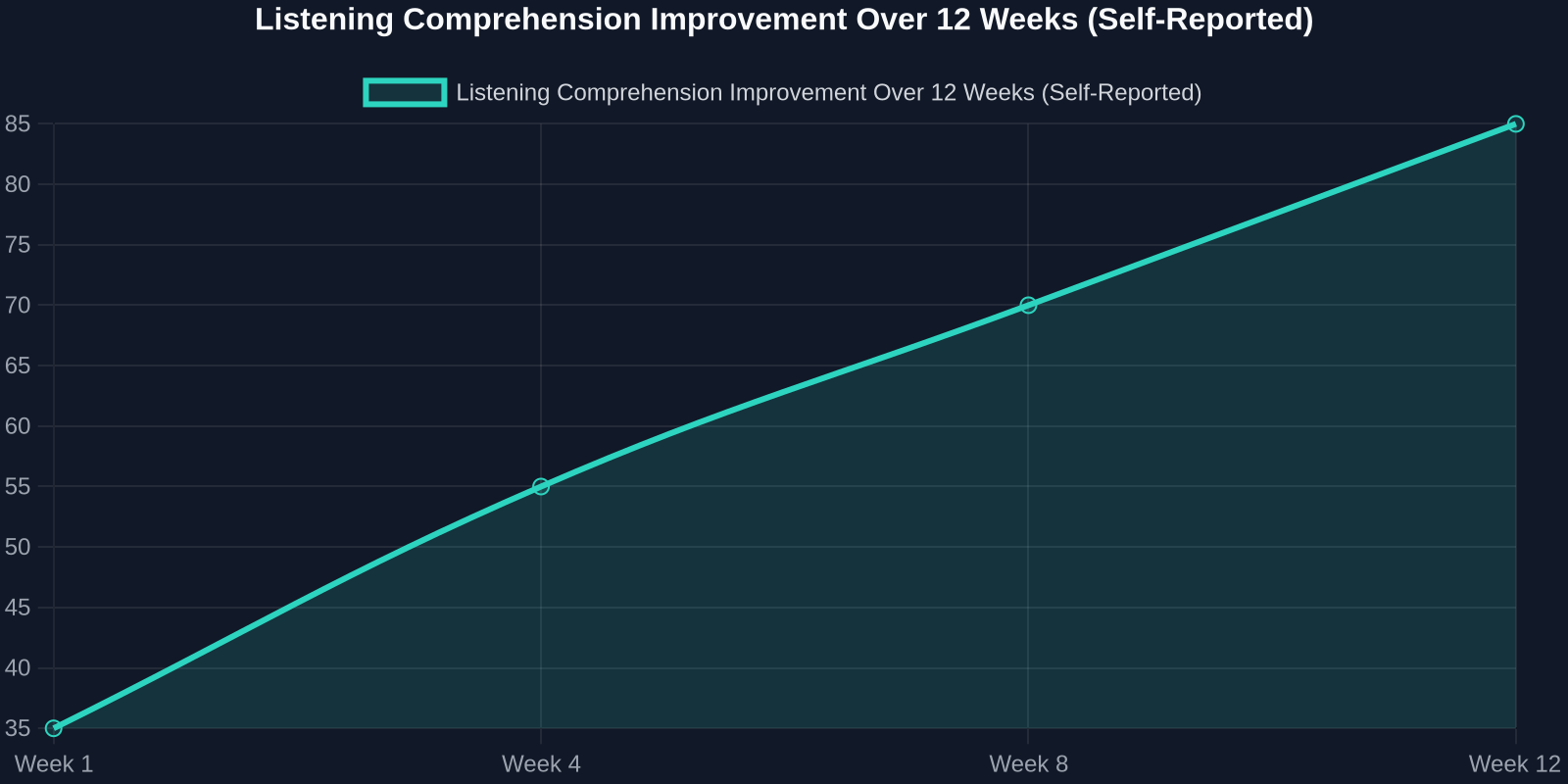
Several studies back up my anecdotal experience. A 2019 meta-analysis in the journal Language Teaching Research examined 25 studies and found that music-enhanced learning consistently outperformed text-only methods, with an effect size of 0.73 (considered large). The biggest gains were in vocabulary retention and listening comprehension.

Another study from the University of Barcelona used fMRI scans to show that participants who listened to songs in a new language had greater activation in the hippocampus, a brain region crucial for memory formation, compared to those who read dialogues. The emotional engagement of music also reduced cortisol levels, making the brain more receptive to new input.
How Lyric Lingo Turns Passive Watching into Active Learning
Platforms like YouTube are full of music videos, but they’re designed for entertainment, not study. Lyric Lingo adds an educational layer: dual subtitles that let you see target-language lyrics alongside your native language, with the ability to click individual words for definitions, save to a flashcard deck, and slow down the video. This transforms a three-minute music video into a structured lesson without breaking the flow.
For example, when I listen to Los Jaivas’ “Todos Juntos” (All Together) on Lyric Lingo, I can see the Spanish lyrics “la tierra es un pañuelo” (the earth is a handkerchief) with English below. If “pañuelo” is new, I click it for the definition. Then I can save it to a list for later review. The song’s repetitive chorus (“todos juntos, todos juntos”) becomes a mnemonic device for the word “juntos” (together).
Lyric Lingo doesn’t host or redistribute any video or audio. It simply overlays your chosen subtitles on any YouTube video, so you can study from the music you already watch.
Practical Playlist: 5 Chilean Folk Songs to Start Today
- “Gracias a la Vida” – Violeta Parra – Perfect for beginners. Slow tempo, repeated chorus, clear enunciation. Teaches basic gratitude and sense vocabulary (vision, hearing, touch).
- “Te Recuerdo Amanda” – Victor Jara – Intermediate. Uses past tense (“me voy”, “te recuerdo”) and introduces emotional vocabulary.
- “Todos Juntos” – Los Jaivas – Folk-rock fusion. Repetitive chorus with present tense and collective nouns.
- “Alturas” – Inti-Illimani – Slow, instrumental-driven. Focus on nature vocabulary and abstract concepts like freedom.”’
- “Run Run Se Fue Pa’l Norte” – Violeta Parra – Folk story with colloquial contractions. Great for voseo exposure.
Each of these is available on YouTube with lyrics. Use Lyric Lingo to add dual subtitles and build your study session.
Beyond Chilean Folk: Applying the Method to Any Language
The principles I’ve described aren’t limited to Spanish or Chilean music. You can apply them to French (try Édith Piaf’s “La Vie en Rose”), English (Johnny Cash’s “Hurt”), or Portuguese (Caetano Veloso’s “Céu Azul”). The key ingredients are the same: slow tempo, emotional depth, repetition, and clear diction. Avoid genres where lyrics are secondary to the beat, like most electronic dance music or heavy metal, unless you’re at an advanced level.
If you’re learning a language without a strong folk tradition, look for singer-songwriters who prioritize lyrics. Think Leonard Cohen (English), Julieta Venegas (Spanish), or Stromae (French). The key is lyrical clarity and emotional weight.
Conclusion: The Classroom Is Not Enough
Classrooms provide structure, but they often lack the emotional engagement that drives deep learning. Chilean folk music gave me not just Spanish, but a soulful connection to the culture. Every “gracias” I learned from Violeta Parra carries the echo of her voice, making it unforgettable. If you’re ready to move beyond textbook Spanish and into living, breathing language, start with a song. Put on your headphones, open Lyric Lingo, and let the cueca rhythm guide your tongue.
“Learning a language through music isn’t a shortcut, it’s a deeper path. You don’t just memorize; you feel.”
Your next study session can be a playlist. Your next grammar lesson can be a chorus. Your next breakthrough can be tonight, with a song you already love. Explore the Lyric Lingo YouTube extension, pick a song from the list above, and experience the difference that rhythm, repetition, and emotion make.